

Virtual surround sound algorithms simulate rear speakers by manipulating audio delays between 0.1 to 1 millisecond, creating phantom sound sources that trick your brain into perceiving directional audio. The technology uses Head-Related Transfer Function (HRTF) processing to adjust frequencies for spatial cues, while also leveraging interaural time and level differences that mimic how your ears naturally locate sounds. I’ll explain how systems like Dolby Atmos and DTS Virtual:X analyze audio channels to position sounds around you, and you’ll discover why reflection-based systems and AI-powered room adaptation enhance this effect.
Key Takeaways
- Virtual surround algorithms use precise delays (0.1-1 millisecond) between speakers to create phantom sound positioning mimicking rear speaker placement.
- HRTF processing adjusts sound frequencies to simulate how ears perceive directional audio, enabling 3D spatial effects through stereo speakers.
- Algorithms exploit interaural time and level differences to trick the brain into perceiving sounds originating from behind the listener.
- Reflection-based systems bounce angled sound beams off walls and ceilings to create immersive rear surround effects without physical speakers.
- Advanced formats like DTS Virtual:X analyze audio content to create virtual rear channels without requiring additional hardware installations.
Why Virtual Surround Works Better With More Speakers?
Have you ever tried to watch a movie or play a game and felt like the sound just didn’t match what you were seeing?
Virtual surround sound can work with just two speakers or headphones, but let’s be real—it gets a lot better with more speakers in the mix. Adding more drivers to your setup gives those fancy algorithms extra points to work with for sound localization. This helps your brain pick up on where sounds are coming from, making everything feel way more immersive.
Say you’re using a soundbar with multiple speakers or a basic 2.1 system. The magic happens when the sound isn’t just coming from a single point. Instead, the sound can be spread out across different physical locations. This setup creates real spatial separation. When the algorithms kick in, they aren’t faking it; they’re enhancing what’s already there. Take Bose automotive systems as an example—they pack 10-11 speakers to create an incredible listening experience by manipulating actual sound sources scattered throughout your car.
How Virtual Surround Tricks Your Brain Into Hearing Phantom Sources?
Ever notice how a good movie can make you feel like you’re right in the middle of the action, even if you’re just at home? That’s not just the visuals; it’s about how sound works its magic too. Believe it or not, your brain doesn’t require sound to blast out of five different speakers to pinpoint where it’s coming from. That’s what virtual surround technology is all about.
So, how does it actually work? Imagine two speakers playing the same sound. If there’s just a tiny delay—say, between 0.1 to 1 millisecond—your brain thinks you’re hearing one sound that’s sitting right in the sweet spot between those speakers. This is where virtual surround algorithms get clever. They tweak something called interaural time differences, which is a fancy way of saying the tiny delays of sound reaching each ear, and interaural level differences, which involve the volume differences your ears can pick up.
What really enhances this whole experience is HRTF processing. This technique gives your ears the cues they need by adjusting frequencies, making it sound like the noise is coming from different directions based on how your head, ears, and torso naturally alter sound waves.
So, why does this matter? If you’re diving into movies or games, this technology can boost your experience without needing a ton of fancy speakers all around you. Honestly, you can get that immersive feel with just a good pair of headphones.
The best part is that you don’t have to be an audiophile to enjoy virtual surround sound. Just try listening to some content that uses it and really focus on how it tricks your brain. It’s a neat little trick of audio perception that can elevate your entertainment game.
HRTF-Based Virtual Surround: How Headphones Simulate 3D Audio?
Ever had that moment in a game when you hear footsteps creeping up behind you? That’s not just your imagination; it’s HRTF processing doing its magic, turning plain stereo sound into a vivid 3D audio experience.
So, how does it work? HRTF, which stands for Head-Related Transfer Function, is all about how sound interacts with your head, ears, and torso before it reaches your eardrums. Think of it like a set of filters that give your stereo audio a boost in direction and distance, making it seem like sounds are coming from specific spots in your environment.
Here’s the trick: these filters model physical sound interactions mathematically, replicating the way we naturally perceive spatial sounds. This means that with a good pair of headphones, your brain interprets these altered sounds as if they’re coming from all around you, not just from the headphones themselves.
You’ll find HRTF used in a bunch of places. Look for it in gaming headsets or virtual reality systems, as well as spatial audio setups like Windows Sonic and Apple Spatial Audio. These platforms may use your personal head measurements, or they might rely on general ones to improve how accurately sounds are positioned.
Reflection Systems That Bounce Sound Off Your Walls?
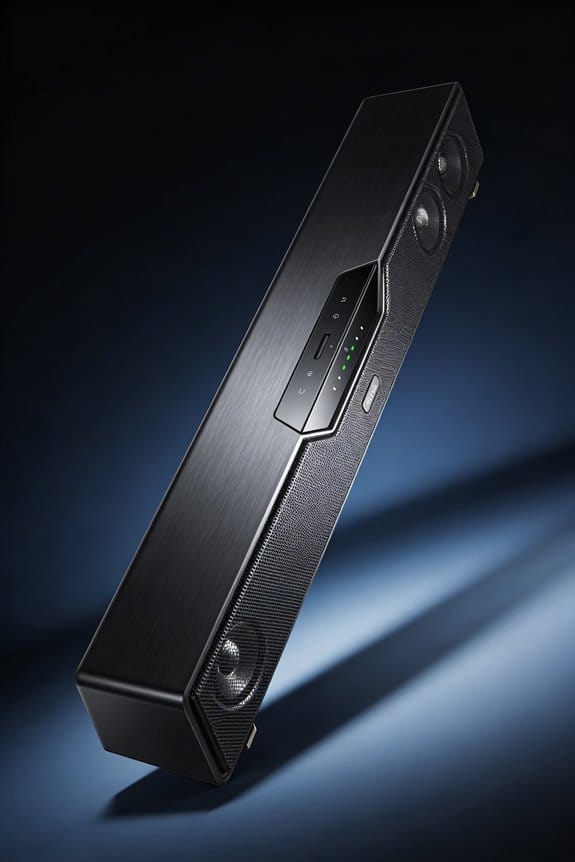
Finding the right audio setup for your home can be tricky. If you’re tired of the clutter that comes with multiple speakers, reflection-based virtual surround systems might be just what you’re looking for. These systems cleverly use angled drivers to bounce sound off your walls, ceiling, and other surfaces, managing to deliver immersive audio without the need for a ton of equipment.
So how does this actually work? Instead of placing speakers all around the room, these systems direct focused audio beams toward specific points. The sound reflects back to you from different angles, creating a surround sound experience that feels natural. A great example is the Cambridge Mechatronics Digital Sound Projector, which uses 40 micro drivers and 2 woofers. It’s designed to send your center channel audio straight to you and bounce surround effects off the side walls.
Another interesting approach comes from Ultrasone’s S-Logic technology. This system spreads sound waves across your outer ear using decentralized transducers. It’s pretty neat because it combines Head-Related Transfer Function (HRTF) processing with sound reflection principles. You’ll end up experiencing audio in a way that mimics having speakers placed all around you.
What’s the best part? You get to enjoy that surround sound feel without the bulk of multiple speakers taking over your space. If you’re looking to upgrade your audio experience but want to keep it manageable, this kind of setup could be a solid choice.
To recap, reflection-based virtual surround systems can help streamline your audio setup while still delivering an immersive sound experience. Have you thought about trying one of these systems out in your home?
Object-Based Formats: Dolby Atmos and DTS Virtual:X Explained
Ever sat down to watch a movie, only to feel like something’s off with the sound? It might be time to rethink how you experience audio at home.
Traditional surround sound setups, like those classic 5.1 or 7.1 channels, can feel a bit limiting. That’s where object-based audio formats step in and change the game. So, how do these systems work?
Dolby Atmos, for example, is pretty impressive. It can handle up to 64 audio channels and assigns each sound a specific spot in a 3D space, making it feel like sound is all around you—including above! You’ll get a sense of depth and movement, which really enhances the overall experience. On the other hand, there’s DTS Virtual:X. This one analyzes audio as it plays and creates a similar immersive experience without needing extra height speakers or hardware. It uses clever algorithms to make sounds seem like they’re shifting dynamically around you. And then there’s Auro-3D, which adds a layer of height to typical surround setups, making those vertical sound fields actually perceptible.
These formats might not be about adding more physical speakers to your room, but rather using sound placement tricks. So, why does this matter? When done right, it can completely transform how you enjoy your favorite films, music, or games.
To wrap it up, experimenting with these object-based audio formats could totally enhance your listening experience. Have you considered how sound can really shape what you watch or listen to? Time to dive in and find out what works best for you!
AI-Powered Virtual Surround That Adapts to Your Room?
Are you tired of sound systems that just don’t fit your space? The way we experience audio has dramatically changed with the rise of object-based sound formats. But let’s be real: when you hit play, you still expect the same audio experience every time. That’s where some pretty smart technology comes into play.
Yamaha’s Surround:AI technology dives into your audio every five seconds. It keeps an eye on how well you can hear dialogue, how rich the music feels, and the quality of ambient sounds. The cool part? It adjusts a 360-degree sound field based on your unique speaker setup and room size. So you don’t have to settle for a one-size-fits-all sound.
You might be wondering how it gets all this done. Well, it’s pretty clever. The system analyzes wall distances, ceiling heights, and even what your surfaces are made of—thanks to something called acoustic feedback. There’s no need for you to fiddle with settings; the AI is on the job, adjusting settings like beam direction and frequency response all on its own.
So, what does this mean for you? You can kick back and enjoy a truly immersive sound experience tailored to your room without breaking a sweat. The best part is, you get consistent audio quality no matter where you are in your space.
In short, this adaptive surround sound technology is a breath of fresh air in the audio world. If you’re searching for better sound that just feels right in your room, give it a shot. How would it feel to experience your favorite films and music in such a personalized way?
Frequently Asked Questions
Can Virtual Surround Sound Work Effectively in Small Rooms or Apartments?
I’d say virtual surround actually works better in small rooms since you’re closer to the speakers and room acoustics create natural reflections. Proper speaker placement near walls helps bounce sound effectively, making the surround effect more convincing than in larger spaces.
Does Virtual Surround Sound Consume More Processing Power or Battery Life?
Yes, I’ve found that virtual surround sound requires significant processing power since algorithms constantly analyze and reposition audio signals. On portable devices, you’ll notice reduced battery efficiency because the CPU works harder processing these spatial calculations in real-time.
Are There Hearing Conditions That Prevent Virtual Surround From Working Properly?
Yes, I’ll explain: hearing impairments affecting one ear or sound localization abilities can prevent virtual surround from working properly. Since the technology relies on binaural hearing and your brain’s spatial processing, asymmetric hearing loss considerably diminishes the effect.
Can Virtual Surround Technology Improve Dialogue Clarity in Movies and Shows?
Want clearer conversations in your favorite films? Yes, I’ve found virtual surround can improve dialogue clarity—audio algorithms isolate and enhance center channel frequencies where speech lives, making voices more intelligible even amid complex soundscapes.
Is Virtual Surround Sound Compatible With All Streaming Services and Formats?
I’d say streaming compatibility varies markedly. Most services support virtual surround, but format limitations exist—some platforms lack Dolby Atmos or DTS encoding. Your device’s processing capabilities and the streaming quality tier you’ve subscribed to matter most.