

Spatial audio isn’t a passing fad—I’d call it the future of listening, though it won’t completely replace stereo soon. The market’s projected to grow from $5.9 billion in 2026 to $115 billion by 2034, with streaming platforms investing heavily in the technology. You’ll need compatible headphones like AirPods Pro or Dolby Atmos-enabled speakers to experience it properly. While older music catalogs remain limited and some listeners find the effect fatiguing, gaming, VR, and entertainment sectors are driving rapid adoption across devices. The sections below explain how this technology works and what you should expect.
Key Takeaways
- Spatial audio market will grow from $5,965 million in 2026 to $115,472 million by 2034, indicating long-term viability.
- Streaming platforms invest billions in spatial audio technology to enhance engagement and justify premium subscription fees.
- Nearly all modern smartphones, headphones, and TVs support Dolby Atmos, ensuring widespread hardware compatibility and accessibility.
- Challenges include limited older music catalogs, inconsistent conversion quality, and potential listener fatigue from excessive directionality.
- Gaming and entertainment drive 55% of adoption, with AI-powered tools improving real-time rendering and personalized experiences.
What Spatial Audio Is (And How It Differs From Stereo)
When you listen to music on regular stereo headphones or speakers, you’re basically experiencing sound on a flat, two-channel plane. It’s like having sound stuck between just the left and right. But have you ever tried spatial audio? It really shakes things up by creating a three-dimensional soundscape. Imagine not just hearing a guitar or vocals, but feeling as if they’re positioned around you—above, below, and all around.
The differences between stereo and spatial audio become pretty clear when you actually compare the two. Stereo relies on its two channels to create depth and width, while spatial audio is like moving into a whole new dimension. It uses something called object-based rendering that can precisely place sounds in a 360-degree space. The cool part? It works with head-tracking sensors found in devices like AirPods or modern headphones. So, as you shift your head, the sound adjusts, keeping everything in place in relation to your device’s screen or whatever reference point you’re using.
So, why does this matter? Well, think about your listening experience. With stereo, your music can feel flat; with spatial audio, you’re immersed. You can pinpoint where sounds are coming from, and it makes everything much more lifelike. Here’s a trick: if you have the right headphones and device, give spatial audio a try during your next listening session.
Why Streaming Platforms Are Betting Billions on Spatial Audio
Have you ever felt bored with your music streaming experience? It’s a common struggle, especially as platforms fight for your attention in a crowded market. That’s where spatial audio comes in. Streaming services are really stepping up, pouring billions into this technology. It’s no surprise, either—spatial audio can keep you engaged and immersed in your favorite tunes or podcasts.
Take a look at the numbers: the spatial audio rendering AI market jumped from $1.53 billion in 2026 to $1.99 billion in 2026. That shows streaming services are all about investing in better audio experiences. And as immersive entertainment with spatial audio is expected to hit $442.11 billion by 2030, you can see why platforms like Apple Music, Tidal, and Amazon Music are making spatial audio a core feature.
Now you might ask, why does this matter? The answer lies in how personalized media experiences improve subscriber retention. Instead of just another boring subscription, you’ll get enhanced listening experiences that make it worthwhile. These platforms are not just throwing money around—they’re building something that stands out when most streaming options offer similar quality.
Consider this: with spatial audio, you have exclusive catalogs that keep you coming back for more. It makes spending a little extra on a premium subscription feel justified. Platforms know that if they can create something unique for you, they’re more likely to win your loyalty.
So, if you’re looking for an upgrade in your audio experience, now’s the time to check out what these services have to offer. Honestly, it could make all the difference in how you enjoy your favorite music or shows.
In short, streaming platforms are investing big bucks into spatial audio because it keeps you engaged and creates a more immersive experience. What would you choose—a plain old stream or something that brings your audio to life?
What Hardware You Need for Spatial Audio Playback
Imagine you’re ready to dive into the world of spatial audio for a truly immersive listening experience. But before you get too excited, let’s talk about the hardware you’ll need to really hear the difference.
Speaker Requirements
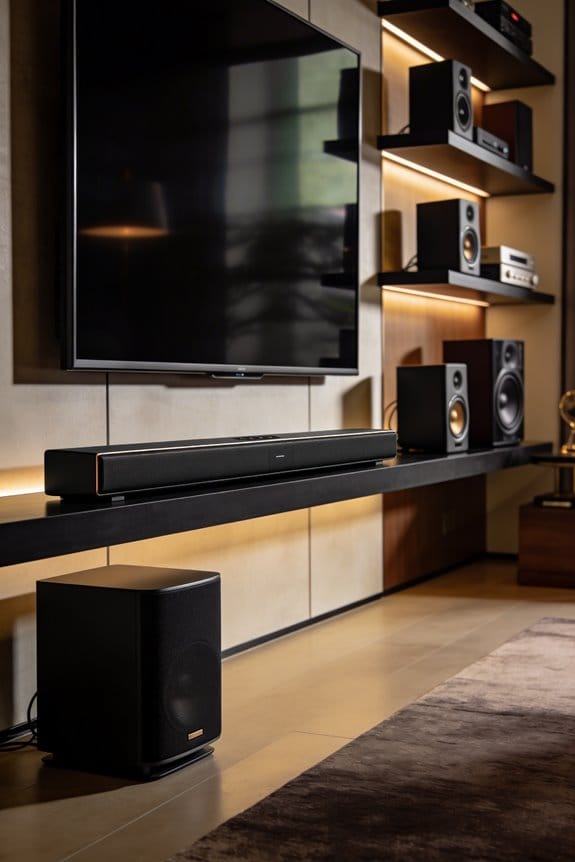
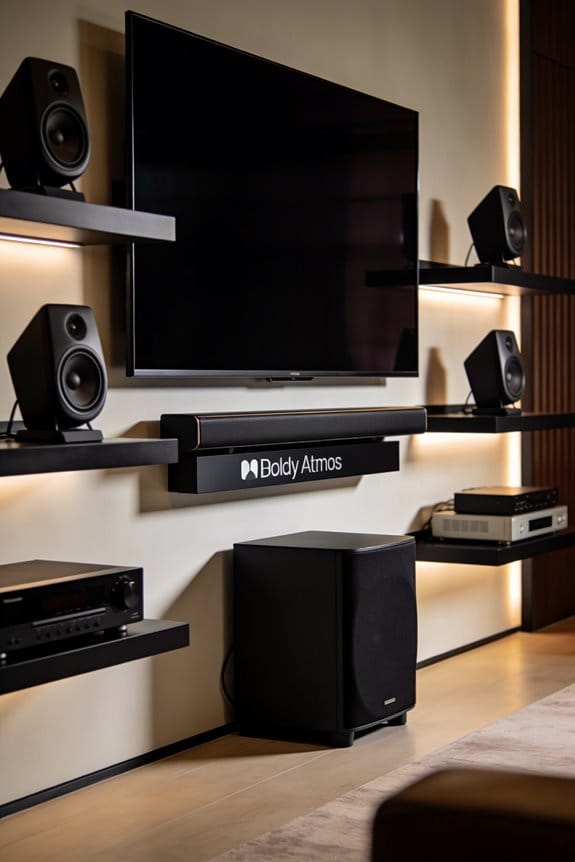
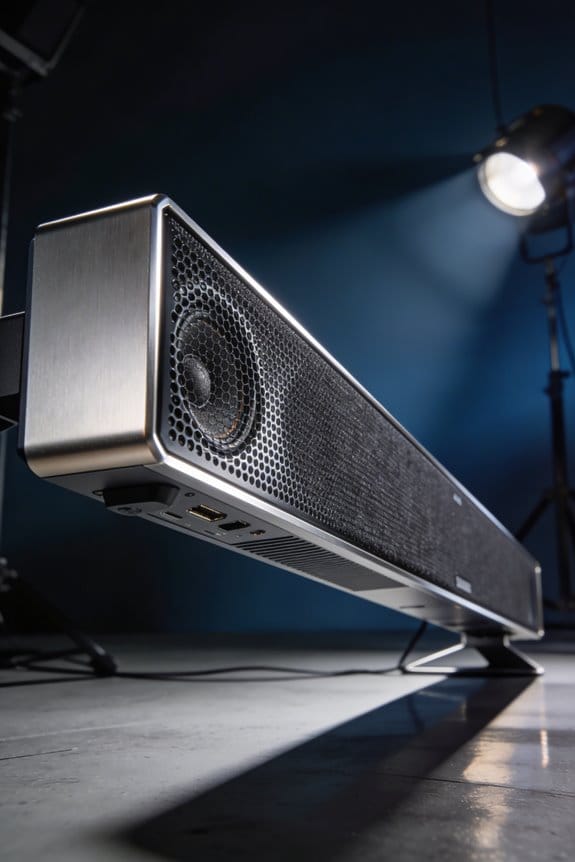
To enjoy spatial audio, your speakers need to be more than just your run-of-the-mill setup. You’ll want to look for multi-channel speakers, like Dolby Atmos-enabled soundbars or a solid home theater system. For example, check out Samsung’s 2026 TVs and soundbars, which come equipped with Eclipsa Audio for 3D sound. Don’t get me wrong—traditional stereo speakers just can’t do justice to the rich effects of spatial audio.
Headphone Compatibility
Now, if you’re more of a headphone person, you’re in luck! Most Bluetooth headphones can handle spatial audio, but here’s the catch: if you want the best experience, go for models with head-tracking sensors. Apple’s AirPods, AirPods Pro, and AirPods Max already have this feature, making them a smart choice. Standard wired earbuds may offer binaural sound, but without dynamic head-tracking, you’re missing out on sound that shifts as you move your head.
So, why does this matter? Sound quality can change everything about how you enjoy your favorite tunes or movies. Truth is, to truly appreciate spatial audio, a little investment in the right gear goes a long way.
Spatial Audio Adoption Rates: What the Numbers Really Show
How quickly has spatial audio spread across devices and platforms? You might be surprised by how much it’s integrated into our everyday tech. Nowadays, almost every modern smartphone, PC, TV, and headphone is compatible with Dolby Atmos or similar features, making it pretty accessible for listeners. In fact, hardware makes up 55% of the spatial audio solutions market, while software consists of 45%. This indicates that the ecosystem is developing nicely, reflecting a balance between the tech we use and the software that supports it.
When it comes to personal devices, Apple’s lineup—including iPhones, AirPods, and HomePods—offers spatial audio playback as a standard feature, which is super convenient. On the Android side, things are looking equally promising. Plus, if you’re into Samsung products, their Eclipsa Audio partnership is set to bring 3D audio to TVs and soundbars in 2026, which means even more options for enjoying those immersive sounds.
So, why does this matter? Well, market trends show that 30% of spatial audio adoption is in entertainment and media, with gaming trailing close behind at 25%. You might be wondering about the differences in consumer preferences. For instance, professional setups in arenas and concert venues are proving that spatial audio isn’t just for personal devices; it can enhance large-scale experiences too.
Ultimately, spatial audio is making strides into various aspects of our lives. With more access through diverse devices and an expanding adoption in entertainment and gaming, it’s an exciting time to explore what it has to offer. Have you tried it yet, or are you still on the fence?
Where Spatial Audio Falls Short for Music Listeners Today
While spatial audio tech has become a hot topic across devices and platforms, it’s not without its bumps in the road when it comes to enjoying your music.
Industry challenges are still a big hurdle. A lot of older music is just stuck in standard formats, which means you might find yourself limited when building your playlist. And if you think jumping between platforms is seamless, think again! Apple Music sticks with Dolby Atmos, while Sony rides with 360 Reality Audio. It’s a maze out there, and when music gets converted from stereo to spatial, the quality can suffer. You might get some tracks that sound great, but not every song will hit the mark.
Listener preferences complicate things even further. Not everyone digs the same sound, and with spatial mixing, some people notice that vocals can seem distant or instruments sound too separated. Have you ever felt worn out after listening for a while? That might happen if the spatial effects go overboard with directionality, making your ears feel fatigued during long sessions.
How AI and Real-Time Rendering Are Fixing Spatial Audio’s Problems
The spatial audio scene is a bit chaotic right now. If you’ve ever struggled with inconsistent sound quality across different headphones or setups, you know what I mean. Luckily, AI technology is stepping in to tackle these issues head-on.
AI algorithms are making a real difference. They process audio in real time, adjusting the sound based on the headphones you’re using, your room layout, and even where you’re sitting. Think about it: these systems are constantly analyzing countless audio factors all at once. The result? Personalized sound quality that doesn’t require you to mix anything manually.
Real-time rendering is another cool feature that’s changing how we experience audio. Instead of relying on pre-mixed formats, this tech creates spatial audio on-the-fly. It figures out the exact positions of sounds, how they might bounce off surfaces, and cues for distance while you listen.
This means you can expect a consistent immersive experience, whether you’re using AirPods or a high-end home theater. Companies like Spatial9 and Masterchannel’s SpatialAI platform are leading the way by using machine learning to turn regular stereo tracks into 3D sound without needing to remix them in a studio.
So, why does this matter? Well, it makes enjoying your favorite music and movies way better. The best part is just how accessible this tech is becoming. You don’t need fancy equipment or complicated setups to experience a richer audio environment.
In short, AI and real-time rendering are fixing a lot of the headaches tied to spatial audio. Isn’t it exciting to think about how this will change what we hear?
How Musicians Use Spatial Audio to Create Immersive Experiences
Have you ever listened to a song and felt like the sounds were all around you? Musicians are stepping up their game by placing vocals and instruments in a three-dimensional space, moving beyond the standard left-right stereo sound we’re used to. Take artists like The Weeknd and Billie Eilish, for example. With Dolby Atmos Music, they can have backing vocals float above your head, drums banging behind you, and lead instruments right in front of you.
If you’re curious about how they pull this off, it all comes down to a technique called object-based audio mixing. This isn’t just your typical mixing; it involves using software that assigns specific positions to each sound within a full 360-degree sphere. Two popular options for this are Logic Pro’s Spatial Audio tools and Pro Tools Ultimate with Dolby Atmos Renderer.
What does this mean for you as a listener? Simply put, it amps up your experience. Think about it: moving your head with compatible AirPods or headphones that have head-tracking sensors can give you a different perspective on the music with every twist and turn. Each listening session can genuinely feel like you’re at a live performance. So, why does this matter? When music feels more immersive, you’re likely to connect with it on a deeper level.
Honestly, if you want to dive into this world, look for tracks and albums made with Dolby Atmos or spatial audio. They’ll change how you hear music, making it a whole lot more fun and engaging. It’s definitely worth exploring the next time you put on your headphones.
In brief, musicians are changing the audio game, providing fresher, multi-dimensional experiences. Are you ready to experience music in a whole new way?
Why Gaming and VR Hardware Accelerates Spatial Audio in Music
Gaming and VR hardware are changing how we enjoy music, and this is great news for anyone who loves immersive sound. Have you ever felt that music just doesn’t hit the same when you’re listening through regular speakers? You’re definitely not alone. The gaming industry has been pushing spatial audio to new heights, making it easier than ever to experience rich, three-dimensional sound whether you’re playing games or listening to your favorite tracks.
The truth is, gaming accounts for about 25% of the spatial audio market. This growth has brought about amazing advancements like low-latency processing and head-tracking sensors that we now see in music platforms. So, when you’re rocking a VR headset, like Meta Quest or PlayStation VR2, you’re not just enjoying epic gameplay; you’re also getting an immersive music experience that feels different from anything else you’ve tried.
VR setups need spot-on 3D audio, which is why manufacturers have made things like Dolby Atmos a standard feature on many devices today. So, whether you’ve got AirPods, Samsung Galaxy Buds, or some top-notch gaming headphones, you’ve actually got spatial audio capabilities right there in your pocket. No more need for tricky or expensive gear just to enjoy music that feels as immersive as a live concert.
Here’s the trick: Start exploring music that uses spatial audio—it’s out there and waiting for you! Finding your favorites can make a huge difference in how you experience each song. In a world where audio quality matters more than ever, asking, “How can I bring my music to life?” is a great first step.
To wrap it up, if you’re looking to enhance your music-listening experience, dive into spatial audio options available on your devices. The evolution of gaming technology has finally made immersive sound accessible, and it’s a ride worth taking. What music do you think would sound incredible with spatial audio?
Why the $115B Market Forecast Signals Long-Term Viability
When you think about whether spatial audio’s worth diving into, the numbers paint a pretty clear picture of its future. The market’s expected to skyrocket to $115,472 million by 2034, which is a jump from $5,965 million in 2026. That’s a steady growth rate of 10%, and it’s not just a trend in one area: gaming captures about 25%, entertainment takes the lead at 30%, and automotive is at around 15%.
So, why does this matter for you? As nearly every smartphone, PC, and pair of headphones is now compatible with Dolby Atmos or similar formats, consumer demand is driving this growth. It seems like everyone wants that immersive experience these days. Plus, hardware makes up 55% of the market, while software takes up the other 45%. This balance shows that both sides are evolving together.
Let’s look at the immersive entertainment segment, which is projected to hit $442.11 billion by 2030 with a rate of 26.3%. That’s huge! This growth suggests that spatial audio isn’t just a passing fad—it’s an essential part of the future.
Honestly, if you’re still on the fence about diving into spatial audio, now might be the perfect time to take a closer look. With the right tools and tech, you could really enhance your listening experience. What do you think: is now the time to invest in something that’s clearly gaining traction?
Will Spatial Audio Replace Stereo as the Standard Music Format?
Have you ever wondered why we still listen to music in stereo when there’s such cool tech out there like spatial audio? Believe it or not, stereo has held the crown for over 60 years, but now it’s up against spatial audio, which is really starting to take off and is set to become a nearly $6 billion market in 2026. A lot of your everyday devices—think iPhones, AirPods, HomePods, and even some Android phones—support spatial audio, making it accessible to a lot of people. The listening experience? It’s a game of dimensions; spatial audio wraps sound around you in a 3D space, whereas stereo just sticks to that old left-right balance.
But here’s where things get tricky. Did you know that hardware still holds a 55% market share, while software lags behind at 45%? This means there are still some challenges to overcome. Gaming and entertainment media are currently big players in this space, accounting for about 25% and 30% of the applications, respectively. This shows that adoption is happening, but it’s more of a slow and steady movement rather than an outright takeover.
Try this: Listen to your favorite track in both formats and notice the difference. You’ll probably find that stereo has its charm, especially for certain songs where the traditional sound works just fine. Truth is, stereo isn’t going anywhere anytime soon. Both formats have their place, meeting different needs and catering to various tastes.
Frequently Asked Questions
Can I Convert My Existing Stereo Music Library to Spatial Audio?
Yes, I can convert stereo tracks through audio upscaling tools and AI-powered services. While stereo conversion won’t match native spatial recordings, technologies like Dolby Atmos Music and various software solutions let me transform existing libraries into immersive formats.
Does Spatial Audio Drain Smartphone Battery Faster Than Regular Playback?
Yes, I’ve found spatial audio does drain battery faster due to increased processing demands. The enhanced audio quality and real-time rendering require more power, though modern smartphones have optimized this impact considerably through efficient algorithms.
Which Music Genres Benefit Most From Spatial Audio Mixing Techniques?
I’ve found classical arrangements, electronic music, and hip hop benefit most from spatial mixing. Classical showcases orchestral depth, electronic music creates immersive experiences with layered synths, and hip hop positions vocals and beats in distinct dimensional spaces.
Are Recording Studios Investing in Spatial Audio Production Equipment?
Yes, I’m seeing significant studio upgrades across the industry. Professional facilities are making substantial audio investments in immersive workstations, object-based mixing systems, and Dolby Atmos-compatible equipment to meet growing demand for spatial production capabilities.
Will Spatial Audio Work With My Older Headphones and Speakers?
I’ll be honest—headphone compatibility varies with older models. While basic stereo headphones can simulate spatial effects, you won’t get true immersive audio. Your speaker setup matters too; older systems lack the necessary channels for authentic spatial rendering.