
Multi-channel audio evolved from stereo’s two-channel system, which dominated for 80 years starting in 1881, through 1970s quadraphonic four-channel experiments that failed due to conflicting formats. The breakthrough came with 5.1 surround sound in 1995, using Dolby Digital’s unified standard with five channels plus subwoofer. Modern systems expanded to 7.1 configurations and Dolby Atmos, which introduced height channels for three-dimensional sound using object-based audio instead of fixed channel assignments. I’ll explain how each technology works, why certain formats succeeded while others didn’t, and what makes today’s immersive audio fundamentally different.
Key Takeaways
- Stereo sound originated in 1881 and became the standard 2.0/2.1 setup for music lovers for 80 years.
- Quadraphonic four-channel sound emerged in the 1970s but failed due to conflicting formats and consumer confusion.
- 5.1 surround sound introduced unified standards and digital encoding, delivering immersive mini-theater experiences at home by 1995.
- Dolby Atmos advanced beyond channel-based audio by using object-based technology to create true three-dimensional spatial sound.
- Binaural audio replicates real-world hearing through headphones, using interaural time and level differences for immersive 3D experiences.
How Stereo Became the 80-Year Standard (1881-1995)
Ever wonder why stereo sound has stuck around for so long? It turns out, a series of cool innovations came together between 1881 and 1995 to make stereo the audio king for nearly a century.
Starting out in France back in 1881, stereo sound took its first steps. Then, during the 1930s, it really started to pick up steam in the U.S. thanks to some impressive theater demos. Fast forward to 1943, and German engineers were busy developing two-track recording, which turned the music production game upside down in the ‘50s.
Here’s the trick: magnetic tape rolled in around 1950 and became the go-to for audio master recordings. This made creating and editing stereophonic content a whole lot easier. And the 2.0/2.1 setup, with those essential left and right channels and an optional subwoofer, kept its crown as the popular choice for music lovers for 80 years.
Truth is, this format is still your best bet for enjoying music even now, despite all the newcomers trying to take the spotlight in home theaters and cinemas.
The Rise and Fall of 1970s Quadraphonic Sound
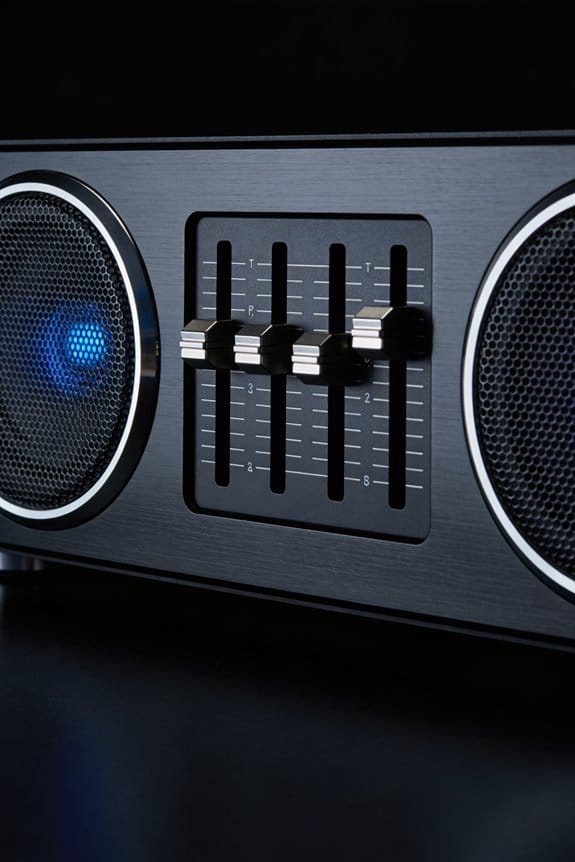
Ever wonder why quadraphonic sound fizzled out despite all the hype in the ’70s? When it first hit the scene, it looked like it might change how we enjoyed music at home with its four-channel surround sound. It was based on 4-track tape technology, which let you experience tunes like never before. The cool part? They designed matrixed quadraphony systems that combined four channels into two, letting you use your existing stereo setup—nice, right? Record labels even started releasing albums in both stereo and quad formats during this time, which made it feel like this was the future of music.
But here’s the kicker: the whole setup came with some serious drawbacks. Different systems jostled for attention, and the confusion left most consumers scratching their heads. Who can blame them? If you’re not sure which format will stick around, would you rush out to buy expensive equipment? Plus, the need for extra speakers and special media didn’t make things any easier. By the time the decade wrapped up, quadraphonic sound kind of crashed and burned. Industry folks now look back and see it as more of a gimmick than a solid innovation, even though it paved the way for modern surround sound tech.
Honestly, the whole experience serves as a reminder. Technology isn’t always a sure bet, and what seems cool today might not last tomorrow. So, if you’re looking into new audio systems, make sure to do your homework. Keep an eye on what’s likely to stand the test of time. Would you take the plunge knowing it might not last?
Why 5.1 Surround Sound Succeeded Where Quad Failed
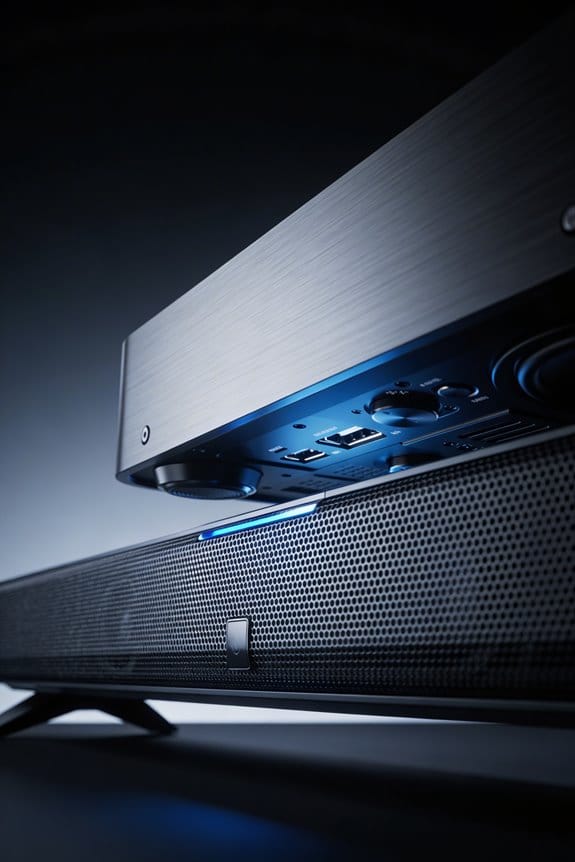
Have you ever tried setting up a quadraphonic sound system only to find it confusing and frustrating? You’re not alone. Back in the day, quadraphonic sound had its fair share of problems that made it tough for people to jump on board. With conflicting formats, pricey equipment, and no standard across brands, it really threw consumers off. This lack of clarity meant it never really took off.
So, what changed with 5.1 surround sound? Truth is, the improvements tackled those issues head-on. The industry came together to create unified standards, which made it easier for everyone to follow along. Plus, digital encoding made managing sound a whole lot simpler, and the layout of channels made perfect sense for home use.
Here’s the trick: Dolby Digital’s AC-3 encoding allows for six channels, transmitting audio at 384-448 kilobits per second. What does that mean for you? Essentially, it packs in superior sound without sacrificing compatibility with DVDs or receivers. You get front left, center, and right channels along with rear surrounds and a dedicated subwoofer. It’s like having a mini-theater right at home! And the best part? You won’t need to fuss with complicated adjustments or annoying format changes.
In short, the leap from quad to 5.1 was about addressing real concerns that people faced. So, next time you set up your home theater, remember how these advancements make your movie nights a little more immersive. How do you think sound plays a role in your favorite films?
When TV Finally Got Stereo: The 1984 MTS Revolution
Have you ever watched a movie or show on TV and thought the sound just didn’t match the action? For years, Americans endured monaural audio, meaning the sound came from a single channel. This made for a flat listening experience, where the dialogue sounded the same no matter what was happening on-screen. But that all started to change in the mid-1980s when the FCC green-lighted the Multichannel Television Sound (MTS) system.
Starting in 1984, stations gradually adopted this new technology to broadcast stereo audio. Think about it: for the first time, you could actually hear sounds coming from different directions on your TV—like an explosion that sounds like it came from the left, while dialogue might be coming from the center. Most major networks rolled out MTS in the late ’80s, giving viewers a richer experience.
Here’s the trick: this system didn’t just mean stereo sound; it also included the Second Audio Program (SAP) feature, which allowed alternate language tracks. So if you wanted to catch your favorite show in Spanish or another language, you had that option.
Frankly, this MTS approval laid the groundwork for everything that followed, including the surround sound formats that we’ve come to know and love today. Just imagine how far audio quality has come since those early days!
So, why does this change matter? It’s a significant upgrade that has given us the ability to enjoy our favorite shows and movies in a way that really draws us into the action. If you’ve got a newer TV and haven’t tried out the stereo or surround sound settings yet, give it a go.
To wrap it up, audio technology has come a long way since those single-channel broadcasts. Are you ready to dive into a better audio experience on your next movie night?
How Dolby Digital Brought 5.1 to Home Theater in 1995
Back in 1995, it felt like home entertainment was finally catching up to what we’d been missing in theaters. With the arrival of Dolby Digital on Laserdiscs, true 5.1 surround sound was making its way into living rooms everywhere. This wasn’t just a minor upgrade; it changed how you experienced movies at home, adding five distinct audio channels plus a special subwoofer channel for those booming low sounds.
You might be wondering, how did this work? Dolby introduced AC-3 encoding in 1992, which compressed six audio channels into bitrates ranging from 384 to 448 kilobits per second. Suddenly, your home theater setup needed to include a mix of front left, center, and right speakers, two rear surround speakers, and a single subwoofer. This setup became the gold standard for surround sound and really brought movies to life.
The best part is that this format set the stage for DVD audio standards. It made multichannel audio something anyone could enjoy, even if you weren’t a pro or didn’t have a super fancy sound system.
So, thinking about setting up your own 5.1 system? Just imagine the thrill of hearing every little detail in your favorite movies as if you were right there in the action. It’s not just a sound upgrade; it’s a whole new way to enjoy your film nights at home.
In short, Dolby Digital helped countless people experience movies like never before, making it accessible and fun. What’s your favorite movie to watch with surround sound?
What Makes 5.1 Surround Sound Different From Stereo?
Ever get tired of the same old stereo sound? You’re not alone. When it comes to audio setup, deciding between 5.1 surround sound and traditional stereo can feel overwhelming. Here’s the lowdown on what sets them apart.
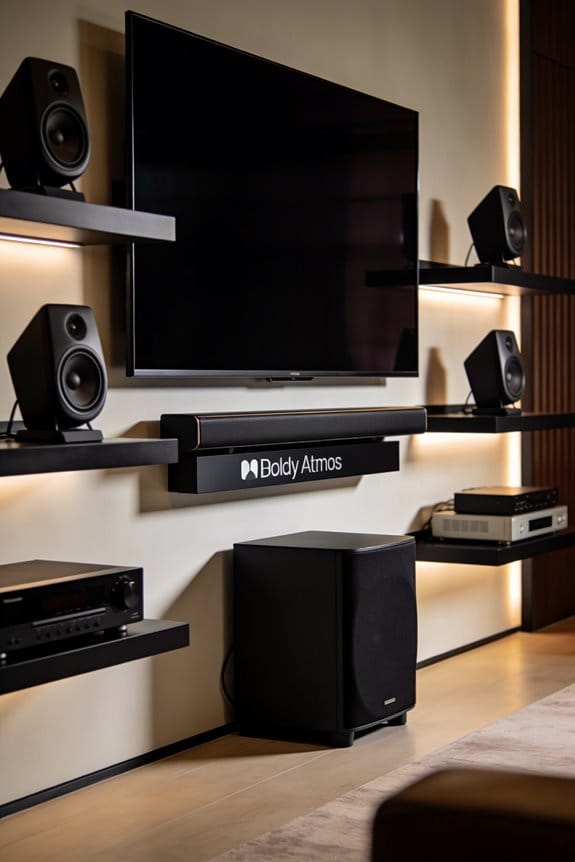
Stereo sound uses just two channels—left and right—to create a sound stage that’s mainly in front of you. It’s great for music or casual listening, but it falls short in bringing an immersive experience to your movies or games. On the other hand, 5.1 surround sound steps it up with three front channels, two rear surround channels, and a subwoofer dedicated to those deep bass effects. This setup means you get audio signals spread across your entire space, not just coming from the front.
Here’s why that matters: the center channel is key for keeping dialogue clear during films. Meanwhile, those rear surround channels add life to ambient noises and help with directional cues, making it feel like you’re really in the action. Imagine hearing raindrops from one side and car engines from the other—total game changer for the ears!
You know those moments when a loud bang or a whisper behind you sends a chill down your spine? That’s the beauty of spatial audio. Sound designers can position sounds in a three-dimensional space so effectively that it feels like you’re stepping into another world. Honestly, that kind of realism is something a traditional stereo just can’t touch.
So if you’re looking to elevate your listening experience beyond basic tunes and into the realm of immersive audio, 5.1 surround sound might just be what you need.
In the end, whether it’s for a weekend movie night or some serious gaming, having that multi-channel experience can really transform how you enjoy sound. What’s stopping you from taking the plunge into surround sound?
How 7.1 and Atmos Add Height to Surround Sound
Have you ever wondered how to take your home theater experience to the next level? You’re probably familiar with 5.1 surround sound, which does a pretty solid job at creating a sound field around you. But if you want to really feel immersed in a movie or gaming session, consider stepping up to 7.1 or even Dolby Atmos.
With a 7.1 setup, you add two rear surround speakers to the standard 5.1 system. That means you now have four surround channels instead of just two. This really boosts your ability to tell where sounds are coming from, making everything feel more lifelike. So if you’re craving better spatial awareness in your audio experience, this is a worthy upgrade.
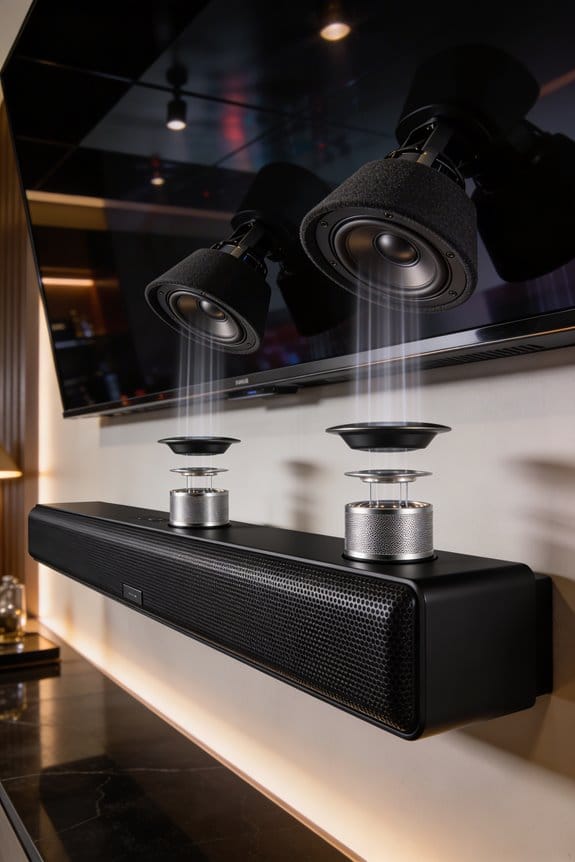
Now let’s talk about Dolby Atmos, which is where things get even more interesting. Instead of just focusing on sounds around you, Atmos introduces extra height dimensions through ceiling-mounted or upward-firing speakers. These speakers bounce sounds off the ceiling, giving you a true three-dimensional audio experience. Imagine hearing birds singing from above or a helicopter flying overhead. It’s the kind of detail that can really suck you into the story.
Atmos systems can be set up in various configurations, usually displayed as numbers like 5.1.2 or 7.1.4. The last number indicates how many height speakers you have in your setup. So, the best part is you have options depending on how much you want to invest in your audio setup.
If you want sound that wraps around you in a way that traditional setups simply can’t provide, make the leap. Think about how much more engaging your favorite movies or games could be with that additional height perception. So, what are you waiting for? Upgrading your sound system might just be the ticket to a more immersive viewing experience.
Channel-Based vs Object-Based Audio Explained
Are you thinking about setting up a home theater and feeling overwhelmed by all the audio options? You’re not alone. The choice between channel-based and object-based audio can be confusing, but understanding the differences can make a big difference in your watching experience.
Let’s break it down. Channel-based audio assigns sounds to specific speakers in set positions. Picture a classic 5.1 setup: you’ve got front left, center, right, rear left, rear right, and a subwoofer. This approach routes audio to predetermined locations regardless of where your speakers are actually placed. So, if your setup doesn’t match those fixed points perfectly, the sound might not be as immersive as you’d want it to be.
Now, here’s the tricky part: object-based audio. This newer technology treats sounds as individual elements with metadata that tells your system where each sound should be in three-dimensional space. It’s a bit like having a custom soundtrack that adapts to your room. With this setup, your AV receiver figures out the best way to place each sound depending on how you’ve arranged your speakers. Pretty cool, right?
One of the standout features is how Dolby Atmos uses this object-based technology. It can handle up to 128 audio objects at once, adjusting the soundtrack dynamically. Imagine the thrill of hearing a plane zoom overhead or a whisper in the corner of the room, exactly where it should be.
So, what does all this mean for your home theater? If you want a more immersive experience, opting for object-based audio might be the way to go. It offers that richer, more dynamic sound that really pulls you into the action. But if you’re sticking with a simpler setup, channel-based audio still delivers solid sound.
In the end, it all comes down to what you’re looking for in your home theater experience. What sounds best to you?
Why Soundbars Can’t Truly Replace Surround Speakers
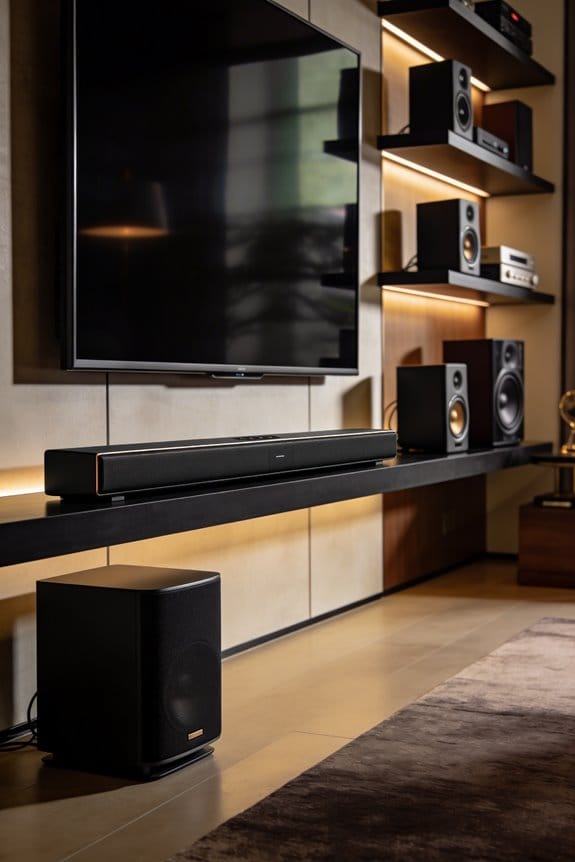
Although soundbars can simplify your home entertainment setup and save some space, they fall short when it comes to delivering that real surround sound experience you can only get with separate speakers.
Understanding Soundbar Limitations
Let’s face it, soundbars rely on some tricks like psychoacoustic processing and beam-forming technology to try and mimic surround sound. But here’s the catch: they simply can’t provide true directional audio from behind your listening area. In a traditional 5.1 speaker setup, the rear channels are positioned about 110-120 degrees behind you, giving you a real sense of depth and immersion—something soundbars can’t replicate.
Physical Constraints
To truly enjoy great surround sound, you need speakers placed at specific angles around your room. With soundbars, you’re mostly hearing sound reflect off walls, which results in general sound effects instead of distinct audio channels. So why does this matter? Room acoustics, wall materials, and how you’ve set up your furniture all play a role in how soundbars perform. But with dedicated surround speakers, you get consistent, reliable audio that stays true regardless of those environmental factors.
In short, while soundbars have their perks, they just can’t compare to the full surround experience offered by traditional speaker systems. If you’re serious about sound, it might be time to think about investing in a proper setup. What will you choose for your space?
How Binaural Audio Creates 3D Sound in Headphones
Have you ever put on headphones and felt like you were right in the middle of a concert or a movie scene? That’s the magic of binaural audio. It’s designed to mimic how your ears pick up sounds in the real world, creating an immersive experience that can seriously enhance what you’re listening to.
Binaural audio techniques use special microphones placed the same distance apart as our ears. Often, these are set up on dummy head models that replicate how humans naturally hear sound. When this method captures sound, it keeps those essential interaural time differences (ITD) and interaural level differences (ILD) intact. Basically, these are the tiny time delays and volume changes between what each ear hears. Why does this matter? Well, they’re crucial for locating where sounds are coming from around you.
When you hit play on a binaural recording through headphones, your brain picks up on these cues, creating a convincing 3D audio effect. It’s a unique experience, but it only works with headphones. Using speakers muddles everything up by adding room reflections, messing with the clarity of those spatial details that make binaural sound so special.
If you’re looking to try this out, make sure to grab a good pair of headphones. That’s all you really need to dive into this immersive world of sound. You might just discover new layers in your favorite music or feel like you’re right there in the scene of a film.
Frequently Asked Questions
What Were Bell Labs’ Multichannel Experiments in the 1920S Testing?
Bell Labs tested whether multi channel technologies could enhance audio fidelity and spatial depth perception. I found their experiments demonstrated that three channels produced superior depth effects compared to two-channel systems, validating multichannel audio’s theoretical advantages.
Why Did Quadraphonic Sound Fail Commercially in the 1970S?
Like a puzzle missing pieces, quadraphonic sound failed because consumer preferences favored simpler stereo systems, and market saturation with competing incompatible formats created confusion. I’d say it was ultimately too complex for mainstream adoption.
What Bitrate Does Dolby Digital AC-3 Encoding Typically Use?
Dolby Digital AC-3 encoding typically operates between 384 and 448 kilobits per second. I’d say these compression techniques strike an effective balance, delivering solid audio quality for six-channel encodings while keeping file sizes manageable for DVD distribution.
When Did DVD Adopt 5.1 Surround Sound as Standard?
I’ll tell you that DVD specifications adopted 5.1 surround sound as standard when the format launched in 1996. This represented major audio advancements, making multichannel home theater accessible to you through an affordable consumer medium.
How Does Object-Based Audio Differ From Traditional Channel-Based Surround Sound?
Object-based audio uses dynamic sound positioning to place individual sounds anywhere in three-dimensional space, while traditional channel-based systems route audio to fixed speaker locations. I’ll note that object tracking enables more precise, flexible spatial reproduction than conventional surround formats.