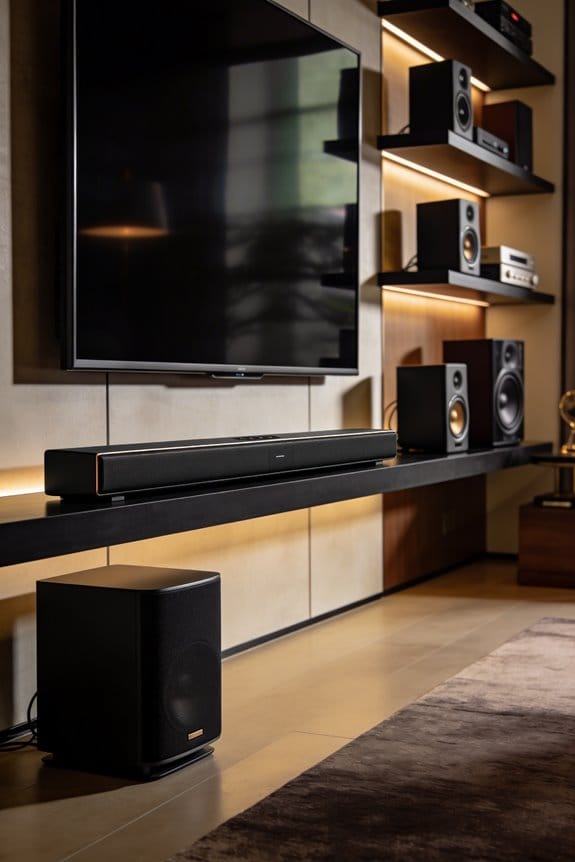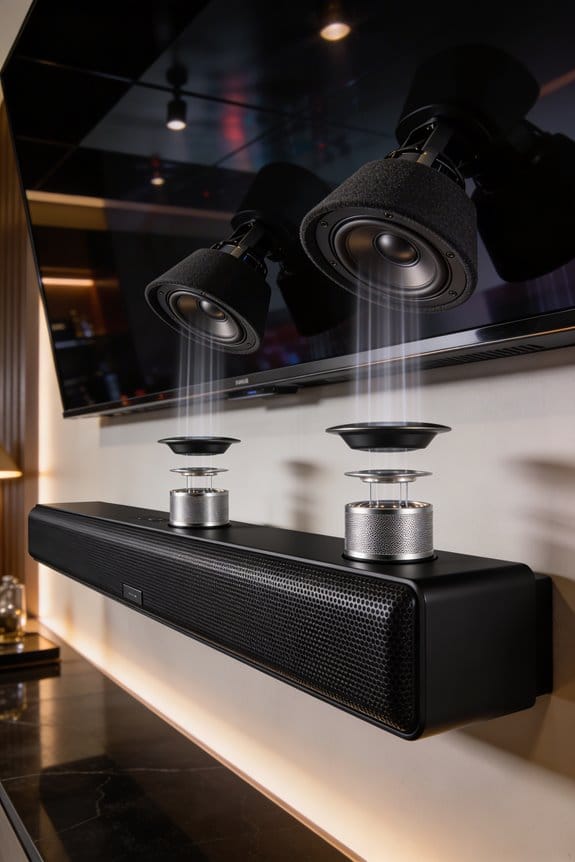
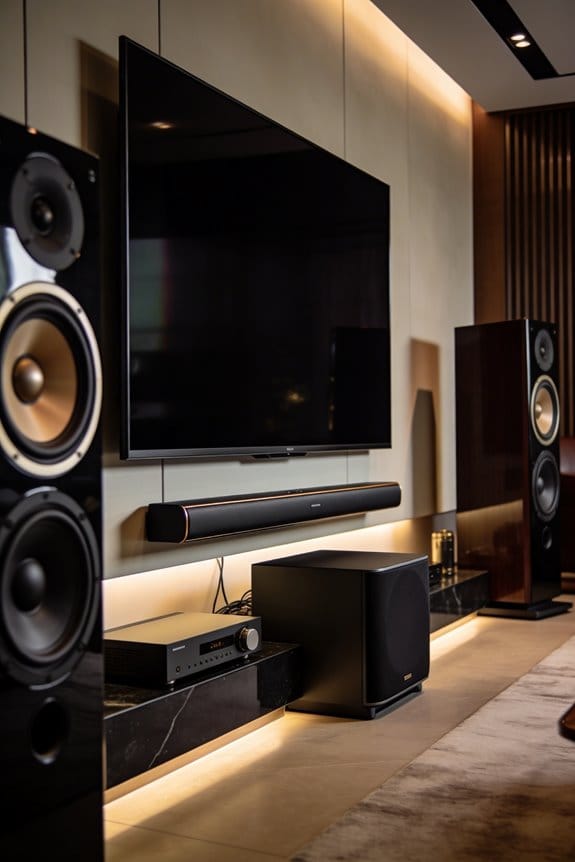

I’ll explain that Auro-3D uses a three-layer, channel-based speaker system with configurations up to 13.1 channels, positioning speakers at ear level, 30-50° height angles, and overhead for immersive audio. Unlike Dolby Atmos’s object-based approach, Auro-3D excels at music reproduction with sampling rates up to 192 kHz, offers backward compatibility through linear PCM encoding, and doesn’t require ceiling speakers when using virtual height technology. However, you’ll face a smaller content library and limited AV receiver support compared to Atmos, though brands like Denon, Marantz, and Yamaha offer compatible equipment. I’ll cover specific configurations and performance comparisons below.
Key Takeaways
- Auro-3D uses a three-layer, channel-based system requiring fewer speakers than Dolby Atmos while delivering immersive spatial audio.
- Limited content library and mainstream AV receiver support hinder Auro-3D’s market adoption compared to dominant Dolby Atmos.
- Auro-3D excels at reproducing music and live concerts with high-resolution audio up to 192 kHz sampling rates.
- Virtual height technology eliminates ceiling speaker requirements, offering simpler installation than object-based competitors like DTS:X.
- Select brands like Denon, Marantz, and Yamaha support Auro-3D, with availability in European cinemas and specialized venues.
What Is Auro-3D and Should You Upgrade From Dolby Atmos?
Auro-3D might not be as well-known as Dolby Atmos, but it offers a different way of experiencing sound that’s worth exploring before you make a decision. This system is built around channels, using three separate layers of speakers: one at ear level, another one positioned at angles between 30-50°, and a top layer placed directly overhead at 90°. You can set it up with configurations that go as high as 13.1 channels!
So, what are the benefits of Auro-3D? For starters, it’s backward compatible through linear PCM encoding, which means you don’t have to ditch your old system. It’s also fantastic for music—high-resolution audio can reach sampling rates up to 192 kHz, making your favorite tracks sound incredible. Plus, it features virtual height technology, which means you won’t need actual ceiling speakers to get that immersive experience.
But before you jump on board, consider its limitations. The library of available titles is smaller than what you’ll find with Atmos, and many mainstream AV receivers don’t support it just yet. Auro-3D primarily relies on a channel-based setup, which can limit its flexibility compared to object-based systems like Dolby Atmos. So, is this a deal-breaker?
Ultimately, weigh your options carefully. Both formats have their merits, but Auro-3D’s unique approach might just offer something special for your audio needs. What do you think—are you ready to explore a different sound experience?
Where Can You Actually Experience Auro-3D in 2026?
Finding places to experience Auro-3D can feel like searching for a needle in a haystack. But don’t lose hope; there are some great options out there if you know where to look.
Home Theater Equipment
If you want to bring Auro-3D home, check out compatible AV receivers from brands like Denon, Marantz, and Yamaha. For instance, the Denon AVR-X4800H features the Auro-3D Engine, allowing for pure playback and upmixing. You’ll want to set up your speakers in 9.1, 10.1, or 11.1 formats, with height channels placed at a 30-50° angle.
Commercial Installations
Looking for a cool place to catch Auro-3D in action? You might want to check out select cinemas in Europe, especially in Belgium and Germany, where installations are still running strong. Some concert venues even embrace AuroMax for unforgettable live performances and classical recordings. Who doesn’t love the feeling of being surrounded by sound during a great show?
Content Sources
You’ve got a few choices for Auro-3D content, too. Take a look for specific Blu-ray releases, and don’t forget about streaming services that support AURO-CODEC. You can also find specialized music albums offering immersive mixes at 96 kHz sampling rates. Pretty neat, right?
Recapping, if you’re eager to dive into the Auro-3D experience, consider home theater gear, check out cinema choices in Europe, or explore content options available to you. What’s stopping you from exploring this immersive audio world?
How Does Auro-3D Use Three Sound Layers to Feel More Immersive?
Have you ever watched a movie and felt like you were right inside the action? That’s what Auro-3D aims for with its unique three-layer sound experience. It’s not just about making things loud; it’s about crafting a sound experience that feels real.
The setup focuses on three distinct layers of sound.
- The first layer is right at ear level. This is where you’ll catch any dialogue and most of the sounds that pull you into the front of the action. It’s the familiar sound setup you’ve likely seen with standard audio systems like 5.1 or 7.1.
- The next layer, known as Height, has speakers positioned around 30 to 50 degrees above your head. These offer reflections and ambient noise that make scenes more lifelike.
- Finally, the Top layer places speakers directly overhead, up to 90 degrees. This is where you get those cool atmospheric sounds—think rain falling or helicopters buzzing overhead.
So, why does this matter? Well, it’s all about mimicking how we naturally hear sounds in real life. Sounds don’t just come from one direction; they surround us from various angles. You might wonder how this fits your space and budget. The good news is that Auro-3D supports setups of various sizes—like 9.1, 10.1, and 13.1 configurations—so you can tailor it to your room.
The best part is that whether you’re watching a movie, playing a game, or listening to music, this layered approach takes your audio experience to a whole new level. It might just change how you experience your favorite media.
How Does Auro-3D Compare to Dolby Atmos and DTS:X?
When you’re diving into the world of immersive audio, you might find yourself stuck trying to decide between Auro-3D, Dolby Atmos, and DTS:X. Each of these formats brings its own flavor to three-dimensional sound, and it can feel a bit overwhelming.
So, what’s great about Auro-3D? For starters, its channel-based setup means you don’t need as many speakers as you would with Dolby Atmos. That’s a plus if you’ve got limited space or aren’t keen on a complicated installation. Plus, Auro-3D has a unique feature that supports height layers without needing to install ceiling speakers. If you love music, Auro-Matic is really something to check out; it does a fantastic job of turning regular stereo music into an immersive experience—perfect for live concerts or orchestral recordings. And if you can’t fit physical height speakers, Auro-Scene technology offers virtual height channels as an alternative.
On the flip side, the biggest drawback with Auro-3D is the selection of content. You’ll notice there are way fewer movies available compared to what you’ll find with Dolby Atmos or DTS:X. Also, since Auro-3D relies mainly on channel-based processing rather than object-based audio, you might miss out on the more dynamic sound effects that other formats can provide.
Honestly, it all comes down to what you’re looking for in an immersive audio experience. Do you want a simpler setup without a ton of speakers, or are you after a rich library of content and the latest technology? Whichever route you choose, just make sure it fits your specific needs.
When Auro-3D Outperforms Atmos: Music and Live Concerts
Are you someone who can’t get enough of live music or orchestral performances? If you value an authentic acoustic experience, you might want to consider Auro-3D over Dolby Atmos. Many folks, including myself, have noticed that Auro-3D really shines when you’re listening to live concerts or high-fidelity studio recordings. Its channel-based setup captures the depth and height of sound in a way that feels true to the original performance, without that extra object-based tweak.
When it comes to orchestral pieces, the three-layer design of Auro-3D makes a real difference. You’ll hear instruments placed exactly where they would be on stage. That height layer, set at 30-50° angles, mimics what you’d experience in a concert hall. Plus, with a 96 kHz sampling rate, it covers the full dynamic range of acoustic instruments, letting you appreciate every nuance.
The Auro-Matic upmixer is also a neat feature worth mentioning. It really optimizes stereo music better than you’d find with other technologies. If you’ve got Grammy-winning albums like “Immersed” in your collection, it makes a noticeable difference in sound fidelity.
So, why does this matter? If you’re serious about enjoying music the way it was meant to be heard, trying out Auro-3D could lead you to a richer listening experience. The best part is that these features aren’t just technical jargon; they enhance the emotional experience of the music.
Frequently Asked Questions
Can I Add Auro-3d to My Existing AV Receiver Through Firmware Update?
Unfortunately, I can’t add Auro-3D to your receiver through firmware—it requires dedicated hardware processing. You’ll need a new receiver with built-in Auro 3D compatibility to enjoy Auro 3D advantages like natural height layers and superior music upmixing.
What Specific Blu-Ray Titles Are Currently Available in Native Auro-3d Format?
I’ll be honest—native Auro-3D home releases remain scarce, painfully scarce. Auro 3D movie titles include select concert films and niche releases, but mainstream adoption hasn’t materialized. Check specialized retailers or Auro Technologies’ website for current availability updates.
Does Auro-3d Require Proprietary Speakers or Work With Standard Home Theater Speakers?
Auro-3D works with your standard home theater speakers—no proprietary hardware needed. I’ll note that speaker configuration matters: you’ll position height channels at 30-50° angles, but Auro-3D compatibility extends to any quality speaker brand you own.
How Much Does Professional Auro-3d Studio Mastering Cost for Independent Music Producers?
I don’t have specific pricing data for Auro-3D mastering services. However, independent budgeting typically depends on whether you’re renting studio equipment hourly or investing in your own setup, which varies notably by location and facility.
Can Streaming Services Like Netflix or Disney+ Deliver Auro-3d Audio Content?
I’ll investigate the streaming compatibility reality: Most major platforms don’t natively support Auro-3D. Netflix and Disney+ prioritize Dolby Atmos for their audio experience. You’d need specialized hardware and specific content, making Auro-3D streaming exceptionally rare currently.