
I’ll explain how Dolby Atmos creates immersive audio by treating sound as individual objects with 3D coordinates, unlike traditional 5.1 or 7.1 systems that use fixed channels. The technology uses ceiling-mounted speakers or upward-firing modules that bounce sound waves off your ceiling, which tricks your brain into perceiving height and depth in the audio. This object-based approach supports up to 128 simultaneous audio elements, allowing sounds to move freely around you in three-dimensional space. The guide below covers equipment requirements, streaming options, and alternative setups.
Key Takeaways
- Dolby Atmos uses object-based audio to position sound anywhere in 3D space, unlike traditional channel-based systems.
- Upward-firing speakers bounce sound off ceilings, creating the illusion of overhead audio without ceiling installations.
- The brain interprets reflected sound waves as coming from above, mimicking natural acoustic environments for immersive experiences.
- Binaural algorithms in headphones simulate 3D spatial audio by replicating how ears perceive directional sound cues.
- Atmos enhances realism by placing audio objects with vertical coordinates, matching how we experience sound in real life.
What Is Dolby Atmos and How Does It Work?
Have you ever wondered what makes movie soundtracks so immersive? Dolby Atmos is the tech that takes audio to a whole new level. Unlike traditional sound systems that only work with fixed channels, like those 5.1 or 7.1 setups you’ve probably heard of, Dolby Atmos uses a different approach—object-based sound technology.
What does that mean for you? Well, instead of mixing sound into set channels, Dolby Atmos treats each audio element as an individual object. Picture it this way: each sound gets its own set of coordinates in three-dimensional space, allowing for precise placement. This system can handle up to 128 audio objects at once, which means you can enjoy incredible detail in sound when watching movies or playing games.
When you play content designed for Atmos, it’s like having a personal sound engineer in your living room. A special renderer figures out the best way to send sound through your speakers in real-time, based on how you’ve arranged your setup. This is where spatial coding comes into play. It groups sounds that are close together, making it easier to transmit and store audio without sacrificing quality.
Now, why does this matter? Dolby Atmos includes metadata that indicates where each audio object should be, how loud it is, and how it should move through the sound environment as the scene changes. It’s all about creating an experience that feels rich and alive.
So, if you’re looking to upgrade your home audio experience, Dolby Atmos is definitely worth considering. You’ll get to hear every little detail like never before, making movie nights, gaming sessions, or even just chilling with music feel way more engaging. Just think about how cool it’d be to have sound coming from above you or around you, making everything feel more realistic.
Why Dolby Atmos Sounds More Immersive Than 5.1 or 7.1 Surround
Have you ever noticed that some movies just draw you in more than others? It’s not just the story or the visuals; a lot of it comes down to how sound is used. If you’re still relying on traditional surround sound like 5.1 or 7.1, you might be missing out on a richer audio experience.
With setups like 5.1 or 7.1, audio engineers are mixing sounds into fixed channels. This means that if a helicopter’s flying in a scene, it’ll always come from the left surround speaker—no matter where it really should be coming from. This is where Dolby Atmos changes everything.
Instead of relying on a set number of channels, Dolby Atmos uses something called object-based audio. Think of each sound as its own independent entity with precise 3D coordinates. Your sound system then uses those coordinates to place the sound exactly where it should be based on your speaker setup.
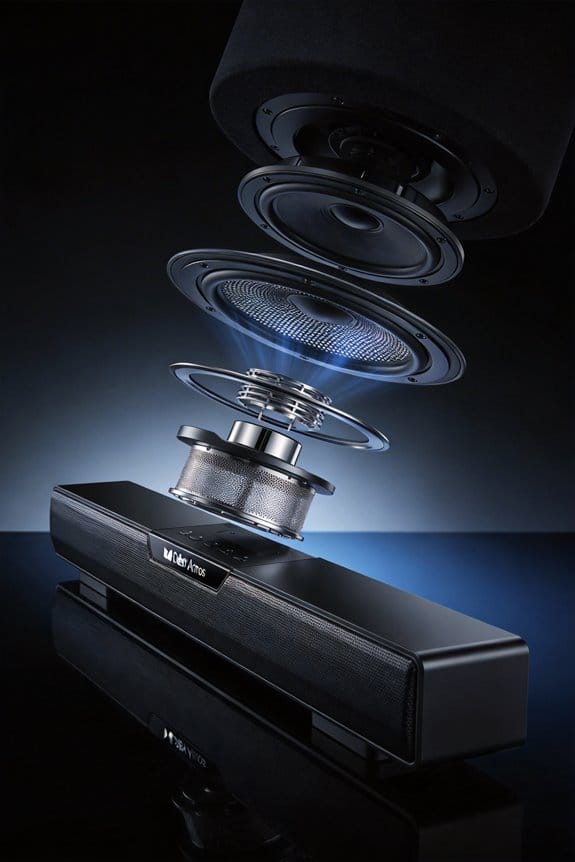
Here’s the trick: Dolby Atmos can handle up to 128 audio objects. That means sounds can be placed virtually anywhere in your living space, and not just in those five or seven typical spots. Plus, with height channels, it adds sound from above using ceiling-mounted or upward-firing speakers. This vertical dimension just isn’t an option with traditional surround systems.
So, why does this matter? Well, it leads to a level of accuracy that mimics real-world acoustics. You get to experience sound in a way that feels more natural and immersive.
The best part is that you don’t have to be a tech whiz to enjoy the benefits of Dolby Atmos. Just a little investment in the right setup can transform your movie nights into something spectacular.
Where You Can Experience Dolby Atmos Today
Ever wonder why some movie nights feel like you’re right in the action? If you haven’t experienced Dolby Atmos yet, you might be missing out on some serious sound magic. You can find Dolby Atmos in quite a few places, and it’s not as hard to access as you might think.
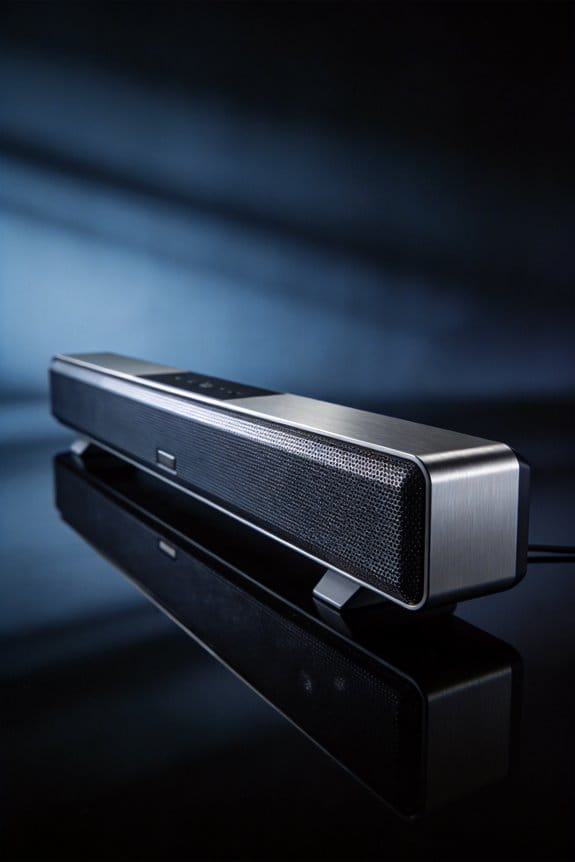
First off, if you love going to the movies, look for theaters that have ceiling-mounted speakers. These setups are designed to create a sound experience that really pulls you in. At home, consider upgrading to a compatible AV receiver or checking out soundbars like the Sonos Beam (Gen 2), which can simulate that overhead sound effect.
Streaming services have also jumped on the Dolby Atmos bandwagon. Platforms such as Disney Plus, Netflix, and Apple Music offer Atmos content—but remember, you’ll need a compatible device to hear the difference. And don’t forget about gaming. Playing games that support Dolby Atmos can give you an incredible three-dimensional feel of the action happening all around you.
Here’s the trick: if you don’t have access to speakers, you can still enjoy Dolby Atmos using headphones. There are cool binaural rendering algorithms that create that spatial audio effect—no physical speakers needed!
Sometimes, you can even experience immersive installations at museums or entertainment venues. These environments use Dolby Atmos to create interactive soundscapes, where sounds seem to come from all directions, adding another layer to your experience.
What Equipment Do You Need for Dolby Atmos at Home?
What does it take to get Dolby Atmos cranking in your living room? You need a few critical pieces: an AV receiver that handles Atmos decoding, a compatible media player, and a proper speaker setup that includes height channels.
Audio Receivers
First off, you’ll need an AV receiver that can process Atmos metadata and direct audio to your speakers. When shopping around, look for something marked “Dolby Atmos compatible.” A receiver with at least 7.1.2 channels is ideal; that last number shows how many height speakers you have, which is essential for experiencing that immersive sound.
Speaker Setup
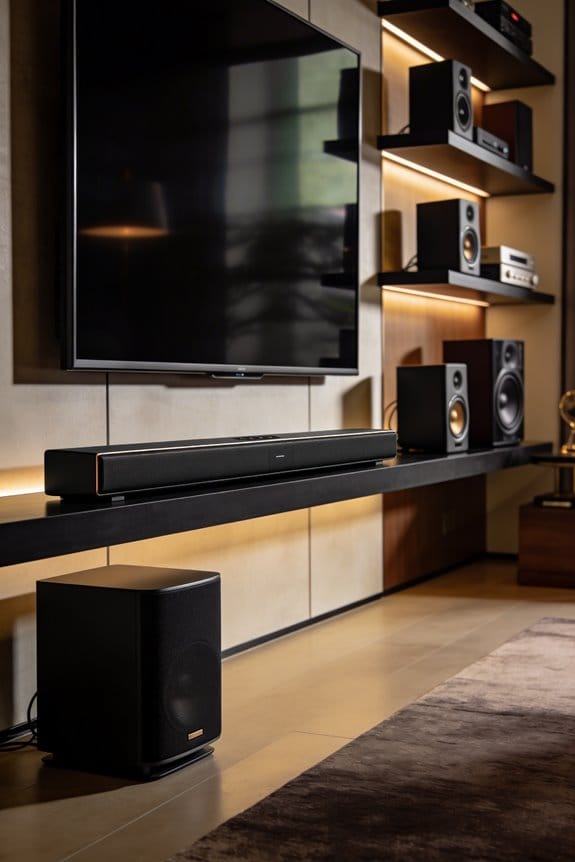
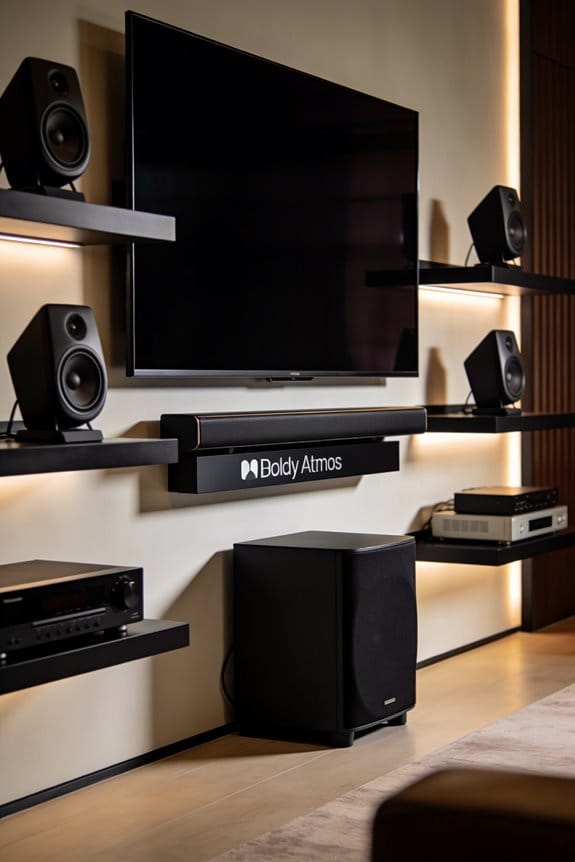
Now let’s talk speakers. You can choose to install ceiling-mounted speakers directly above where you sit, or go for upward-firing modules that bounce sound off the ceiling. A basic layout typically involves seven ear-level speakers, one subwoofer, and two height speakers. If you want something simpler, soundbars with virtual height processing can simulate that over-the-top audio without needing to mess with ceilings.
Don’t forget about your media player! It must be capable of outputting Atmos-encoded content via HDMI to your receiver for the best experience.
Will Dolby Atmos Work Without Ceiling Speakers?
Have you ever wondered if you can experience Dolby Atmos without ceiling speakers? While ceiling speakers can really elevate the whole experience, there are alternatives that can still give you those immersive height effects you’re craving.
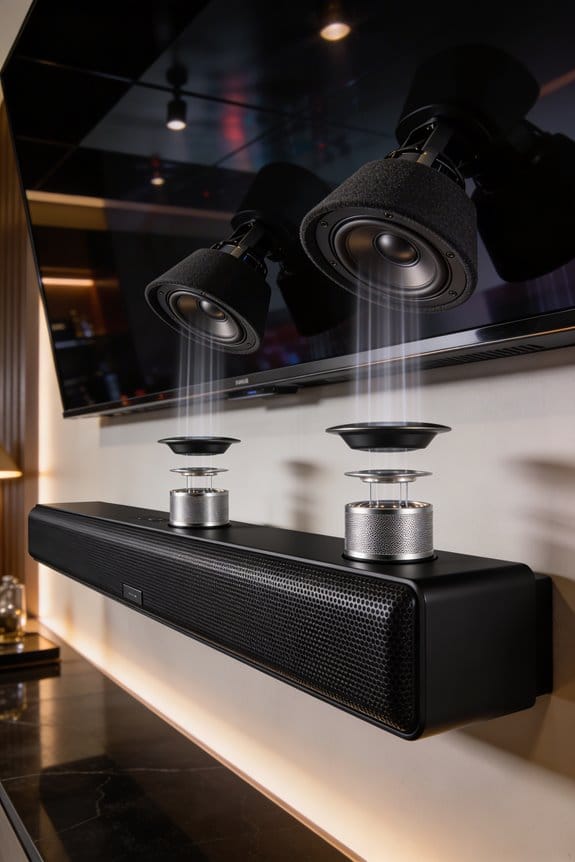
Consider soundbars with upward-firing technology. These clever devices bounce sound off your ceiling, tricking your ears into believing there are height channels. They position their drivers at specific angles to reflect audio down to where you sit. A great example is the Sonos Beam (Gen 2), which employs digital signal processing to heighten this effect.
Another option is Dolby Atmos-enabled tower or bookshelf speakers. These speakers mix traditional front-facing drivers with upward-firing ones on top, projecting sound toward the ceiling. This setup helps create that three-dimensional soundstage without needing to hassle with installed overhead speakers.
Frequently Asked Questions
How Many Audio Objects Can Dolby Atmos Handle Simultaneously?
I’ll tell you that Dolby Atmos’s audio object capabilities allow up to 128 discrete audio objects to move in virtual 3D space. Its sound object management uses spatial coding to cluster nearby objects, optimizing bit rate while maintaining immersive audio.
Can Dolby Atmos Work With Regular Headphones or Earbuds?
I’m thrilled to tell you that Dolby Atmos works phenomenally with regular headphones through binaural audio techniques. This headphone compatibility transforms your sound experience into immersive 360-degree audio without expensive equipment.
When Was Dolby Atmos First Introduced to Movie Theaters?
Dolby Atmos history began in 2012 when it first launched in movie theaters with Pixar’s “Brave.” I’ve watched this immersive sound technology transform cinema experiences, adding overhead audio that makes you feel like you’re inside the action.
Does Dolby Atmos Require Special Content or Encoding?
Like a recipe needs specific ingredients, yes, Dolby Atmos requires special encoding with metadata for object positioning. Content must be mixed with those 3D coordinates I mentioned earlier, so standard audio won’t deliver the immersive experience.
What Streaming Services Currently Support Dolby Atmos Audio?
I’ll tell you the major streaming platforms supporting Dolby Atmos include Netflix, Disney Plus, Apple TV Plus, Amazon Prime Video, and Apple Music. They’ve enhanced their audio quality to deliver immersive sound experiences on compatible devices.