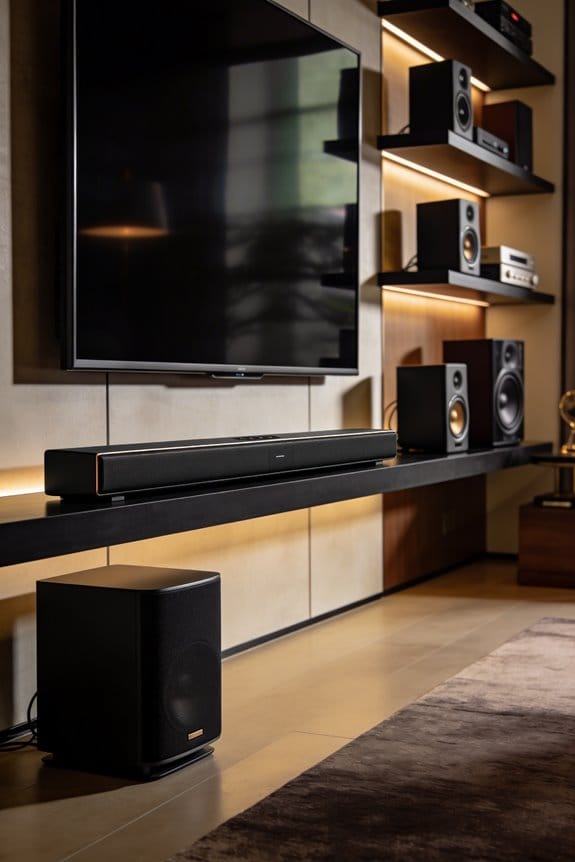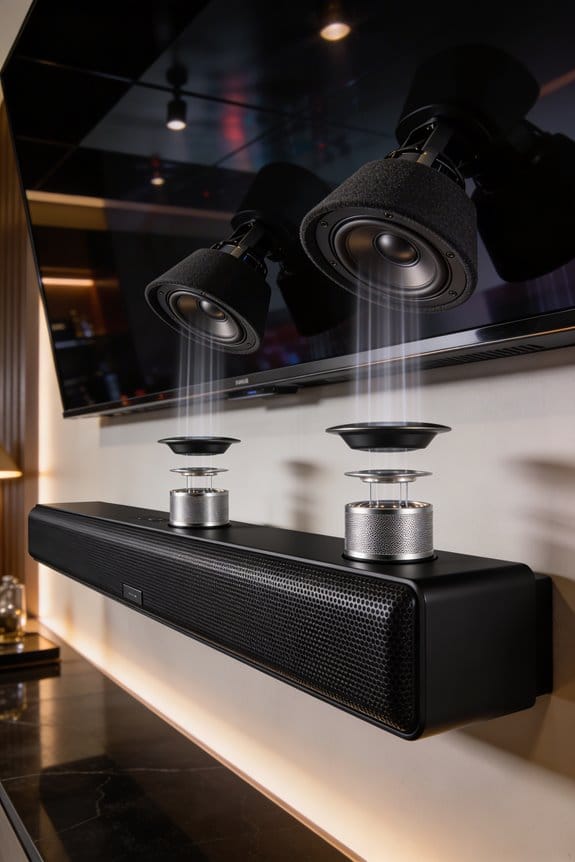
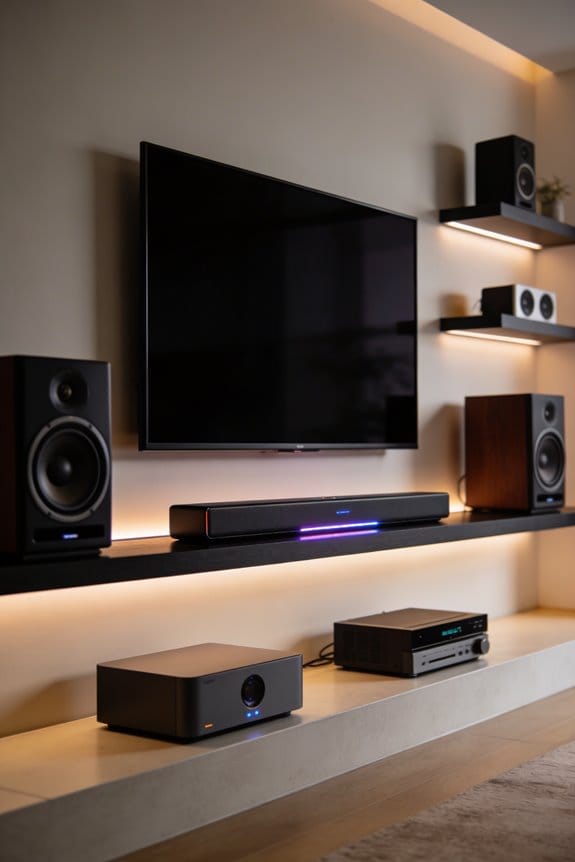

I don’t think computational audio will completely replace physical rear speakers within the next five years, though the technology is closing the gap with 70-80% accuracy compared to traditional setups. Systems like AMBEO and Dolby Atmos virtualization can simulate surround sound effectively for casual viewing, but they struggle with bass response, latency under 5 milliseconds, and directional precision that gaming and action movies demand. Physical rear speakers still deliver authentic spatial information from Dolby Atmos soundtracks, while computational alternatives depend heavily on room acoustics and listener position. The sections below break down specific scenarios where each approach excels.
Key Takeaways
- Computational audio currently achieves 70-80% accuracy versus physical rear speakers, indicating significant progress but not complete parity in performance.
- Physical rear speakers remain essential for gaming and cinema, delivering precise directional audio and full Dolby Atmos rear-channel information.
- Computational audio struggles with low-frequency reproduction and experiences higher latency compared to physical speakers’ sub-5-millisecond processing.
- Consumer trends favor compact, wireless solutions, though traditional setups still dominate where audio fidelity and reliability are prioritized.
- Firmware updates enable computational audio improvement over time, suggesting potential future competitiveness but not immediate obsolescence of physical speakers.
Can Computational Audio Replace Rear Speakers for Home Theater?
Can Computational Audio Replace Rear Speakers for Home Theater?
Have you ever tried to set up a home theater, only to be overwhelmed by the number of speakers you need? It’s annoying when you just want to enjoy your favorite movie or game without a full-on installation project. Let’s talk about how computational audio might be the answer to this dilemma.
These days, advancements in audio tech are pretty impressive. Computational audio can replicate that immersive surround sound experience we usually get from physical rear speakers, but it does it with software and smart algorithms. For instance, technologies like AMBEO spatial audio plugins and Neumann’s VIS app use sophisticated modeling to mimic sounds coming from behind you, all while you’re using just the front speakers.
Here’s the trick: these systems analyze your room’s acoustics and your position in real-time, adjusting the sound to give you a spatial experience. Pretty cool, right? But, let’s be real—current tech typically delivers only about 70-80% of the accuracy you’d get from actual rear speakers. If you’re looking for that perfect surround sound, consider a modular wireless system where you can still add rear speakers when needed.
So, why does this matter? If you’re into gaming or watching action-packed flicks, precision matters. You want to hear where that sniper is or when the dinosaur is roaring behind you. Unfortunately, in competitive gaming scenarios, having physical speakers still gives you an edge over virtual options when it comes to those crucial sound cues.
To sum it up, while computational audio can provide a convincing surround sound experience for most, it doesn’t fully replace rear speakers just yet. If you care about audio accuracy, especially in gaming, think about using both methods together. It might just give you the best of both worlds. Have you tried mixing and matching your audio setup?
Where Rear Speakers Still Outperform Spatial Audio: Gaming and Movies

Although computational audio has come a long way, let’s be honest—nothing beats the experience of physical rear speakers in certain situations. Whether you’re gaming or watching movies, there’s real value in having those speakers behind you when it comes to sound quality.
Gaming Applications
When you’re deep into a game, especially competitive ones, having physical rear speakers is a must for full immersion. Spatial audio from headphones or soundbars just can’t match the true 360-degree sound that you get with a dedicated 5.1 or 7.1 speaker setup. Think about it: in first-person shooters, real rear speakers help you pinpoint enemy footsteps and gunfire direction. This level of detail can really influence how you play.
Movie Experience Benefits
The same idea applies when you’re binge-watching your favorite movies. Having physical speakers behind your seating area makes a huge difference in creating authentic surround sound effects. Dolby Atmos soundtracks pack a lot of rear-channel info, but when you rely on computational audio, a lot of that detail gets lost. You might find that action scenes feel less impactful, and ambient sounds don’t draw you in quite like they should without those dedicated rear speakers.
In short, while tech has made impressive strides in audio, there’s still something special about the feel of a proper speaker setup. So, if you really want to amp up your gaming or movie nights, maybe it’s time to think strategically about where you place your speakers. After all, isn’t that what makes the experience truly immersive?
Why Spatial Audio Became Standard: And Where It Falls Short
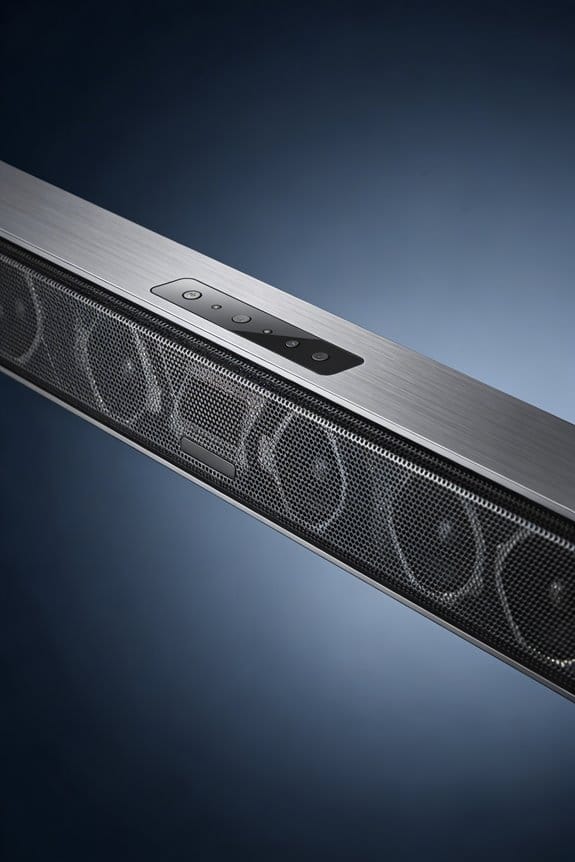
Spatial audio became standard across consumer devices in 2026 because major brands like Apple, Sony, and Samsung made it a part of their basic offerings. This meant you didn’t have to break the bank for a premium experience anymore. Now, virtual acoustics went from a fancy add-on to something you can enjoy daily, whether through headphones or soundbars. It’s pretty amazing how accessible it’s become.
Where Spatial Audio Falls Short
But here’s the catch: even though spatial audio is everywhere now, it’s not perfect. There are a few limitations you should keep in mind. For instance, if you’re serious about gaming, you might still want to invest in physical rear speakers. They provide the precise directional cues that give you the edge in competitive scenarios.
Bass is another area where spatial audio struggles. You know that deep, punchy feeling you get from a subwoofer? Virtual setups can’t replicate that physical impact. Also, when it comes to room dynamics, computational modeling can be tricky. It often has a hard time dealing with complex acoustic environments.
And what if you’re trying to enjoy your favorite flicks with friends? Spatial audio tends to optimize for just one listener at a time, which can really ruin the experience for the whole group. You might find these issues creeping in during intense gaming sessions or movie nights.
Bass Response and Latency: What Software Can’t Simulate Yet
Have you ever listened to music or watched an action movie on a system that just didn’t hit you in the feels? It’s frustrating when you cannon blast through your favorite scenes but don’t feel the bass in your chest. Here’s the deal: while computational audio is impressive, it still can’t replicate the physical sensation of low-frequency sounds that you actually experience.
Think about it for a second. Physical subwoofers move air with big driver cones and create those incredible bass dynamics that you can feel in your body—right down to your furniture vibrating. Sure, software can simulate directionality and spatial sounds pretty well, but can it really make you feel that heart-pounding rush during intense explosions or the deep thump of a bass line? Not a chance. Low frequencies below 80 Hz require real pressure waves to deliver that visceral experience, and software just can’t pull that off.
You’ve probably noticed another hiccup: latency. Those annoying delays in audio processing can mess with your immersion. If you’re gaming or watching a fast-paced flick, a delay of 10 to 40 milliseconds can really throw you off. While physical rear speakers get their signals virtually instantaneously, usually under 5 milliseconds, maintaining that tight synchronization ensures you’re seamlessly connected to the action on screen.
So, when you’re setting up your audio system, it’s essential to think about how much you value that tactile experience versus relying purely on digital sound. The difference is something you’ll notice, especially in high-energy moments. Honestly, if you’re after the most immersive experience, you might want to pair your computational setup with some physical components to really feel that bass.
In the end, sound isn’t just about what you hear; it’s about what you feel. Have you experienced any significant audio differences with physical vs. virtual audio systems?
Wireless Modular Systems vs. Traditional Rear Speaker Setups
When setting up your home theater, you might be debating between traditional wired speaker setups and the newer wireless modular systems. This choice can really affect not just the sound, but also the ease of installation and how you can arrange your space. So, what’s the best fit for you?
Traditional setups can be a hassle. They often require running speaker wires through walls, carpets, or along baseboards to get to those rear channels. If you enjoy a clean look and hate the idea of too many cables hanging around, that can feel like quite the chore. On the flip side, wireless modular systems take a lot of that grunt work away. You can pair a sleek soundbar with wireless satellite speakers that connect using dedicated RF protocols, which is definitely more reliable than standard Bluetooth.
But let’s be real here: with those wireless solutions, you get placement freedom and a cleaner aesthetic, yet they may sometimes introduce signal interference. If you’re after crystal-clear sound without drops, a wired connection is usually the way to go, especially for a dedicated home theater. You want the setup that delivers consistent power and audio—especially if you’re something of a home theater aficionado.
Here’s the trick: think about how often you change your setup. If you’re likely to relocate speakers or adapt your room frequently, going wireless might save you some headaches. But if you want everything to just sit nice and pretty without worrying about signal quality, sticking with traditional wired options could serve you better.
In the end, it really comes down to your priorities. Do you value flexibility and aesthetics more, or are you committed to the best possible audio experience? Take a moment to weigh those choices before you commit. What features make or break your home theater experience?
Do AI-Driven Soundbars Match Physical Surround Sound Quality?
When you’re thinking about whether an AI-driven soundbar can step in for your classic surround sound setup, it’s best to break down what each option really brings to the table. AI-driven soundbars aim to create a surround sound experience by using tech that simulates how sound behaves in a room. They work by bouncing audio off your walls and ceiling, giving you a somewhat immersive listening experience. On the other hand, traditional surround sound systems have actual speakers placed around you, delivering real, directional audio that isn’t influenced by how your room is set up.
So how do soundbars stack up? Well, they usually come with features like Dolby Atmos processing, algorithms that calibrate sound based on the room, and beam-forming tech that zeroes in on specific spots where you’re sitting. But there are trade-offs. For instance:
- Physical rear speakers provide clearer spatial separation.
- Each channel has its own amp, which gives a more authentic sound.
- Soundbars rely on digital processing, making it feel less genuine.
Keep in mind that things like room size, wall materials, and even where your furniture is can really impact how well a soundbar performs. If your room has a lot of hard surfaces, that could actually help a soundbar sound better. But in a space that’s filled with soft furniture, the sound may get muddled.
So, is the convenience of a soundbar worth it over a full surround sound system? Honestly, it depends on what you value in your audio experience. If you want something that’s easy to set up and doesn’t take up a ton of space, a soundbar could be perfect for you. But if you’re an audio purist looking for the most accurate sound, those physical speakers are hard to beat.
In short, think about what matters most to you. Would you rather deal with a few more cables and speakers for better sound, or is ease of use more your speed?
Headphone Spatial Audio vs. Rear Speakers: Side-by-Side Comparison
How does listening to music or movies through headphones with spatial audio compare to having rear speakers set up behind your couch? If you’re trying to decide which is best for your setup, let’s dig into what I’ve found.
Spatial Accuracy:
When it comes to spatial accuracy, RIME version 1.5 paired with NDH 20/30 headphones does a great job of delivering directional sounds that mimic where real speakers would be positioned. On the other hand, rear speakers provide a more authentic sense of where sounds are coming from. They don’t rely on head-tracking, so you’re getting a true sound experience. Apple Vision Pro users can even utilize the Neumann VIS app, which lets them create 3D audio fields with just hand gestures—pretty cool, right?
Headphone Comfort:
If you’ve ever spent more than 90 minutes wearing headphones, you probably know that they can start to feel a bit uncomfortable. This pressure fatigue can take you out of the moment. In contrast, physical speakers won’t give you that problem at all. You can sit back and enjoy your tunes or movies without feeling like you’re wearing a weight on your head.
Key Differences:
Here’s the thing: headphones can offer a personalized sound experience, but they often isolate you. That might not be ideal if you’re looking to share an experience with friends or family. In contrast, speakers naturally fill a room, making it easy for multiple listeners to vibe together.
Cost Analysis: Rear Speakers vs. Computational Audio Solutions in 2026
When it comes to upgrading your audio setup in 2026, costs can stack up quickly. You might be wondering if it’s worth investing in physical rear speakers or if you should consider a modern computational audio solution. Let’s break down what each option really entails.
If you’re leaning towards physical rear speakers, be prepared for some hefty expenses. A pair of speaker units can run anywhere from $200 to $800. On top of that, if they’re not powered, you’ll need an amplifier. Don’t forget about mounting hardware, which usually costs between $50 and $150, plus the possibility of hiring a professional for installation—adding another $300 to $500 to your bill. In total, you could be looking at spending between $550 to nearly $2,000 just to get started with basic rear channels.
Now, let’s talk about computational audio solutions. These come in several forms, like soundbars with spatial processing features that can cost you between $400 and $1,200. If headphones are more your style, ones equipped with RIME or similar tech fall into the $300 to $600 range. You can even look at software plugins like AMBEO, which typically fall between $200 and $400. What’s great about these setups is they’re usually more cost-effective because they require fewer physical components and simpler installation.
So, why does this matter? Over time, computational audio solutions can actually serve you better. They get firmware updates that can enhance functionality, while physical speakers will remain static. Plus, going the software route means you won’t have to deal with wires, you can rearrange your room as needed, and you can scale your system with updates instead of continually buying new hardware.
Should You Buy Rear Speakers Now or Wait for Better Software?
Why spend a bunch of money on rear speakers now when tomorrow’s software updates could make them a thing of the past? Before you dive into that purchase, it’s good to take a step back and think about your timeline, budget, and how you plan to use the speakers. If you’re craving surround sound for gaming or watching movies with Dolby Atmos right away, rear speakers can definitely give you that experience without delay. But let’s be real—software is evolving fast. AI-driven audio tech is getting better and better with updates that don’t cost you a dime.
Here’s a thought: why not invest in a solid soundbar that’s expandable? That way, you can wait a little while to see what innovations come in spatial audio. In six months, you might discover new tech that rivals traditional systems. There are already headphone setups like RIME that can convincingly simulate a multi-speaker environment. So, why not test out some virtual surround sound demos at your local electronics store?
Think about your space, the types of content you usually enjoy, and how open you are to new tech. Are rear speakers a must-have right now, or could they just end up being an impulse buy? Keeping an eye on how the audio landscape shifts in the coming months could help you make a smarter choice.
Frequently Asked Questions
Can Computational Audio Work in Rooms With Difficult Acoustics or Odd Shapes?
I’ve seen computational audio excel in challenging spaces—awkward corners, vaulted ceilings, asymmetrical layouts. It uses room calibration to map sound reflections, then compensates digitally. The technology adapts to your space’s quirks, delivering immersive audio despite acoustic imperfections.
How Does Spatial Audio Affect Hearing Health Compared to Traditional Speakers?
I’ve found spatial audio generally supports hearing preservation better than traditional speakers when properly calibrated. It reduces audio distortion and listening fatigue by delivering clearer directional cues at lower volumes, though you’ll still need breaks during extended use.
Will Movie Studios Change How They Mix Soundtracks for Computational Audio?
Ironically, studios won’t abandon traditional mixing techniques—they’ll expand them. I expect they’ll master for both legacy audio standards and computational playback, ensuring Atmos mixes translate whether you’re using physical speakers or AI-driven personalization algorithms.
Can Multiple People Experience Proper Spatial Audio in the Same Room Simultaneously?
Yes, each person can wear their own spatial audio headphones or earbuds simultaneously. I’ve seen multi-device compatibility let everyone get personalized head-tracking and immersion. You’ll each experience optimized sound tailored to your position and preferences independently.
What Happens to Existing Home Theater Equipment Investment When Upgrading?
I know you’re worried about wasted money, but your existing gear won’t become useless overnight. Equipment depreciation happens gradually, and I’d explore upgrade alternatives like adding wireless modules or AI processors to extend your current system’s lifespan.