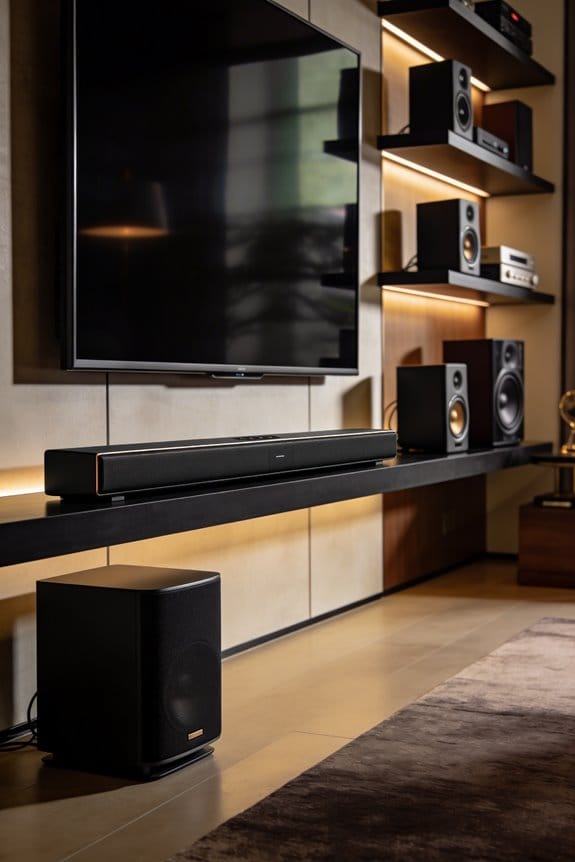
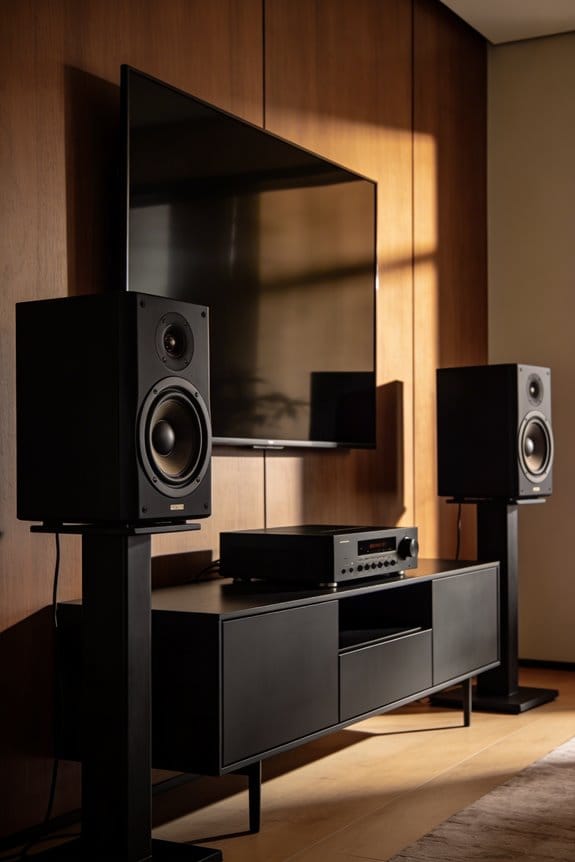

I’ll explain why stereo remains the dominant audio format despite surround sound availability. Approximately 95% of music is mastered in stereo, making it the standard for streaming services, radio, and podcasts across all devices. Stereo systems cost $200-$2,000 compared to surround setups exceeding $5,000, and they deliver superior spatial realism in rooms under 200 square feet. Two quality bookshelf speakers with 1-inch tweeters and 6.5-inch woofers outperform budget surround systems, providing clearer directional audio without complex calibration. The sections below break down the technical advantages and practical considerations.
Key Takeaways
- Stereo format dominates 95% of music content, ensuring compatibility across streaming platforms and devices from premium speakers to basic earbuds.
- High-quality stereo speakers ($200-$2,000) often outperform budget surround systems by prioritizing superior drivers and cabinet construction over speaker quantity.
- Stereo systems excel in small spaces under 200 square feet, delivering better spatial realism with simpler setup than complex surround configurations.
- Two-channel mastering remains industry standard because recording catalogs avoid costly surround sound conversion, maintaining stereo’s widespread accessibility.
- Proper stereo speaker placement creates three-dimensional soundstages through panning and timing differences, mimicking natural human hearing without artificial processing.
What Makes Stereo Sound Three-Dimensional With Two Speakers?
Ever wonder why listening to music on a stereo system feels like you’re surrounded by sound? It’s all about how your brain picks up on tiny differences in what you hear in each ear. Sound engineers know this and use it to create a sound stage that feels three-dimensional.
When they mix tracks, they adjust things like volume levels and timing between the left and right channels. This isn’t just for show; it actually helps your brain figure out where a sound is coming from. For example, if a guitar is panned slightly to the left, your brain picks up on that and you can almost pinpoint its location. This technique mimics how we naturally hear sounds around us at ear level.
Recording techniques also play a big role. Engineers often place microphones in different spots to capture the slight variations in sound. By doing this, they allow your ears to catch the same spatial clues that help you understand directionality in everyday life. Ever notice how a sound can feel like it’s coming from right in front of you or off to the side? That’s your brain at work.
So, how can you make the most of your stereo setup? Proper speaker placement is key. You want the speakers positioned so that they’re at ear level and spaced apart to give that wide soundstage effect. Truth is, the right setup can really transform your listening experience.
To recap, the magic of stereo sound lies in how your brain processes audio from both speakers, creating a rich sound experience. Have you tried adjusting your speaker placement to see how it changes the sound? If you haven’t, it’s definitely worth experimenting with!
Where Stereo Outperforms Surround Sound Systems

While it’s great to know how stereo systems can create an immersive sound experience, let’s be real: there are a bunch of situations where stereo beats out surround sound.
Music Production and Playback
If you’re a music lover, you really can’t ignore how much better stereo clarity sounds when you listen to tracks that are mastered in two-channel format—a whopping 95% of the stuff out there! Streaming services like Spotify and Apple Music are mostly delivering content in stereo, so sticking with a two-speaker setup makes a lot of sense for your listening enjoyment. Why complicate things?
Small Room Acoustics
Are you trying to set up a sound system in a small room? If your space is under 200 square feet, you’ll find that stereo speakers placed 6-8 feet apart create better spatial realism. Surround systems need a larger area—300 square feet or more—to function well. Plus, in those cozy spaces, the walls can mess with the audio, making surround sound just not worth the hassle.
Headphone Listening
Let’s talk about headphones. If you use stereo headphones, you’ll get directional audio that sounds spot on, thanks to pan technology. On the flip side, surround virtualization tends to throw in some artificial processing that can muddy the quality. So, when you’re tuning in for that killer podcast or music, stick with stereo for a clearer sound.
In a nutshell, for music, small spaces, and headphone setups, stereo systems have a lot going for them. So, what’s your go-to for listening?
Why Music Streaming and Headphones Rely on Stereo

When you open up Spotify or Apple Music, do you ever wonder why nearly all the tracks sound so similar? Well, that’s because about 95% of the music out there is mastered in stereo format. This two-channel audio setup has become the go-to for anyone looking to stream music, making it the standard for digital distribution.
This all comes down to how music is produced. The audio production process has settled on two-channel mastering because it just works. You can play your favorite songs on pretty much any device—whether it’s in your car, on your laptop, or through a Bluetooth speaker—and they’ll sound great. Plus, headphones are designed around this stereo layout. They depend on those left and right channels to create a space where music feels immersive and alive.
You might be interested to know that streaming services squash those heavy audio files using AAC or MP3 codecs. Why? To keep things streaming-friendly without sacrificing sound quality. This is especially helpful if you’re stuck in an area with slow internet. When engineers master music in stereo, it ensures that no matter where you listen—be it earbuds, a portable speaker, or your home stereo system—the sound stays consistent. You don’t have to worry about compatibility issues ruining your listening experience.
Stereo vs Surround Sound: Setup Costs and Space Requirements
Thinking about whether to go with a stereo or surround sound setup for your home? It’s an important choice that comes down to what you want out of your audio experience and how much you’re willing to spend.
When it comes to costs, stereo systems generally come more affordable. You’re looking at two speakers and a basic receiver, which typically range from $200 to $2,000. On the other hand, surround sound systems require five or more speakers, a subwoofer, and a fancy AV receiver, which can set you back anywhere from $500 to over $5,000. That’s a pretty big difference!
Budget Considerations
- With stereo, you can skip those pesky professional installation fees, which can really add up.
- Two quality stereo speakers can easily outperform some budget surround sound setups, so consider if you really need all those extra speakers.
- Surround sound systems often need specific layouts and speaker placements that can be tricky, depending on your room.
Setup Simplicity
Worried about complicated installation? Here’s the nice part: stereo systems are pretty straightforward. You just find a couple of spots for two speakers at ear level, connect them to your receiver, and you’re usually good to go in about half an hour.
Surround sound? Not so fast. It demands careful speaker positioning, and you might have to route wires through walls—yikes! And then there’s calibration, which can take several hours. So, why does this matter? A simpler setup means less stress and more time to enjoy your music or movies.
In short, weigh your options carefully. Think about your budget and your willingness to tackle a complicated setup. Which sounds more appealing to you right now?
When Two Quality Speakers Beat Budget Surround Systems
Ever wonder why some home audio setups sound miles better than others? It usually boils down to speaker quality. You might think that more speakers mean better sound, but that’s not always the case. In fact, splurging on just two great stereo speakers can be way better than trying to stretch your budget across a bunch of average surround system speakers.
When you’re looking to spend around $500, consider putting that money into two high-quality bookshelf speakers instead of spreading it across a whole 5.1 surround setup. The catch with the latter is that you end up with speakers that cut corners on important aspects like drivers and cabinet construction. This often leads to disappointing sound deficiencies, like weak bass and muddled mids. Not exactly what you’d want when you’re trying to enjoy your favorite tunes or movies.
Try this: look for stereo speakers that feature a 1-inch silk dome tweeter and a 6.5-inch woven kevlar woofer. These specs can really elevate your sound experience. Plus, a solid MDF cabinet with internal bracing is a key player in keeping your audio clear and well-balanced. This setup will give you detailed imaging and a natural tonal balance that cheap surround systems just can’t match.
So, what does all this mean? It means you’ll get richer sound with two quality speakers that actually deliver the goods. Frankly, you deserve that! Considering these points can make your audio experience not only more enjoyable but also more authentic.
Why Most Content Is Still Mastered in Stereo
Ever wondered why most music and audio you hear is still in stereo instead of surround sound? Despite surround sound being around for quite a while, most audio content you come across is mastered in good old stereo format.
Here’s the deal: music producers stick with two-channel mastering because it keeps things simple and accessible. Whether you’re jamming on high-end speakers or just using basic earbuds, stereo audio has your back. Plus, the recording industry isn’t rushing to revamp existing catalogs for surround sound. It takes a ton of time and money to do that, and they generally prefer what’s tried and true.
When you stream tunes on platforms like Spotify or Apple Music, what you’re really hearing is stereo audio that’s optimized for compatibility across devices. Radio, podcasts, and even most TV shows still rely on stereo mastering tactics to grab as many listeners as possible. The best part is, your stereo system can handle just about any content without any hiccups, while surround formats usually need special encoding that might not be convenient for everyone.
Stereo Speaker Placement That Maximizes Sound Quality
Getting your stereo speakers positioned just right can really transform how your music or movies sound. It’s not about having the most expensive gear; it’s more about smart placement that can bring you that immersive audio experience.
Ideal Speaker Positioning
To kick things off, try placing your speakers about 6-8 feet apart. This distance helps create a solid stereo field, making sure you’re getting good sound from both the left and right channels. The goal is to form an equidistant triangle between the speakers and your main listening spot. This setup really helps balance the audio, making everything sound more natural.
When it comes to height, position those speakers at ear level while you’re sitting—usually around 36-42 inches off the ground. If they’re just sitting on the floor, you might miss out on some quality sound. Consider using stands or shelves to get them up where they belong.
Now, let’s talk angles. It helps to tilt each speaker inward by about 22-30 degrees so they’re pointing right at you. Doing this creates a sweet spot for listening, where the sound feels just right, pulling you into the music or movie.
Don’t forget to give some space between your speakers and the walls—about 12-18 inches should do the trick. This distance can help reduce bass buildup and unwanted reflections that could muddy the sound.
Is Stereo or Surround Sound Right for Your Space?
When you’re thinking about whether to go for stereo or surround sound in your home, it’s key to consider a few things like your room size, how much you’re willing to spend, and how you plan to use your audio system.
Room Size Considerations
If your space is under 200 square feet, stereo might be the way to go. You can easily set up two speakers, just 6-8 feet apart at ear level, and you’ll be good to go. But if you’re leaning towards surround sound, keep in mind it might not work well in smaller spaces. For a proper 5.1 system, you really need specific angles and distances—something not always achievable in a cozy room.
Budget Analysis
Here’s the scoop on pricing: for decent stereo speakers, expect to fork out between $200 and $500. On the flip side, entry-level surround systems can cost you anywhere from $800 to $2000. Don’t forget to factor in the total costs—this means including receivers, speaker wires, and any potential installation fees if you’re not into DIY.
Usage Patterns
Think about how you really use sound in your life. If you’re frequently streaming music, catching up on podcasts, or enjoying casual TV shows, stereo is probably your best bet. Surround sound makes sense mostly if you’re a movie buff and have enough space to place those speakers correctly.
Frequently Asked Questions
Can Stereo Systems Be Upgraded to Surround Sound Later?
Think of it as building blocks—I can confirm that stereo upgrades are absolutely possible. Your existing speakers become front channels during surround conversion, so you’ll simply add rear speakers, a subwoofer, and an AVR receiver.
Do Vinyl Records Sound Better on Stereo Than Digital Formats?
I can’t definitively say vinyl sounds “better”—it’s subjective. Vinyl warmth appeals to some listeners, while digital precision offers accuracy. Both formats excel on stereo systems, but your preference depends on whether you value analog character or clean reproduction.
How Does Stereo Perform for Watching Action Movies at Home?
I’ll be honest—the stereo experience works adequately for action movies, but you’ll miss directional action sound effects. Explosions and gunfire lack the immersive surround placement, though quality stereo speakers still deliver enjoyable, balanced audio presentation.
What Amplifier Wattage Is Needed for Quality Stereo Speakers?
I’ll cut through wattage myths for you: most quality stereo speakers thrive on 50-100 watts per channel. Different amplifier types matter more than raw power—your room size and speaker sensitivity determine actual needs, not marketing hype.
Does Room Size Affect Stereo Sound Quality More Than Surround?
Actually, room size affects surround sound more considerably than stereo. I’ve found surround systems demand precise speaker placement across larger spaces, while stereo’s simpler sound distribution adapts better to various room acoustics and dimensions with minimal adjustment.