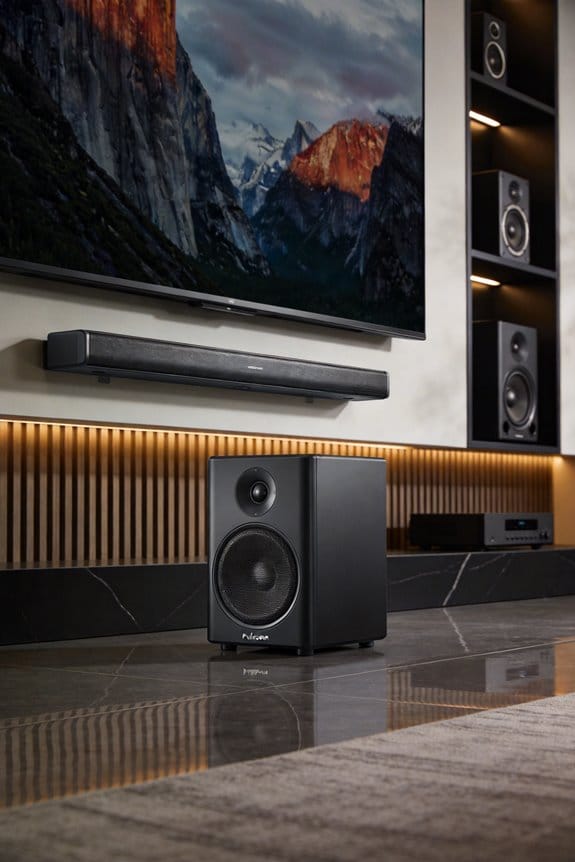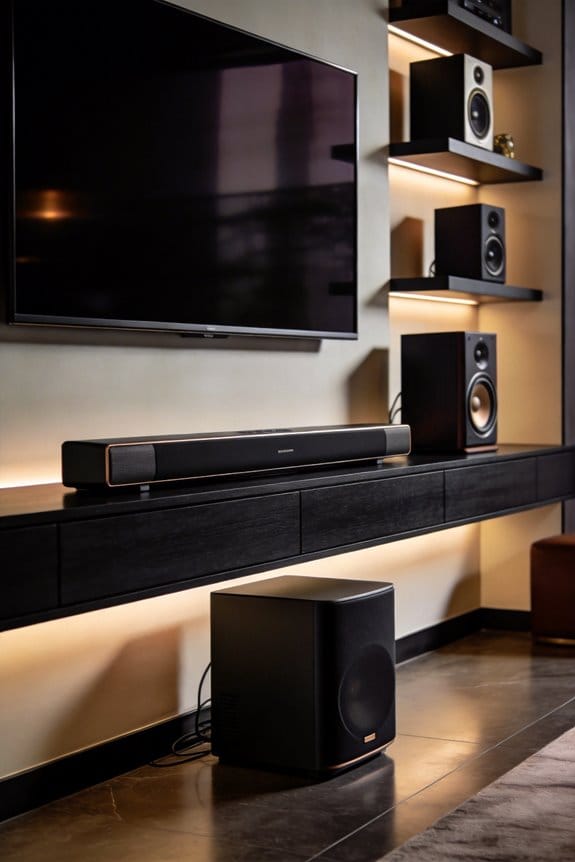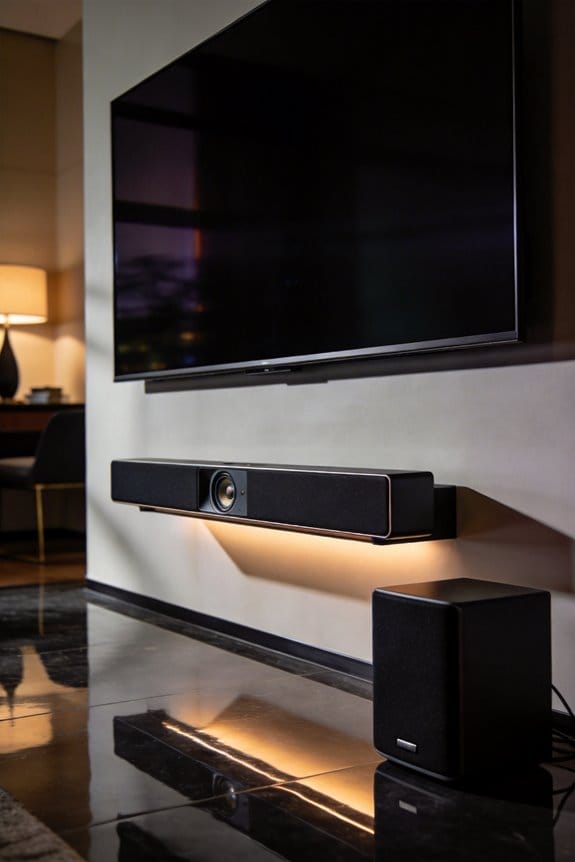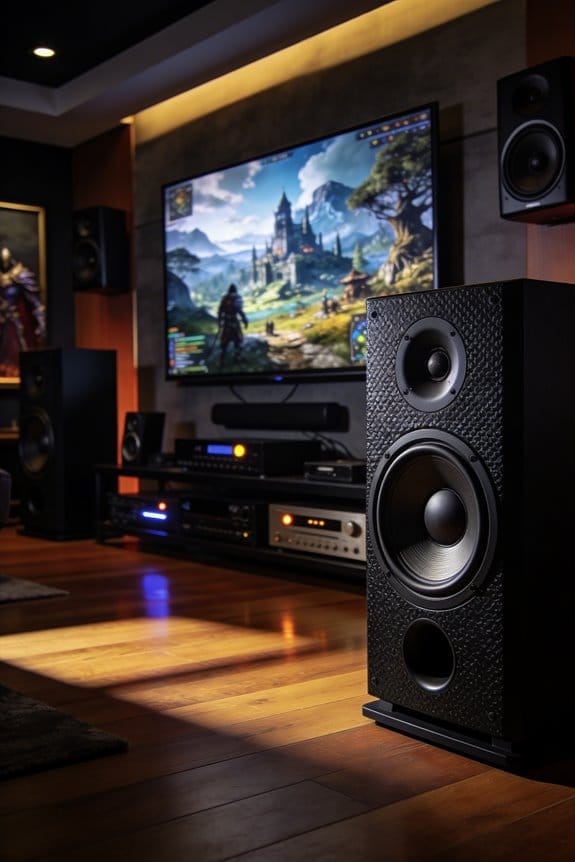
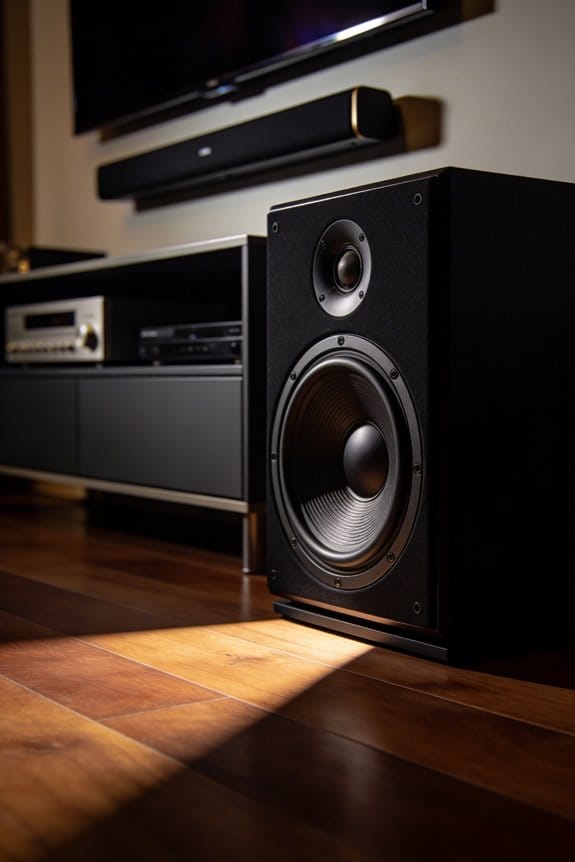

Down-firing subwoofers direct bass waves into your floor, which reflects sound back into the room and creates stronger physical vibrations, especially on hard surfaces like concrete or hardwood. Front-firing subwoofers project bass directly into the air, delivering faster response times and greater pitch accuracy without relying on floor reflections. Carpeted floors absorb energy from down-firing designs and reduce their impact, while front-firing models maintain consistent performance across different flooring types. The sections below explain how room dimensions, material choices, and listening priorities determine which configuration suits your space.
Key Takeaways
- Down-firing subwoofers direct sound into the floor, creating vibrations and rumbles that resonate throughout the room for immersive experiences.
- Hardwood and tile floors reflect bass waves from down-firing subs, amplifying sound, while carpet absorbs vibrations and reduces bass response.
- Front-firing subwoofers project sound directly into the air, making them less affected by floor type and delivering faster, more accurate bass.
- Down-firing designs introduce slight delays as sound bounces off floors, potentially muddling musical notes but enhancing tactile sensations for movies.
- Carpet benefits down-firing subs for deeper boom, while hardwood floors favor front-firing designs for clearer, more direct sound delivery.
Down-Firing vs Front-Firing Subwoofers: What the Terms Actually Mean
Choosing between a down-firing and a front-firing subwoofer can feel a bit overwhelming, right? Understanding what these terms mean is the first step you need to take for making the right choice.
Down-Firing Subwoofer Design
A down-firing subwoofer has its driver facing down towards your floor. This design sends sound waves into the ground, which then bounce back up into your room. The result? You get some serious vibrations and a deep rumble that can really enhance your audio experience. It’s common to find this setup in entry-level and compact models, often teamed up with bass reflex ports on the bottom or sides. This arrangement can often give you a solid bass experience, especially if you’ve got hardwood or tile floors.
Front-Firing Subwoofer Design
On the other hand, a front-firing subwoofer has its driver positioned right on the front of the cabinet. This means sound waves are projected straight into your living space. You’ll notice faster response times and better pitch accuracy, which can be a real plus for blending with your other speakers. If you’re into stereo configurations, this setup makes it easier to achieve a balanced sound that complements your bookshelf speakers.
So, where does that leave you? Truth is, both designs have their pros and cons. Think about your space and what you’re looking to achieve with your audio setup. Do you want that floor-shaking bass or a more direct sound? Each option can serve you well depending on your needs.
When it comes down to it, your choice should reflect your personal preferences and the way you use your audio system. Which subwoofer design resonates with you more?
How Your Floor and Room Size Affect Bass Performance
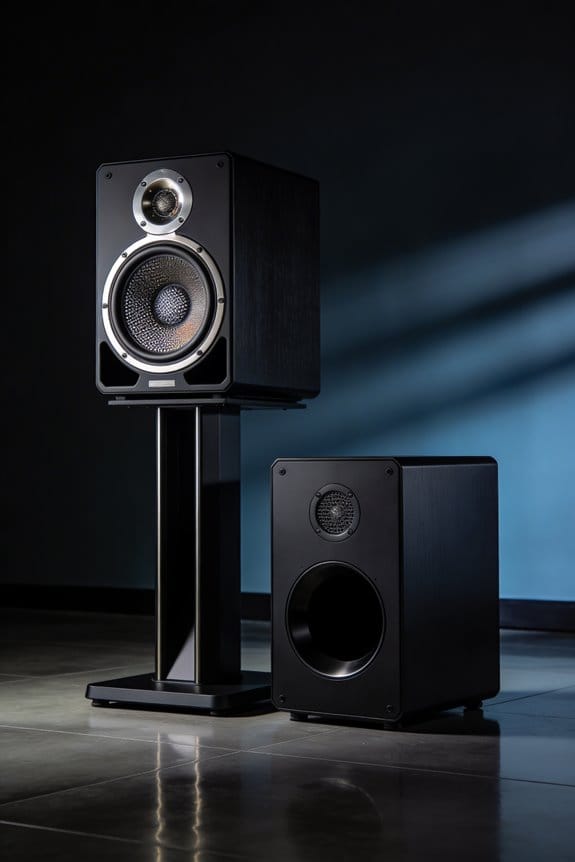
Your floor material and room size can seriously affect how those bass frequencies hit your ears. Think about it: hardwood, concrete, and tile floors typically bounce sound waves around, enhancing the bass from down-firing subwoofers. On the flip side, if you’ve got carpet and padding, they absorb sound, which cuts down on that bass boost and shifts the vibe of your listening space.
Room dimensions also play a big part. They create all sorts of standing waves, which means certain bass notes can either cancel out or really boom in specific spots. If you’re dealing with a smaller room—like those cozy spaces in the 10×12 to 15×18 range—you’re likely to notice more bass buildup in the corners. In larger areas, especially rooms over 20×25 feet, you need to be choosy about where to place your subwoofer to get that even bass.
Try this: measure both your floor type and room size before you set up your subwoofer. Those physical details matter a lot in determining which direction your speaker should fire for the best sound. Honestly, small tweaks can result in a big difference in your listening experience. So, are you ready to dive into the setup?
Why Carpet, Concrete, and Placement Change Subwoofer Sound
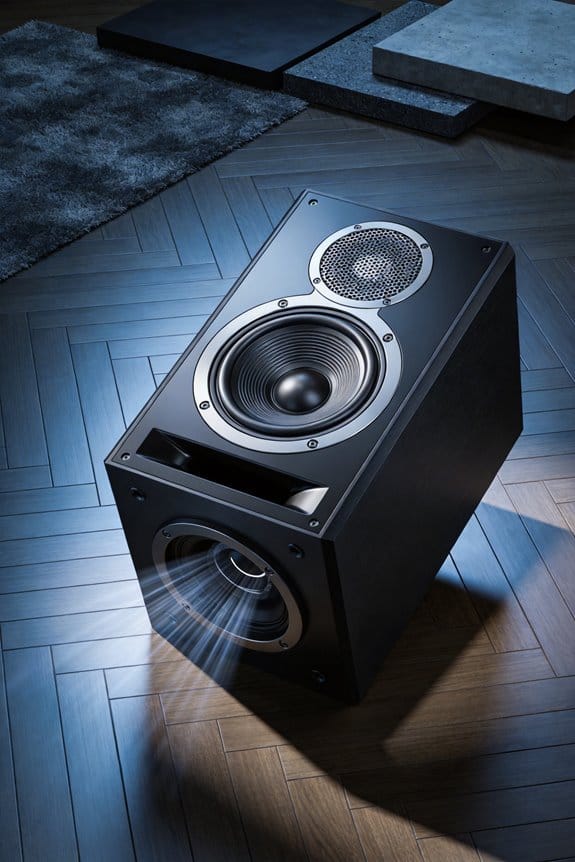
Have you ever wondered why your subwoofer sounds different depending on the floor you have? It all boils down to how various surfaces interact with sound. Carpet absorbs sound energy, while a concrete floor reflects it. This fundamental contrast can significantly influence your subwoofer’s performance, and it’s worth considering when setting up your space.
When you place a down-firing subwoofer on carpet, the fibers dampen any floor vibrations and absorb some of those heavy bass frequencies. This means that less reflected energy makes its way to your ears. The result? A slightly muted bass response. On the other hand, concrete floors offer max reflection. If you’ve got a down-firing model sitting on concrete, get ready for an amplified rumble that directly connects with the hard surface below.
So, how do you make the most of your flooring type? When you’re on carpet, try moving your subwoofer closer to the walls. This can help counteract the absorption and enhance sound delivery. But if you’re on a concrete floor, pull it away from the walls to avoid overwhelming your ears with excess boom.
Front-firing subs tend to be a little more forgiving across different floor types. They project their sound directly into the room air, so they’re less reliant on the reflections bouncing off the floor for their performance. That said, consider the space around them to ensure your sound is balanced.
Frankly, understanding how your flooring affects subwoofer sound can make a real difference in your listening experience. Are you ready to experiment and fine-tune your setup? Just a few adjustments can lead to a much richer audio experience.
Sound Quality Compared: Speed, Depth, and Distortion Differences
When deciding between down-firing and front-firing subwoofers, it’s easy to get lost in the specs. But understanding how each type deals with bass frequencies can make all the difference in your listening experience.
Bass Speed and Response
Front-firing models generally provide a quicker bass response. That’s because their drivers shoot sound directly into the air, bypassing any interaction with the floor. On the flip side, down-firing designs often introduce a slight delay. This happens when sound bounces off the ground, creating a fuller rumble that’s great for movies, but it might muddy things up a bit when you’re trying to enjoy fast-paced music.
Depth Accuracy and Distortion
Depth and accuracy are key when it comes to subwoofers, and front-firing subs tend to shine here. They produce lower distortion levels during intense scenes since the driver isn’t compressing vibrations into the ground. Down-firing units do a fantastic job at immersing you in sound through floor coupling. You might feel the vibrations in your feet and furniture, which can be thrilling as long as your flooring doesn’t create pesky frequency peaks.
Which Design Works Best for Home Theater and Movies
Got a home theater setup? You might be debating whether to go with down-firing or front-firing subwoofers. It’s a common dilemma, and the right choice can really change how you experience movies. So, let’s break it down.
If you’re looking for that punchy feel during action scenes, down-firing subwoofers are your best bet. With this design, the sound waves bounce off the floor, delivering a serious rumble that makes you feel like you’re right in the middle of the explosions and crashes. You’ll really notice this tactile sensation during those heart-pounding moments—think of the roar of thunder or the blast of a cannon, especially in the 20-40 Hz range where all the cinematic effects pop.
On the other hand, if dialogue clarity and precise sound tracking are your priorities, front-firing models might suit you better. They offer quicker response times which proves helpful when you’re watching intricate, dialogue-heavy scenes. You’ll pick up those subtle audio layers much clearer, though you might miss out on that floor-shaking effect you’d get with down-firing options.
Now, which one works best really depends on your space. Here are a few pointers to consider:
- Carpeted rooms with more space often benefit from down-firing subwoofers. The softer surface helps enhance that low-end boom.
- Hardwood floors and smaller areas generally favor front-firing designs, giving a more direct sound that you can appreciate without the added vibrations.
Honestly, a little thought about your room’s dimensions and flooring type will go a long way. So, what’ll it be for your home theater setup? Whichever you choose, knowing the strengths of each can help you create the ultimate movie experience.
Which Design Works Best for Stereo Music Systems
What do you want from your music experience? If you’re like me, you crave that crisp, rich sound that pulls you in. While movies may thrive on deep bass rumbling, music needs a more refined touch from your subwoofer.
Front-firing designs shine when it comes to stereo integration. They push bass directly into your living space, which is how your bookshelf or tower speakers function. With this setup, you get a smooth blend across different sound frequencies—nothing feels detached or overly boomy. For music lovers, the real magic lies in speed and precision. Front-firing drivers do a fantastic job at this through direct air coupling, skipping messy floor reflections that can ruin the experience.
Now, consider down-firing subwoofers for a moment. They might seem like a good choice, but they can muddle musical notes due to floor bounce. This effect creates timing delays and unwanted resonances that can smear those delicate transient details. Whether you’re into rock, jazz, or classical, floor reflections can blur the nuances you’ve come to love in high-quality recordings.
For those building a killer stereo music system, I’d strongly recommend front-firing subwoofers. They do wonders for instrument separation, keep vocals clear, and maintain the rhythm accuracy that any serious audiophile demands.
Ready to elevate your sound? Think about the type of subwoofer that best fits your setup. It can truly make a difference in how you experience music. What’s your go-to setup for that perfect sound?
When Down-Firing Subs Deliver Stronger Physical Impact
Are you thinking about setting up a home theater system? If so, you’ll want to pay attention to the type of subwoofer you choose. Down-firing subwoofers offer a vibe that’s totally different from front-firing models. Unlike their front-firing counterparts, these speakers send sound waves downward into the floor, which causes the bass to resonate throughout the entire room.
Here’s the trick: When the driver pushes bass frequencies into the floor, you get that wonderful physical sensation during intense movie scenes or while playing video games. It feels like the action is happening around you, not just on the screen. This type of coupling with the floor works especially well in wood-framed homes or apartments that have raised floors.
So, why does this matter? That connection between the subwoofer and the room can really enhance how you experience sound. The bass waves bounce off the floor and walls, energizing the whole space. You’ll find that those heart-pounding moments—like explosions or crashes—feel much more intense.
The best part is the way this setup can amplify your enjoyment of action-packed films or intense gaming sessions. Instead of just hearing the bass, you’ll feel it in your chest and even in your feet!
To wrap it up, if you want a deeper connection to your entertainment, consider giving a down-firing subwoofer a shot. Are you ready to feel the difference in your home theater experience?
When Front-Firing Subs Deliver Tighter, Faster Bass
When you’re trying to set up a music system or just binge-watching those action-packed movies, have you ever noticed how some subwoofers just seem to hit harder than others? Front-firing subwoofers are pretty much the unsung heroes in these scenarios. Unlike down-firing designs that bounce sound off the floor, front-firing models project sound waves directly into the air. This straightforward approach leads to tighter bass that’s clearer, especially when it comes to instruments like kick drums and bass guitars.
The kicker? Front-firing subs nail pitch accuracy. Why does that matter? It’s all about how sound waves interact with surfaces in your room. If the sound is bouncing off carpets or hard floors, those frequencies can get all muddled up above 60 Hz, making the music feel less sharp. You’ll actually notice how much quicker and clearer those fast rhythms hit during complicated musical passages, rock songs, or even thrilling sci-fi soundtracks where precision really counts.
And let’s not overlook another vital aspect: these designs avoid cone sag over time. With gravity pulling down on down-firing drivers, you might want to worry about losing that consistent performance. The way front-firing subs are designed means they stay reliable throughout their lifespan.
Hybrid Subwoofers That Solve the Down vs Front Trade-Off
Ever get stuck choosing between down-firing and front-firing subwoofers? It can feel like a never-ending battle. But here’s the kicker: hybrid designs actually bring together the best of both worlds in one cabinet. With these setups, you’ll find a front-firing active driver paired with a down-firing passive radiator, which means you can enjoy the fast response you want for music without losing that deep, rumbling bass for movies.
REL has jumped on this hybrid bandwagon in their mid-to-high-end models, calling their approach Multi Modal Bass. So what does that really mean? It energizes your space from multiple directions at once! The front driver gives you great pitch accuracy and quick response, while that downward radiator enhances low-frequency vibes through the floor.
This setup lets you keep your subwoofer compact without sacrificing that powerful bass output. It’s perfect for those times when you want crystal-clear stereo sound but still crave the booming impact that makes home theater magic happen.
Frequently Asked Questions
Can I Convert a Down-Firing Subwoofer to Front-Firing Orientation?
I don’t recommend converting subwoofer orientation yourself. Manufacturers engineer cabinets, ports, and bracing specifically for their firing direction. You’ll compromise sound pressure distribution and performance. Instead, I’d suggest purchasing a front-firing model designed for your needs.
Do Down-Firing Subs Damage Hardwood or Tile Floors Over Time?
I’ve found no documented cases of floor surface impact from down-firing subs causing actual damage. The vibrations effects are minimal—hardwood and tile easily withstand the pressure. I’d recommend using isolation feet for extra protection and better sound.
What Minimum Floor Clearance Do Down-Firing Subwoofers Need?
I recommend at least 1–2 inches minimum clearance between a down-firing subwoofer and your floor for proper floor interaction. This spacing allows adequate airflow and bass reinforcement while preventing rattling or muffled output that compromises performance.
Are Front-Firing Subs Louder Than Down-Firing at Same Wattage?
Not necessarily—I’ve found both can achieve similar loudness at the same wattage. The perceived difference depends more on your subwoofer placement and how each design’s bass response interacts with your room’s acoustics and floor coupling characteristics.
Do Isolation Pads Help or Hurt Down-Firing Subwoofer Performance?
I’ve found isolation pads typically hurt down-firing performance by blocking intended floor coupling. They reduce subwoofer vibrations that create that visceral rumble, though sound isolation helps if you’re bothering neighbors below your listening space.