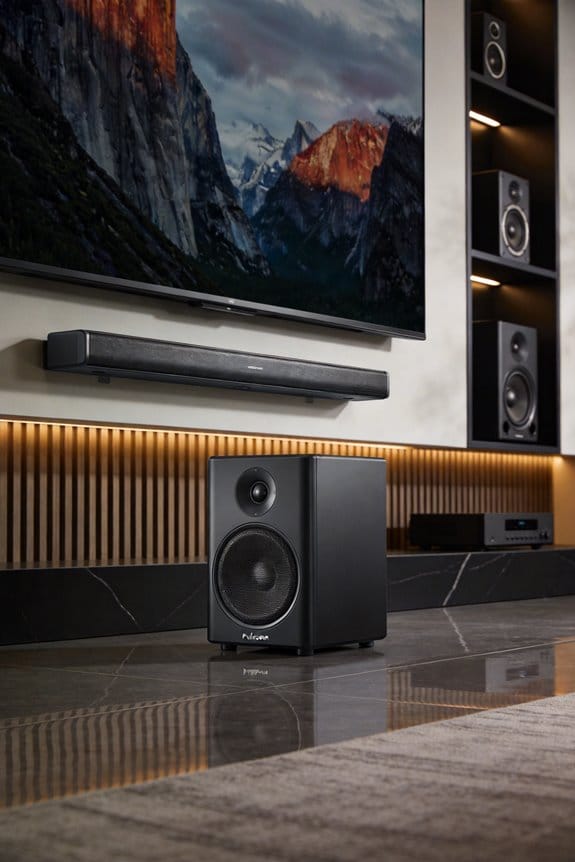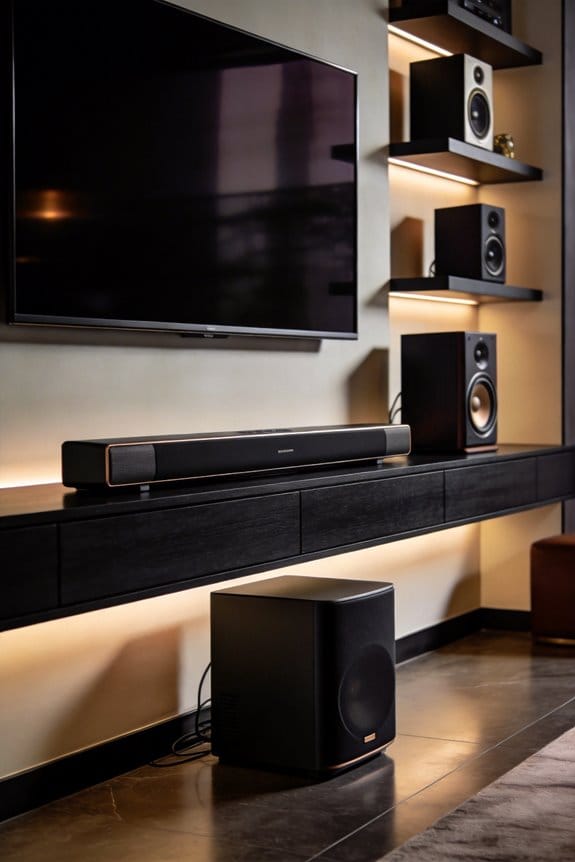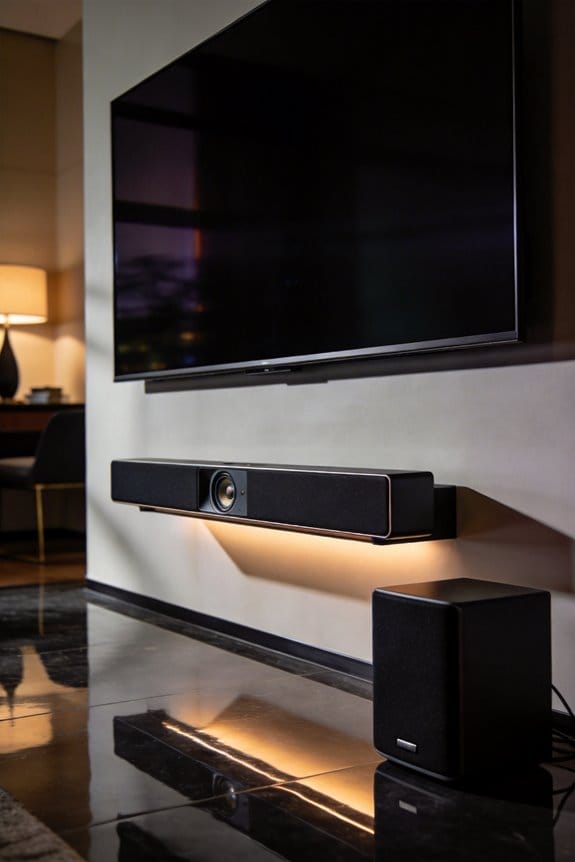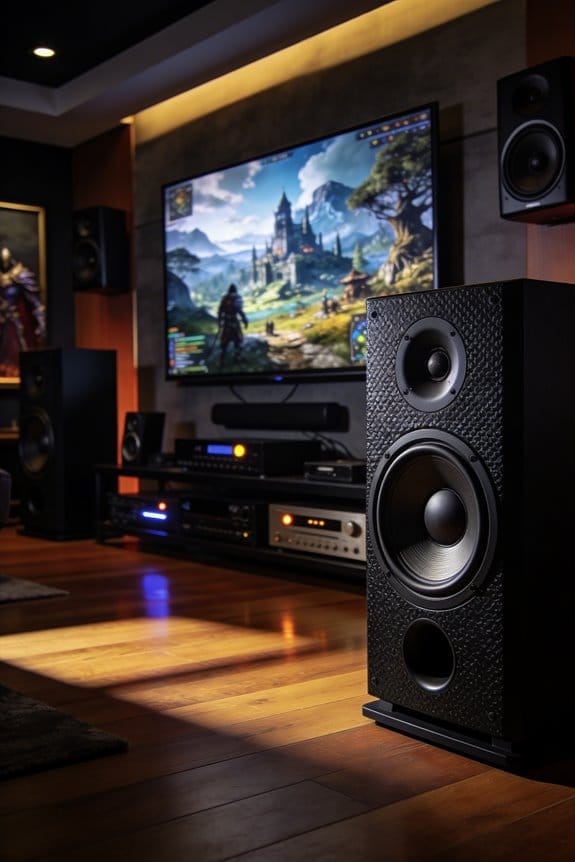
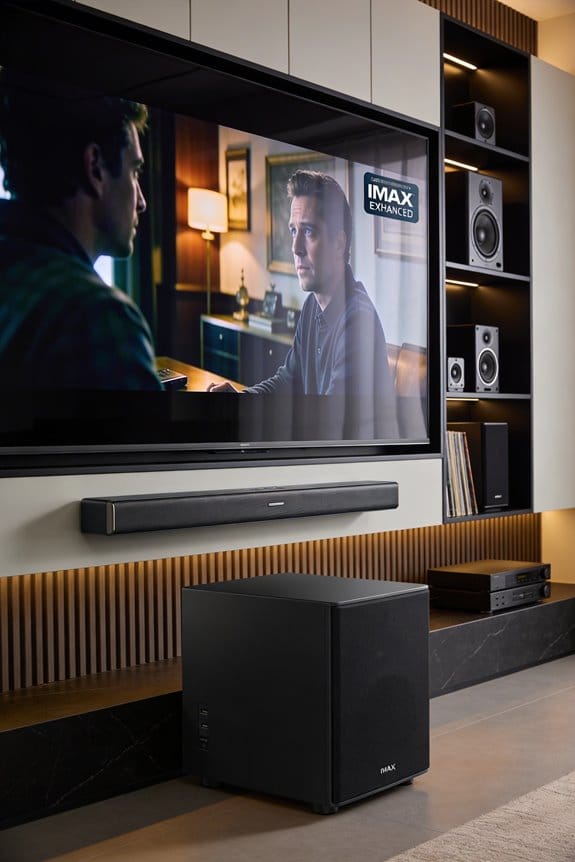

IMAX Enhanced certification requires home theater equipment to meet specific audio performance standards, including DTS:X object-based processing, a dynamic range spanning 20dB to 110dB, and frequency response from 20Hz to 20kHz. I’ll explain that your system needs a minimum 5.1.4 speaker configuration, with subwoofers capable of 115dB peaks at 20Hz measured from three meters. The certification process tests smooth frequency response, controlled distortion, and spatial remapping capabilities that preserve the filmmaker’s original sound design, and I’ve outlined the complete technical requirements below.
Key Takeaways
- IMAX Enhanced uses DTS:X object-based audio technology to place each sound element precisely anywhere in three-dimensional space.
- Certification requires speakers delivering 85dB average with 110dB peaks, and subwoofers reaching 115dB at 20Hz from three meters.
- Systems must maintain smooth frequency response from 20Hz to 20kHz with controlled distortion across the entire spectrum.
- The technology preserves filmmakers’ original dynamic range from 20dB whispers to 110dB explosions without compression.
- A spatial remapping engine adapts IMAX cinema soundtracks to home speaker configurations while retaining directional audio cues.
What Makes IMAX Enhanced Different From Standard Home Theater Audio?
Have you ever watched a movie at home and thought, “Why doesn’t this sound as good as the theater?” It’s common to feel let down when your home audio system doesn’t quite hit the mark. That’s where IMAX Enhanced steps in, and it’s pretty cool how it differs from standard home theater audio.
Unlike regular setups that focus on just making sounds accurate, IMAX Enhanced aims for the full experience. Think about it: in a theater, you hear everything from the softest whispers at 20dB to booming explosions at 110dB without any drop in quality. Wouldn’t it be nice to replicate that at home? This certification uses a unique version of DTS:X that keeps audio true to how filmmakers intended it to sound.
Standard audio systems often compress this dynamic range to fit average listening spaces. This can make the experience feel flat or one-dimensional. IMAX Enhanced, on the other hand, demands more from your equipment. Here’s the trick: it ensures your system can handle that whole audio spectrum. This creates a much richer experience with spatial calibration, solid bass management down to 20Hz, and immersive sound that really pulls you into the scene.
So, what does this mean for your movie nights? With IMAX Enhanced, you’re setting the stage for something close to what you would experience at the cinema. Just imagine being enveloped in sound that surrounds you from every angle!
IMAX Enhanced Equipment Requirements: What You Need to Get Started
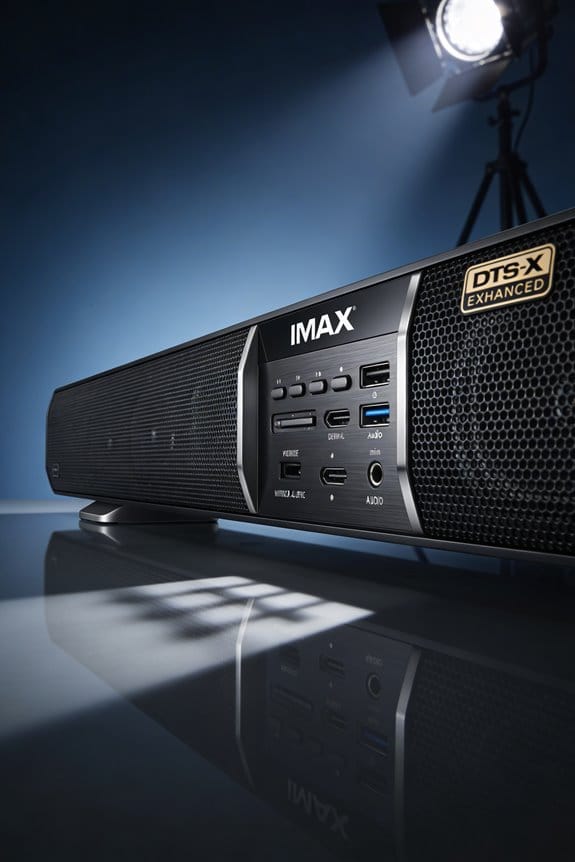
Are you ready to dive into the world of IMAX Enhanced? If you’re looking to elevate your home entertainment experience, you’ll need to make sure you have the right gear. Let’s break it down to avoid any confusion when you’re shopping.
First off, you’ll need a 4K HDR display. This can be either a certified TV or a projector, but it’s crucial to ensure it meets the certification standards for optimal content quality. Next on your list should be an AV receiver or soundbar that’s compatible with DTS:X processing. Some solid choices include the Denon AVR-X8500H and the Marantz AV8805.
When it comes to speakers, don’t skimp! The minimum configuration you’re looking for here is a solid 5.1.4 setup, but if you want the best experience, aim for 7.2.4. And let’s not forget about the subwoofer. It needs to hit 20Hz and produce peaks of 115dB at three meters. That means you’ll really feel those blockbuster soundtracks!
Certified speaker options are essential too. Brands like Polk Legend series and Definitive Technology Dymension models are trusted for good reason. You’ll also want to remember that all your equipment should pass a range of performance tests for things like frequency response, distortion control, and dynamic range. So, why is all this important? The right setup really makes all the difference in how immersive your viewing experience can be.
To summarize, ensure you have a suitable display, a capable AV receiver or soundbar, a robust speaker setup, and a powerful subwoofer. This thoughtful approach will set you up for an incredible IMAX Enhanced experience. Are you excited about where this might take your home cinema?
How IMAX Enhanced Uses DTS:X for Object-Based 3D Audio
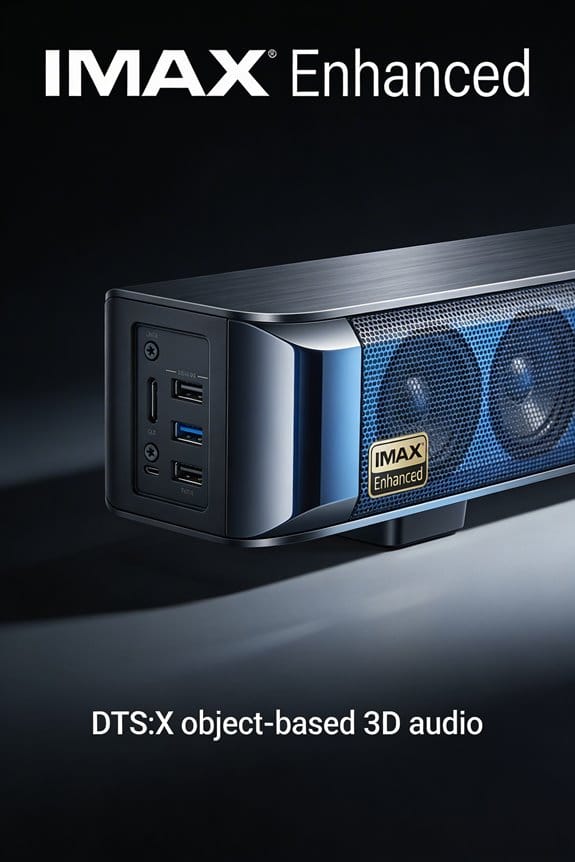
Ever been frustrated with your home audio setup? You know, that moment when you can see the action on screen but the sound just doesn’t match up? Well, IMAX Enhanced is here to tackle that issue head-on, thanks to a special version of DTS:X that’s all about creating that immersive audio experience.
Instead of sticking to the old way of mixing sounds in channels, this system takes a refreshing approach. It treats each sound as its own little object in the room. Each of these sound objects comes with specific data that tells it where to be, how to move, and how loud it should be at any given moment.
What’s really cool is the real-time object tracking. This means that sounds can be placed anywhere in your room, even above you. Traditional surround sound formats often struggle with this level of precision, but IMAX Enhanced nails it. You get to feel the sound wrapping around you just like it would in a theater.
Here’s the trick: no matter how your speakers are set up—be it 5.1.4 or 7.2.4—the DTS:X system is smart enough to map the sounds to fit your speaker configuration perfectly.
The best part? There’s a spatial remapping engine that looks at where your speakers are positioned in the room. This means audio objects are rendered just right, without losing those important directional cues from the filmmakers. So, why does this matter? Because it keeps the action feeling immersive, pulling you deeper into the film.
To sum it up, IMAX Enhanced transforms the way you experience sound at home, making it feel more like the real deal. If you’re serious about your movie nights, this could be a solid upgrade to consider. Have you thought about how sound impacts your viewing experience?
IMAX Enhanced Certification: What Devices Must Pass to Qualify
How does a device earn the IMAX Enhanced badge? That’s a question many of you might have if you’re looking for the best home theater experience. The certification process is quite intense, involving hundreds of performance tests that check audio and visual capabilities against strict standards set by IMAX, DTS, and the pros from Hollywood.
When manufacturers put their devices through testing, here’s what they need to check off:
- A 4K HDR display that meets certain brightness and color accuracy standards.
- Audio specs that deliver an immersive experience using DTS:X technology.
- Smooth frequency response from 20Hz to 20kHz.
- Controlled distortion during playback for a clearer sound.
- Dynamic range that matches what you’d hear in a cinema setting.
- An average of 85dB SPL with peaks hitting 110dB at 3 meters—pretty loud, right?
- Subwoofers that can reach down to 20Hz and can hit 115dB at peak.
You can find certified devices like TVs, projectors, AV receivers, soundbars, and speakers from brands like Sony, Denon, Marantz, LG, Polk, and Definitive Technology. It’s mostly about making sure your gear meets top-notch standards for sound and picture quality.
So why does this matter? If you’re aiming to create a cinematic experience at home, having IMAX Enhanced gear ensures you’re getting the best possible sound and visual fidelity.
The takeaway here? Look out for that IMAX Enhanced badge when choosing your home entertainment equipment. It really does make a difference in quality. What do you think—would you invest in gear that carries this certification?
Speaker Layout Requirements: Why IMAX Enhanced Needs 5.1.4 Minimum
Setting up an IMAX Enhanced system can feel overwhelming, especially when trying to figure out the speaker layout. If you want to dive into the immersive experience, you’ll need at least a 5.1.4 speaker configuration. That means five ear-level speakers, one dedicated subwoofer, and four height speakers that you can mount overhead or use upward-firing models.
Why does this matter? Well, the 5.1.4 setup gives you a decent audio experience, but if you really want to feel like you’re part of the action, consider going for a 7.2.4 channel configuration, as recommended by DTS. The four height speakers are key to creating that vertical sound placement that pulls you in, while the subwoofer needs to handle frequencies down to 20Hz for the full effect.
The cool thing is that IMAX Enhanced content can work with various speaker setups. Thanks to DTS:X spatial remapping, your audio will adjust to fit your particular configuration. Just keep in mind, your system should maintain around 85 dB average SPL with peaks up to 110 dB at three meters away. This ensures that all the sound channels sound great without losing that dynamic range we all appreciate in a movie.
Performance Standards: Frequency Response and Dynamic Range Testing
Precision in audio reproduction is a big deal if you want that IMAX Enhanced experience at home. Ever wondered what sets these systems apart from regular home theaters? Let’s break down frequency response and dynamic range testing, two critical factors that ensure you hear exactly what the filmmakers intended.
Frequency Response Requirements
So, can your sound system hit all the right notes? For a truly immersive experience, you want your setup to reproduce sounds across the 20Hz to 20kHz range with minimal deviation. This is the full spectrum of human hearing. Test equipment is used to see how flat the output is — if it stays consistent without any peaks or dips, congratulations, you’ve got a certified device.
Dynamic Range Specifications
Now, let’s talk about dynamic range. Your audio system should maintain the full dynamic range found in cinema mixes. That means it needs to handle average levels around 85dB and peaks hitting 110dB at a distance of three meters. If you’re using subwoofers, the bar is set even higher, with requirements reaching 115dB peaks and extending down to those deep 20Hz lows.
Subwoofer Requirements: Bass Performance Down to 20Hz
Is your current subwoofer really delivering the cinematic experience you crave? If you’re a fan of deep bass, you’ll want one that can reach down to a solid 20Hz. This isn’t just a number; it’s vital for achieving that IMAX Enhanced certification, which promises a full, thrilling audio experience.
To hit this mark, every type of subwoofer—sealed, ported, or passive radiator—must perform well in the low frequency range. You don’t want any significant roll-off in bass output, especially between 20Hz and 120Hz. Consistency in this range is key for those heart-pounding moments in movies or music.
Have you ever noticed how impactful explosions and low musical notes can feel? To get that intensity at home, your subwoofer should be able to reach peak levels of 115dB at your main listening spot, which is usually about 3 meters away. This ensures that your home setup can replicate the power of IMAX theaters, making your viewing or listening experience much more immersive.
Here’s the trick: don’t overlook the importance of good bass management. You’ll want something that handles bass below 80Hz specifically for the subwoofer channel, while sending everything else to your main speakers. Using DTS:X processing can make a notable difference in how you experience sound.
Certified IMAX Enhanced Audio Equipment Available Now
Finding the right IMAX Enhanced equipment can feel overwhelming, but it doesn’t have to be. With major manufacturers stepping up, you’ve got plenty of options to choose from.
Sony is at the forefront, offering a range of certified gear like their Bravia TVs, projectors, and soundbars. These products are designed to meet IMAX’s tough performance standards, which is great for anyone looking to bring a theater experience home. Denon and Marantz don’t skimp on quality either—check out their AVR-X8500H and AV8805 processors for amazing audio processing.
If you’re looking for something more budget-friendly, LG jumped into the game in 2022 with their mid-range soundbar lineup. This means you don’t have to break the bank to find certified equipment. And for those into speakers, you can’t go wrong with Polk’s Legend and Reserve series or Definitive Technology’s Dymension models. These options offer the dynamic range and frequency response you need to make the most out of your movie nights. So, why does this matter? You’ll be experiencing films just the way the filmmakers intended.
On a side note, if you rely on streaming boxes, keep in mind they don’t have IMAX Enhanced certification. You’ll want to use built-in TV apps for the best playback experience.
In a nutshell, there are plenty of certified options to consider for that cinematic feeling at home. Have you thought about what kind of setup you want to create?
IMAX Enhanced Setup: Calibration and Room Treatment Essentials
Getting certified equipment is just the starting point; the real magic happens with proper calibration and room treatment to make the most of that IMAX Enhanced audio experience.
Room Acoustics Foundation
Have you ever wondered why your audio doesn’t sound as good as you expected? It might be your room’s acoustics. Installing acoustic panels at the first reflection points on your side walls and ceiling can make a huge difference. Don’t forget about the space behind your listening position; that area needs attention too! Adding bass traps in the corners can help control low-frequency buildup below 100Hz. These adjustments tackle those annoying echoes and standing waves that can mess with spatial accuracy.
Calibration Techniques
Now, let’s talk calibration. Run your AVR’s auto-calibration system with the included microphone, but be sure to place it at ear level in your usual seating position. It’s a quick step that can pay off. Once that’s done, manually check your speaker distances. They should be within an inch of your physical measurements. When using a subwoofer, set the crossover frequencies to 80Hz for your satellite speakers. Finally, confirm output levels measure 75dB per channel with some test tones – it’s a simple way to ensure everything’s in sync.
Frequently Asked Questions
Can I Upgrade My Existing Home Theater to IMAX Enhanced Certification?
I’d need to practically rebuild everything! IMAX upgrades demand certified devices passing hundreds of tests. Home theater enhancements require specific 4K HDR displays, immersive audio processors, and speakers hitting exact specs—you can’t just certify existing gear.
Does IMAX Enhanced Work With Streaming Services Like Netflix or Disney+?
I should clarify that IMAX Enhanced content isn’t available on Netflix or Disney+. You’ll need specific streaming services that offer the IMAX experience, like Sony’s Bravia Core or Disney+ IMAX Enhanced versions, for proper streaming quality.
Is IMAX Enhanced Better Than Dolby Atmos for Home Theaters?
I wouldn’t say IMAX Enhanced is definitively better than Dolby Atmos. Both deliver excellent immersive experiences through object-based sound. The comparison really depends on your content availability, certified equipment, and personal preference for each format’s spatial characteristics.
How Much Does a Complete IMAX Enhanced System Typically Cost?
While budget setups start around $2,000, I’d expect you’ll spend $5,000-$15,000 for quality IMAX technology. Premium home theater equipment like certified receivers, speakers, and displays can easily exceed $20,000 for reference-grade performance.
Will IMAX Enhanced Content Play on Non-Certified Equipment?
Yes, IMAX Enhanced content will play on non-certified equipment, but you won’t experience the full benefits. The certification standards guarantee excellent playback quality, while content compatibility means you’ll get standard audio and video without the enhanced features I’ve described.