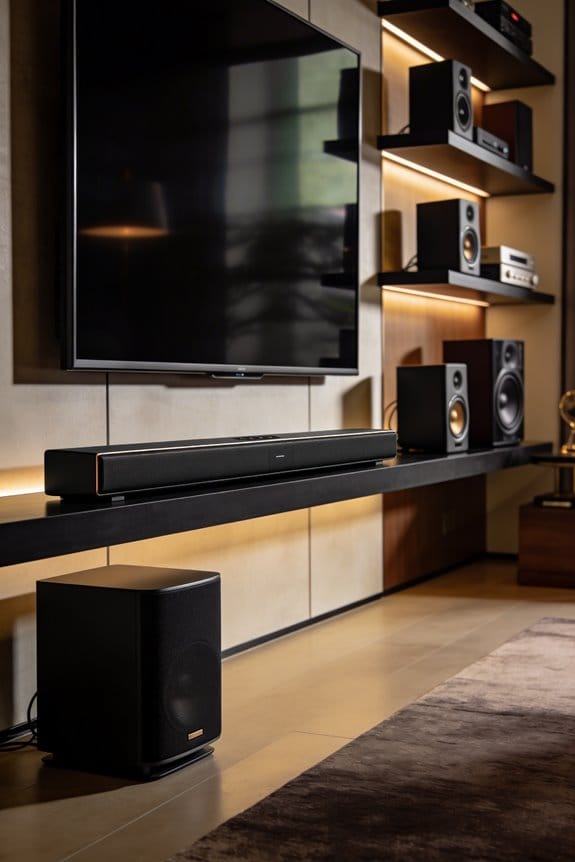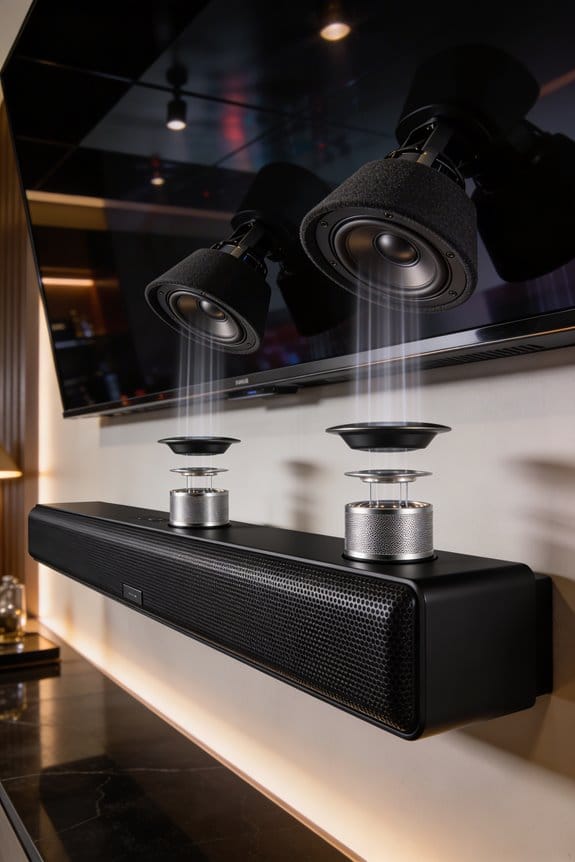


I’ve found that furniture-grade audio equipment replaces bulky traditional speakers with systems built from premium materials like wood veneers and metal finishes, allowing them to blend seamlessly into your home décor. These systems integrate advanced technology, including wireless connectivity, automatic room tuning, and voice control, within stylish enclosures that function as furniture pieces. You’ll eliminate messy cables while maintaining high-quality sound through components like A/V receivers with 5-7 HDMI inputs, speakers with 87dB+ sensitivity ratings, and frequency responses spanning 20Hz to 20kHz. This guide explains the technical specifications and design choices you’ll need to contemplate.
Key Takeaways
- Furniture-grade speakers use premium materials like wood veneers and metal finishes to blend seamlessly with home décor.
- Wireless technology eliminates messy cables while features like automatic room tuning maintain minimalistic aesthetics and optimize sound quality.
- A/V receivers connecting audio components now comprise 38.75% of the home audio market, offering essential integration for entertainment systems.
- Aesthetic materials, durability engineering, and limited production runs increase costs but deliver long-term value in functionality and style.
- Choosing between soundbars for single rooms or multi-room systems depends on lifestyle needs, with prices ranging from $200 to $1,500-plus.
How Furniture-Grade Audio Differs From Traditional Speakers
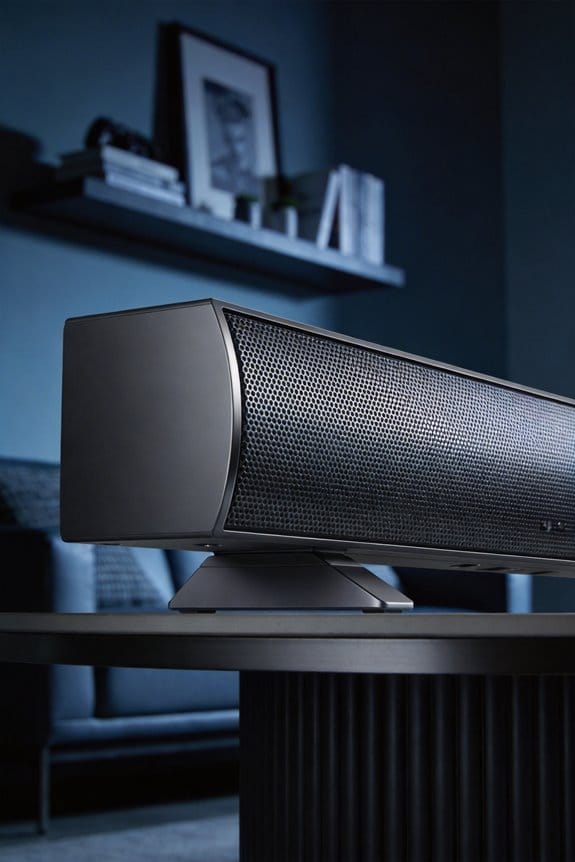
Have you ever noticed how traditional speakers can clash with your home’s decor? It’s like they scream “I’m just a speaker!” instead of blending into the space. Furniture-grade audio equipment does a better job of merging sound quality and style so you can enjoy music without sacrificing your aesthetic.
Let’s dive into what makes furniture-grade audio different:
Material Selection
Furniture-grade speakers are made from premium materials like wood veneers and metal finishes. They often come with fabric grilles that fit right in with modern furniture. In contrast, traditional speakers usually stick to black plastic and have exposed driver cones that can be a real eyesore.
Form Factor
You’ll find furniture-grade audio designs that serve as functional pieces of furniture—think credenzas, side tables, or even wall art. The drivers are tucked away behind decorative panels, making them stylishly discreet. Traditional speakers, on the other hand, often come in bulky boxes, announcing their presence in your living space loud and clear.
Audio Innovation Integration
Here’s the trick: furniture-grade systems often feature cutting-edge technology. They offer wireless connectivity, automatic room tuning, and digital signal processing neatly packed into sleek enclosures that don’t disrupt your decor. Traditional setups typically require visible amplifiers and tangled cables, which can detract from a clean, streamlined look.
So, why does this matter? If you want a seamless look in your home while still enjoying top-notch audio, furniture-grade speakers could be the way to go. They blend into your environment while delivering impressive sound quality, making your home feel both stylish and welcoming.
Why Furniture-Grade Audio Is Replacing Visible Tech Setups
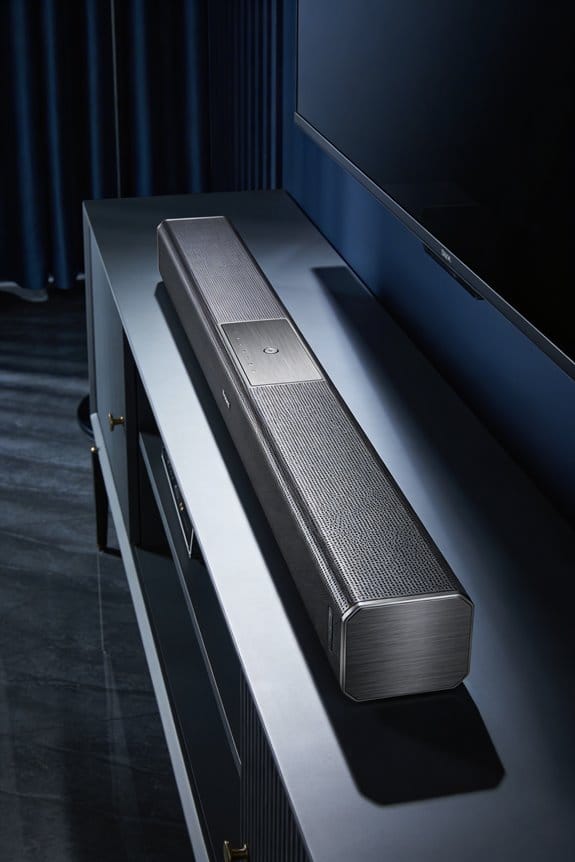
As you navigate your home design journey, have you ever felt overwhelmed by bulky speakers and tangled cords? It’s a common struggle for many homeowners trying to create a streamlined, minimalist look. Today, more people are leaning toward furniture-grade audio that blends into their spaces while still delivering impressive sound.
Wireless speakers are gaining popularity, with projections showing an 11.1% CAGR up to 2031. Why? Because they eliminate the hassle of cords and still provide great audio performance. Plus, features like automatic room tuning fine-tune sound specifically for your space, meaning you won’t have to let unsightly calibration gear take up valuable real estate.
And let’s talk about convenience: voice-activated technology means you can control your music without fumbling for remotes or controllers. That’s right – your coffee table can stay clutter-free while you effortlessly adjust the volume or pick a playlist.
So what’s pushing this shift in the market? People are changing their tech more frequently, every three to four years. Manufacturers are rolling out sleek, new designs loaded with AI features. This makes traditional, visible setups seem almost outdated, nudging you toward stylish, integrated solutions.
In the end, furniture-grade audio isn’t just about aesthetics. It’s about finding harmony between sound quality and your home’s design. Have you considered how smart audio can enhance your living space without taking away from its style?
A/V Receivers as Anchor Pieces in Modern Living Rooms
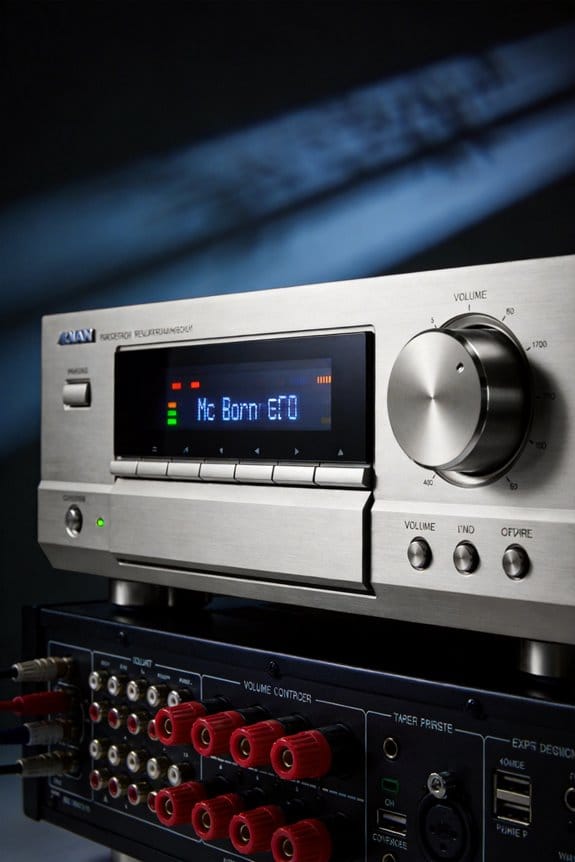
A/V receivers have become the must-have centerpiece in today’s living rooms. If you’re a home theater buff, you’ll know how important these units are for connecting all your audio and video components. In fact, in 2026, they made up a whopping 38.75% of the home audio market. So, it’s clear these receivers aren’t just a nice addition—they’re pretty essential.
When you’re picking out a receiver, think about how it fits into your room’s vibe. These modern units are more than just technology; they often serve as permanent furniture pieces. You want a receiver that complements your space rather than gets tucked away out of sight. Look for models equipped with multiple HDMI inputs—aim for around five to seven ports. This way, you can connect gaming consoles, streaming devices, and Blu-ray players all while keeping your setup free of cable tangles.
Another crucial feature to look for is high-current amplification. This helps deliver the power needed for those surround-sound speakers you’ve been dreaming about. Plus, many receivers come with automatic room calibration, which fine-tunes audio output based on your room’s dimensions. So, why does this matter? Because nobody wants to blast their favorite movie and have the sound be all off!
You might be wondering where to actually put your receiver. A good spot is in entertainment centers or media cabinets. Just keep in mind that ventilation is key—your receiver should operate within temperatures between 32°F and 95°F to make sure it runs smoothly for the long haul.
Furniture-Grade Wireless Speakers for Cable-Free Interiors
Are you tired of messy wires ruining your perfectly designed living space? You’re not alone. It can feel like a hassle to get high-quality sound without the chaos of cables snaking through your rooms. That’s where wireless speakers come in. They offer a sleek solution that lets you enjoy great audio while keeping your home looking tidy.
These compact units can easily fit on shelves, side tables, or even be mounted on walls. No need to tear down drywall or hide cords behind furniture. Plus, you can pair them in different rooms, so you can enjoy the same tunes throughout your home without compromising on design.
Here’s the trick: many of these speakers come with automatic room tuning features. That means they’ll adjust themselves to fit your specific space, no extra equipment or hassle involved. And if you’re like me and prefer keeping things simple, the voice-assistant integration lets you control your music without cluttering your surfaces with remotes.
Honestly, this cable-free option supports a more contemporary and clean vibe in your home while still delivering impressive sound quality. Why does this matter? Because you deserve an audio experience that matches your style, without extra effort.
Soundbars vs. Multi-Room Systems: Which Fits Your Space?
Choosing between a soundbar and a multi-room audio system can feel a bit overwhelming, right? It’s essential to think about how you use your space, your listening habits, and of course, your budget before hitting that buy button.
If you’re mostly watching TV in one room, a soundbar might be just what you need. These things deliver solid audio from right in front of you, are super easy to set up, and don’t clutter your space. On the other hand, a multi-room audio system really shines if you enjoy music throughout your entire home. Imagine having music playing in the kitchen while you cook, and then it seamlessly continues in the living room. Sure, these systems can be pricier, but they offer that beautifully coordinated sound no matter where you are.
Here’s a quick breakdown of costs:
- Soundbars: Typically, you’re looking at $200 to $1,500 depending on features like how many channels it has and if it supports Dolby Atmos.
- Multi-room systems: These start at around $400 for the entry-level kits. But keep in mind, you’ll need to factor in the cost of additional speakers if you want to fill more spaces, which can add up quickly.
So, what’s the right fit for your lifestyle? If you love chilling out with movies in a single spot, go for the soundbar. If you like to fill your entire home with audio, then the multi-room system might be worth the investment.
Truth is, it boils down to what fits you best. Think about where you spend the most time and how you like to enjoy your entertainment. What sounds better to you—a cozy setup in your living room or a whole-home audio experience?
Room Tuning, Voice Control, and Other Clutter-Free Features
Are you tired of tripping over wires and overcrowded shelves just to enjoy your music? It’s become so much easier to set up a great sound system without all that chaos. Modern audio gear does the heavy lifting for you, with automatic acoustic calibration—no more measuring mics or complicated adjustments.
Take a look at the room calibration systems like Sonos Trueplay and Yamaha YPAO. These systems are nifty because they automatically read your room’s dimensions and factors, like wall materials and where your furniture is. This means the sound is adjusted to work best with your space, without needing any visible gadgets cluttering your room. You just place your speaker, hop onto the app, and let the device tweak the sound for you. It’s all about the right frequency response, timing delays, and customized volume levels—no fuss involved.
Voice control is another big win. With assistants like Alexa, Google Assistant, or Siri, you can control your speakers without lifting a finger. Imagine just saying what you want—like adjusting the volume or skipping a track—while keeping your space looking tidy. Those old remotes and control panels can crowd your living area; now, you can keep everything sleek and simple.
So, why does all this matter? Keeping your space free of technical clutter not only looks good but also feels good. It helps create a calm atmosphere, letting you focus on enjoying your music instead of managing equipment.
Why Furniture-Grade Audio Costs More Than Standard Speakers
Have you ever noticed how furniture-grade speakers can cost two to three times more than standard ones, even if their specs look similar? It’s a common frustration when you’re trying to get the best bang for your buck. But the truth is, the price tag reflects much more than just audio quality.
Manufacturers pour a lot into making these speakers aesthetically pleasing. We’re talking about hand-finished wood veneers, precision-machined metal grilles, and fabric wraps that blend seamlessly with your home’s décor. These materials aren’t just for show; they have to withstand everyday wear and tear, UV light, and moisture. It’s about building something that lasts decades, not just a few years.
Design consultations and limited production runs also drive up the costs. Want special features, like modular connectivity or hidden cable management? Those come with extra expenses too. Here’s the kicker: when speakers are designed to fit into smart home systems and maintain your living space’s style, it all adds up.
So, why does this matter to you? If you’re investing in something that doubles as a piece of furniture, it’s worth understanding what you’re paying for. Expect it to not only play great music but also look good doing it.
How to Choose Furniture-Grade Audio Without Sacrificing Sound
Choosing furniture-grade audio equipment can feel like a tough balancing act between aesthetics and sound quality. But don’t fret—you can have both if you know what to look out for.
First off, let’s talk frequency response ratings. Aim for something in the range of 20Hz to 20kHz. This ensures you get the full spectrum of sound no matter the cabinet style. You’ll also want to pay attention to sensitivity ratings—look for those above 87dB. This way, you can enjoy great sound without needing bulky amps that mess with your decor.
When you’re shopping, here are a few key specs to keep an eye on:
- Driver size: Match it to your room size. For medium rooms, go with 6.5-inch woofers; for larger spaces, opt for 8-inch ones.
- Look for digital signal processing that includes automatic room correction.
- Make sure there are multiple input options like HDMI ARC, optical, and some wireless protocols.
Don’t forget to check out brands that offer both quality and style. Certifications like THX or Dolby Atmos can indicate impressive sound. Plus, you want finishes that match your taste. Try this: visit a store and ask for live demos of similar models featuring different finishes. It’s a great way to see if the sound holds up no matter what look you choose.
So, why does this matter? Because your audio setup can be both impressive in sound and visually appealing in your space. Truth is, it’s all about the right choices.
In the end, remember that you don’t have to settle. Quality audio that complements your style is out there. What’s the first piece of furniture-grade audio you’ll look into?
Where to Buy Furniture-Grade Audio Online and In-Store
When you decide to buy furniture-grade audio equipment, you might find yourself wondering where to start. There are two main ways to shop, each with its own perks and quirks.
Online Retailers let you shop from the comfort of your couch. You can compare specs, check out customer reviews, and find pieces that fit your home decor perfectly. Plus, you can filter by color, size, and connectivity features without dealing with a sales pitch. It’s like having a personal shopper at your fingertips, but you’re in control.
On the flip side, In Store Shopping brings you face-to-face with the products. You’ll get to touch and feel the build quality, inspect the materials, and see how everything might look in your space. It’s all about that hands-on experience. Many of these retail locations are buzzing with experts who can guide you on setting up for the best sound in your particular room.
So, what’s the best approach for you? If you thrive on research and comparing options, online might be your best bet. But if you want to experience the products in person, visiting a store can really pay off.
In the end, think about what fits you best. Whether you choose to shop online or in-store, you’re sure to find the audio equipment that will not just sound good, but also look great in your home. What’s your next move going to be?
Frequently Asked Questions
Can Furniture-Grade Audio Equipment Work With My Existing Smart Home System?
Better safe than sorry—I’d verify smart home compatibility before purchasing. Most furniture-grade audio equipment integrates seamlessly with popular ecosystems, though audio branding differences can affect feature availability. Voice-assistant support typically guarantees smooth connectivity across platforms.
How Often Should I Replace Furniture-Grade Speakers to Stay Current?
I’d replace furniture-grade speakers every three to four years to keep up with technology advancements like AI features and smart integration. However, speaker lifespan depends on your priorities—if sound quality satisfies you, they’ll last much longer.
Do Furniture-Grade Speakers Require Professional Installation or Complex Setup Procedures?
Most furniture-grade speakers don’t require professional installation—I’ve found modern models offer plug-and-play simplicity with automatic room tuning. Complex setup procedures are largely eliminated through voice-assistant integration and wireless connectivity, making sophisticated audio surprisingly accessible.
Are Furniture-Grade Audio Components Covered by Different Warranties Than Standard Speakers?
I’ve found that furniture-grade audio components typically carry standard manufacturer warranties similar to traditional speakers, though some premium brands offer extended coverage. You’ll want to review specific warranty differences and coverage limitations before purchasing high-end models.
Can I Mix Furniture-Grade Audio Brands in a Single Room?
Yes, you can mix furniture-grade audio brands in one room. I’d focus on aesthetic cohesion—matching finishes, materials, and form factors—while ensuring brand compatibility through standardized wireless protocols like AirPlay, Chromecast, or Bluetooth for seamless functionality.