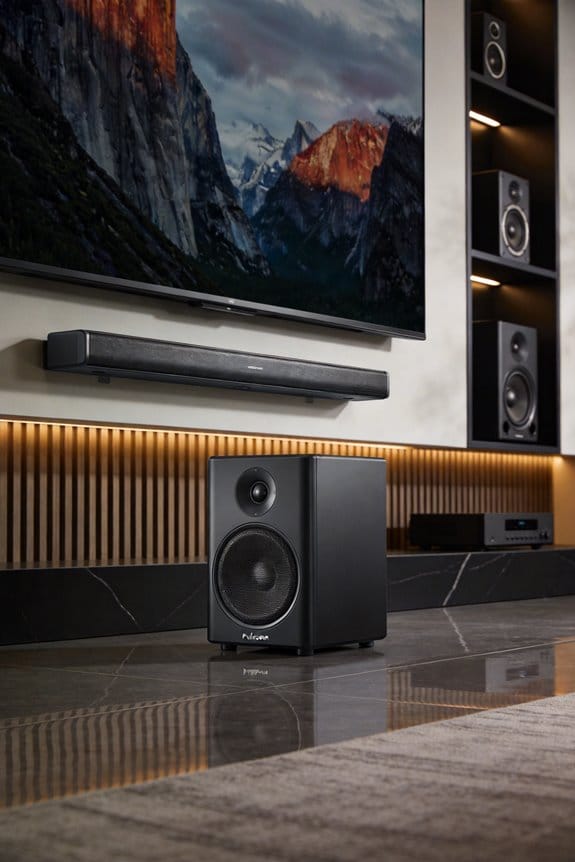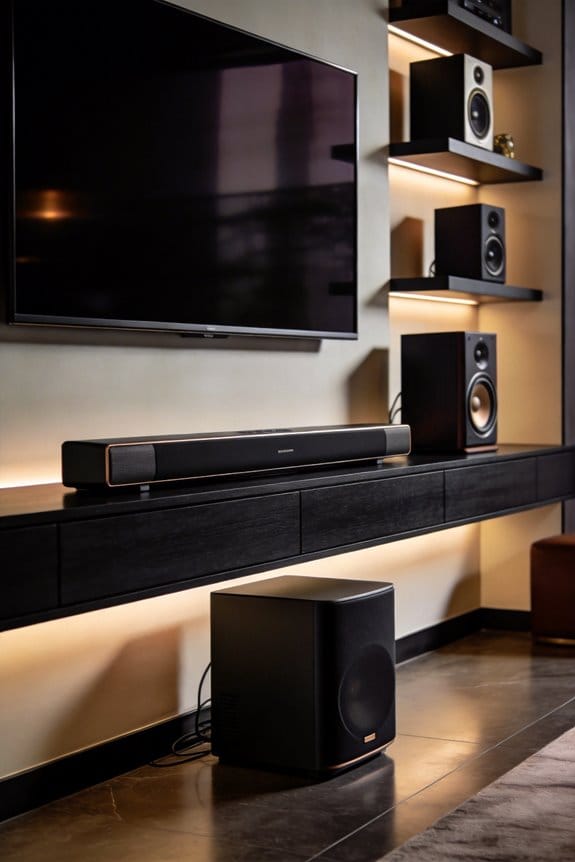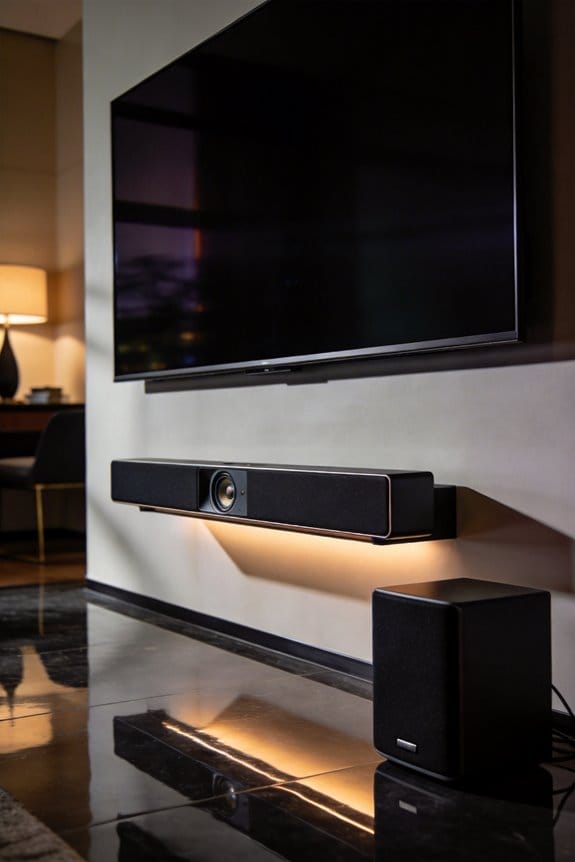
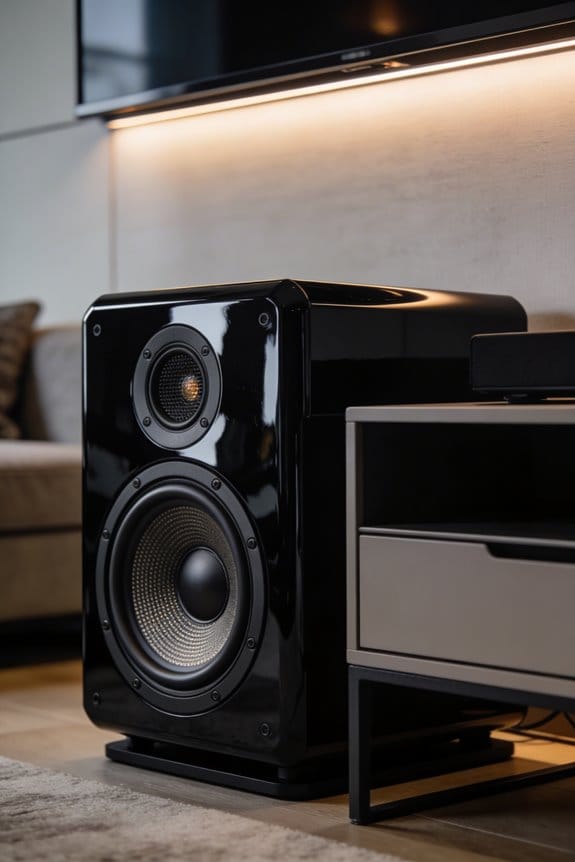

I’ll explain how passive radiators use air pressure physics to generate deep bass from compact speaker cabinets. When an active driver moves inward and outward, it creates pressure waves inside the enclosure that push against a passive radiator, which is fundamentally a speaker cone without a voice coil or magnet. This diaphragm vibrates at resonant frequencies you can tune by adding mass, typically steel plates, to lower the frequency down to 20-40 Hz in small enclosures. The design eliminates port noise while fitting tight spaces, though it costs 15-30% more than ported systems and handles lower maximum volumes before reaching mechanical limits.
Key Takeaways
- Passive radiators use air pressure from active drivers to move a diaphragm without voice coils, eliminating amplifier power needs.
- Adding mass to the radiator cone lowers resonant frequency, enabling bass as deep as 20 Hz in compact enclosures.
- Unlike bass reflex ports, passive radiators produce cleaner sound by avoiding wind chuff and pipe resonance distortion.
- Compact design allows deeper bass in smaller cabinets, making them ideal for portable speakers, desktops, and bookshelf systems.
- Passive radiators cost 15-30% more than ported designs due to precision tuning requirements but offer superior sound clarity.
What Is a Passive Radiator and How Does It Work?
Have you ever wondered how some compact speakers deliver punchy bass without taking up a ton of space? That’s where a passive radiator comes into play. It resembles a typical speaker cone, but here’s the kicker: it doesn’t have a voice coil or magnet and isn’t connected electrically at all. Instead, it reacts to changes in air pressure created by your active driver bouncing around inside the enclosure. When that main woofer moves forward, it squishes the air inside, which in turn pushes the passive radiator out. This setup helps increase bass response without needing extra power from an amplifier.
You might be thinking, “What’s in it for me?” Well, here are a few standout benefits of using a passive radiator:
- Increased low-frequency output in compact speaker designs.
- No annoying port noise, which can happen with traditional bass ports.
- Less distortion from the active driver, giving you clearer sound.
You can even tweak the radiator’s sound by adding or removing weight from its cone. This means you can fine-tune the sound to match your taste or the acoustics of your room. Plus, the sizes of enclosures for passive radiators are usually smaller than those needing ports. This makes them perfect for bookshelf speakers, portable systems, or subwoofers when you’re short on space.
Passive Radiators vs. Bass Reflex Ports: What’s Different?
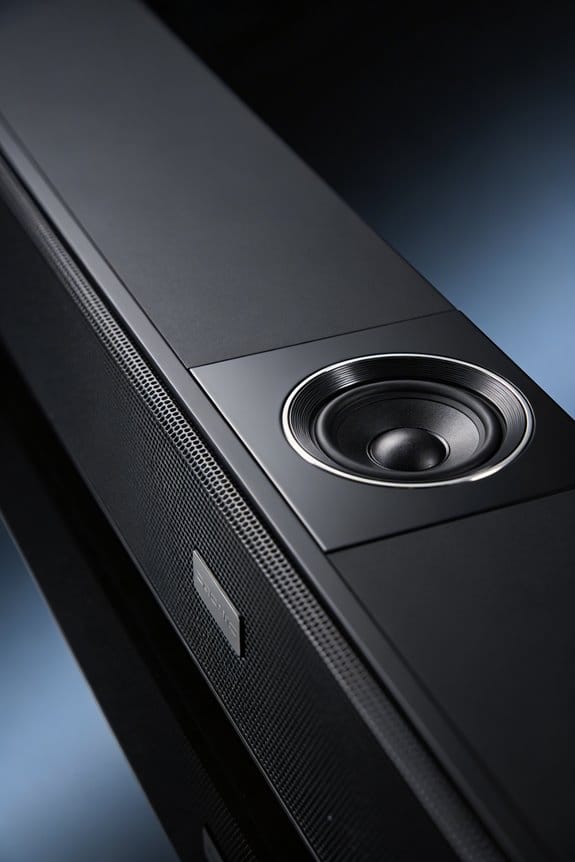
When you’re trying to decide between passive radiators and bass reflex ports, it can be a bit tricky. You want the best sound quality for your setup without running into issues that could ruin your listening experience.
Bass reflex ports work by using tubes to manage air pressure inside the speaker. This method can, however, lead to some unwanted noise—think wind chuff or pipe resonances that mess with those sweet midrange frequencies. On the flip side, passive radiators skip the electrical connections and instead use a diaphragm that moves freely, which could mean cleaner sound quality across the spectrum.
Here’s something to consider: ports can take up a lot of cabinet space, especially if they’re tuned for deeper bass below 30 Hz. If you’re looking for a compact solution, passive radiators require much less room, allowing for smaller and more efficient designs. But there’s a catch—ported designs tend to provide higher output levels. This happens because they manage airflow better than the mass of a radiator, making them a better fit for scenarios where you really need to crank the volume.
Why Passive Radiators Deliver Deep Bass in Small Enclosures
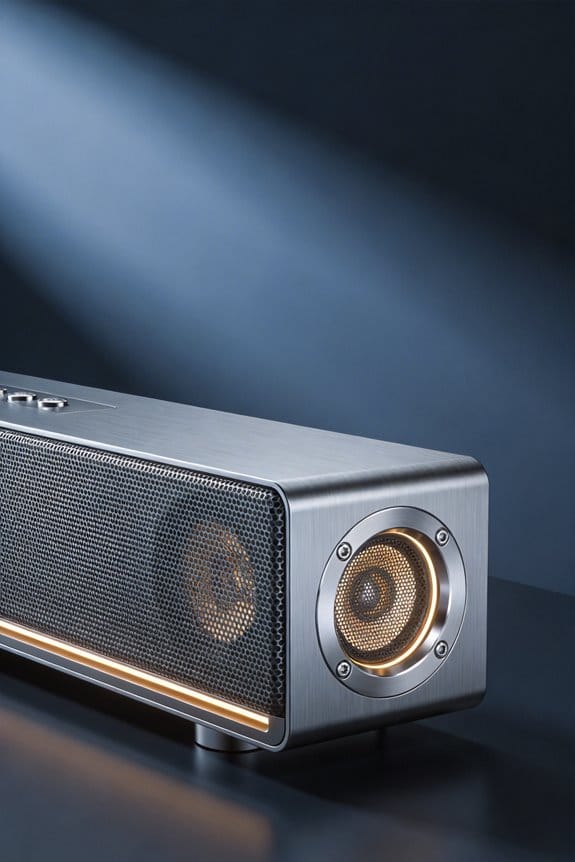
Have you ever cranked up your favorite playlist in a compact speaker and felt a bit disappointed by the lack of bass? It’s a common issue. Small speaker cabinets often struggle to deliver those low frequencies that really get a party going. So, what’s the secret to getting deep bass without needing a giant setup? That’s where passive radiators come into play.
How Passive Radiators Enable Deep Bass
Let’s break it down. The key lies in adjusting the mass of the passive radiator, which helps you lower its resonant frequency. By adding weight to the radiator, it starts to resonate at deeper frequencies, acting much like a larger woofer would. This means you can enjoy that rich bass tone without needing a bulky speaker cabinet.
Sound Wave Amplification Process
Here’s how it works: the internal pressure waves from the active driver kick the passive radiator into gear at its tuned frequency. This exciting movement is done without needing any extra electrical power. It’s quite remarkable how this pressure-driven action can push out a large volume of air, resulting in bass that can reach down to 20 Hz, all from a small enclosure.
The beauty of this setup is in its portability. You get that extended low-frequency response, making passive radiators perfect for settings where space is tight.
So, why does this matter? If you’re looking for a compact solution that doesn’t sacrifice sound quality, passive radiators could be your best bet.
How Moving Mass and Spider Design Control Tuning Frequency
Are you tired of not getting that deep bass sound you crave in your compact audio setup? Let’s break down how engineers actually fine-tune bass response using passive radiators. It’s all about the moving mass of the radiator, which directly affects its resonant frequency. When you add weight, like steel plates, it shifts the tuning down, helping you hit those lower frequencies you want.
Try this: if you’re looking to adjust the bass, consider changing the cone material or even the weight of the spider, the part that helps support the cone. This can have a significant impact on the sound. A stiffer spider design can raise the resonance, while a softer one allows for lower frequencies. Honestly, understanding these little tweaks can make a big difference in how your enclosure sounds.
You might wonder how engineers figure out the exact mass they need. They measure the enclosure’s volume and decide on a target frequency, which usually falls between 20 Hz to 60 Hz. Did you know that the distribution of the spider’s steel plate weight greatly influences sound clarity? And remember, while the cone mass gives you control over the primary frequency, the overall performance really hinges on all these variables working together.
Reducing Driver Distortion and Excursion at High Volumes
Ever cranked up the volume only to find your sound getting all muddy and distorted? It’s a frustrating experience, especially when you just want to enjoy your favorite bass-heavy tracks. Here’s a little insight: passive radiators could be your best friend in these scenarios.
When you increase the volume, your active driver cones take on a lot of strain. The active woofer struggles to produce those low frequencies, causing its cone to move back and forth too much. This excessive movement leads to distortion and can create all sorts of audio artifacts you definitely don’t want to hear.
So, how do passive radiators fit into this? They step in and relieve some of that pressure by absorbing internal cabinet energy at their tuned frequency, usually between 30-50 Hz. This means they can help push air in sync with your active driver. By sharing the workload, your main woofer doesn’t have to exert itself as much, which helps maintain its performance when the music gets demanding.
You’ll notice less distortion since the woofer stays within its linear travel range. This is important because, within that range, the suspension components like the spider and surround can control the cone without flexing too much or hitting mechanical limits.
Honestly, if you’re looking to get better sound in your high-volume listening sessions, considering passive radiators might be worthwhile. They can help keep your audio clean and punchy, even during those heavy bass songs. So, next time you’re ready to turn it up, remember this tip and enjoy your music without the hassle of distortion!
No Port Noise: How Passive Radiators Eliminate Turbulence
Have you ever noticed strange whooshing or chuffing noises from your speakers when the bass really kicks in? That’s a classic case of port noise. It happens when air rushes through those tiny port tubes, and trust me, it can be a real buzzkill when you’re trying to enjoy your favorite tracks.
Now, here’s where passive radiators come into play. They swap out the tube for a physical diaphragm, so there’s no air column to create all that annoying turbulence or compression. This change can lead to some seriously clean bass without those distracting whistles or wind sounds. You might even find that your midrange frequencies sound clearer since there’s no color added by resonances.
If you’re into complex musical passages, you’ll appreciate how passive radiators make a difference. Typically, ports would mess things up by adding unwanted noise, but with this setup, you get pure low-frequency extension with none of that annoying interference.
Honestly, if you’re listening in a nearfield environment, the benefits become even more noticeable. The lack of port artifacts means you can really focus on the music without those irritating distractions sidetracking your experience.
Portable Speakers, Subwoofers, and Tight Spaces: Best Applications
Got a tight space and need some serious bass? Passive radiators might just be the solution you’re looking for. Many portable speaker brands—think JBL, Ultimate Ears, and Bose—are on board with this design. They use passive radiators to squeeze out deep bass from speakers measuring only 6-8 inches, allowing them to hit those low frequencies around 40-50 Hz.
Compact subwoofers take a cue from this too. They can fit 8-inch or 10-inch passive radiators in enclosures that are 30-40% smaller than typical ported systems. Just imagine how handy this can be for your desktop setup, car, or even a small home theater. If you’re worried about cabinet depth, you really can’t go wrong with these designs—most of them can fit comfortably in spaces that only allow 12-14 inches in depth.
The best part? These designs don’t need extra space for rear ports, so you can place your speakers right against the wall without any worries about bass roll-off or chuffing noises. So, what’s the main takeaway here? If you’re short on space but still want that full bass experience, looking into devices with passive radiators is definitely worth your time. Try it out and see how it works for you!
Volume Limits and Efficiency: Where Passive Radiators Compromise
Want to get killer bass out of a compact speaker system? You might be considering passive radiators, and while they do have their perks, there’s something you need to know. When it comes to cranking up the volume, passive radiators can struggle a bit. They just can’t deliver the same high output levels that ported designs can when you really push them.
Here’s the problem—passive radiators have limitations. When you push that system hard, the radiator hits its mechanical limits well before a port would. Why’s that? It’s because the radiator has to move more to push the same amount of air. This becomes a real concern if you’re into subwoofers and need that maximum sound pressure level (SPL).
The shared power usage between the active driver and the passive radiator means you’re spreading the energy thin across different moving parts. It’s not quite as efficient as having a single driver going to town. But don’t let that discourage you! With some smart tuning adjustments and clever enclosure designs, you can find a good balance that gives you decent output without taking up a ton of space.
If you’re planning to enjoy moderate levels of music in a typical room, these negatives usually don’t outweigh the positives of having a compact system. You get to enjoy great sound without sacrificing all your living space.
Cost and Complexity Compared to Bass Reflex Designs
Choosing between passive radiators and traditional bass reflex designs isn’t just about how much space you have. Have you thought about the costs involved? Passive radiator systems usually cost about 15-30% more than their ported counterparts. Why? Because you’re paying for that extra precision component instead of just cutting a hole in your cabinet.
The manufacturing process for a passive radiator is a bit more complex. You need careful attention to things like mass distribution, spider suspension, and cone materials, which can really add to what you’ll pay. You might be wondering if that extra investment is worth it. Honestly, the benefits can be significant. You get clearer sound, less distortion, and more flexibility with your cabinet design.
On the flip side, bass reflex ports are cheaper to make. They just require some tubing and a bit of math for precise length calculations. But here’s the kicker: they can’t match the noise-free operation or compact sizing of passive radiators. So, what’s it going to be? Your budget and available space will guide you in picking the best option for your needs.
In the end, whether you opt for passive radiators or bass reflex designs comes down to your personal priorities. Think about what matters most to you—cost, sound quality, or space. What’s your next move going to be?
Small Room vs. Large Room: Matching Radiators to Your Space
Ever tried cranking up the bass in a small room and ended up with a muddy mess? It’s frustrating when you can practically feel the vibrations through the walls yet can’t enjoy the beat. That’s why it’s super important to match your radiators to the size of your space.
For rooms under 150 square feet, aim for passive radiators tuned between 35-50 Hz. This prevents excessive bass that can muddle your sound and ruin the experience. On the flip side, if your room is more than 300 square feet, you’ll want to go for lower tuning frequencies between 25-35 Hz. This will keep the bass balanced and ensure it fills the space without overwhelming everything else.
Here’s a handy tip: in smaller rooms, make sure your radiator-equipped speakers are at least 12 inches from the walls. This will help minimize reflections that can make everything sound unclear. In larger rooms, placing speakers closer to the corners—about 6-8 inches away—can really amp up that bass and make the most of the extra air volume.
To get your setup just right, measure your room dimensions in feet. Multiply the length by the width, and you’ll have a clearer idea of what radiator specifications you need to be looking at.
Frequently Asked Questions
Can I Upgrade My Ported Speaker to Passive Radiators Myself?
Where there’s a will, there’s a way! I’d say DIY speaker upgrades are possible, but passive radiator installation requires precise calculations for enclosure volume, tuning frequency, and radiator mass. I recommend consulting expert resources before attempting modifications yourself.
Do Passive Radiators Work With Sealed Enclosures or Only Vented Designs?
Passive radiators work with sealed enclosures, not vented designs. I’ll explain: they replace ports entirely, so you’re choosing between sealed vs vented approaches. Key design considerations include enclosure volume, radiator mass, and tuning frequency for peak bass response.
What Happens if the Passive Radiator’s Mass Is Incorrectly Tuned?
Mismatched mass tuning creates chaotic consequences—I’ll see sound distortion, uneven bass response, and poor frequency alignment. The passive radiator won’t resonate correctly with your active driver, resulting in boomy peaks or weak low-end output that compromises overall audio quality.
Are Multiple Small Passive Radiators Better Than One Large One?
I’d say multiple small passive radiators can offer better design efficiency than one large unit. They distribute pressure more evenly, reduce individual excursion requirements, and give you more flexibility in cabinet layout without compromising bass output or control.
Do Passive Radiators Require Break-In Time Like Active Drivers Do?
Yes, I recommend allowing break-in duration for passive radiators since their suspensions need loosening like active drivers. You’ll notice improved driver performance after several hours of use as the spider and surround become more compliant, enhancing bass response.