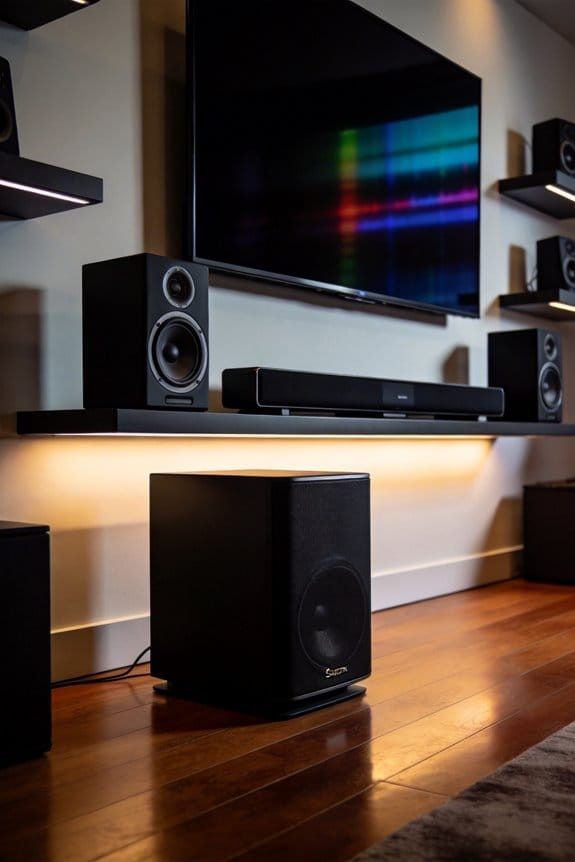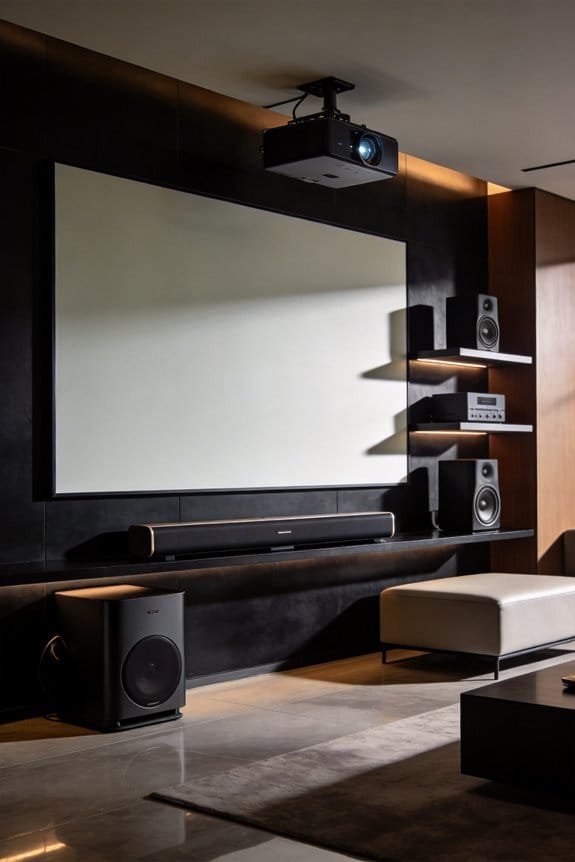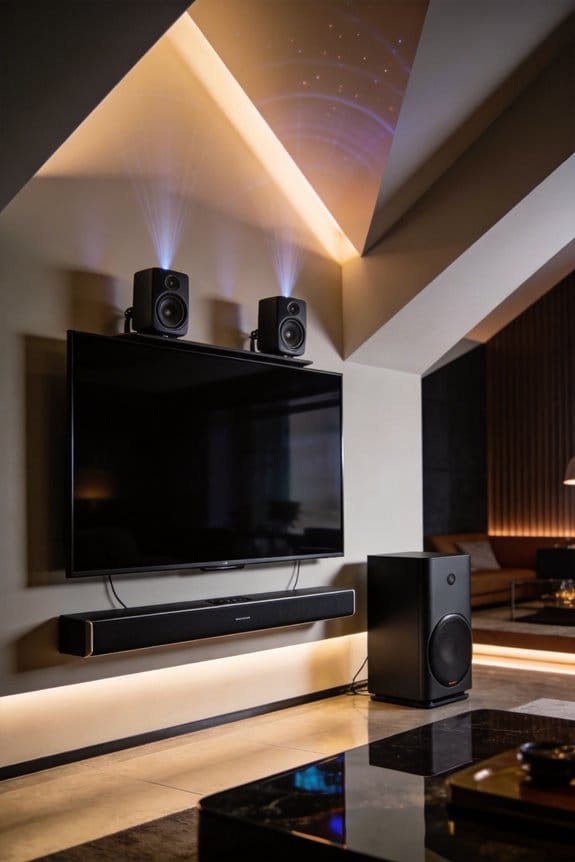
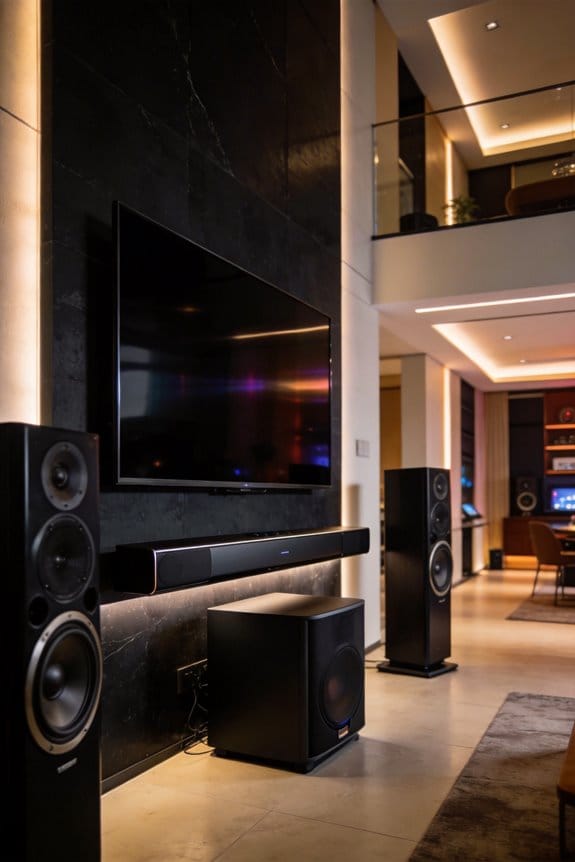

Open-concept floor plans challenge me as an audio engineer because they eliminate walls that normally control sound reflections, bass response, and acoustic pressure zones. Hard surfaces like concrete floors, glass walls, and vaulted ceilings create unpredictable sound wave behavior, causing echoes, acoustic dead zones, and uneven bass distribution throughout the space. I can’t rely on traditional room boundary techniques, so I need multiple subwoofers, fabric-wrapped acoustic panels, ceiling baffles, and strategic placement of sound-absorbing materials to manage overlapping frequencies and maintain clarity. Below, I’ll show you specific solutions that transform these challenging spaces.
Key Takeaways
- Open layouts lack walls, causing poor sound quality through increased reflections from hard surfaces like concrete and glass.
- Bass response becomes unpredictable as low frequencies require pressurization that open spaces cannot provide, creating uneven distribution.
- Acoustic dead zones develop in longer rooms, causing bass frequencies to vary dramatically between different listening positions.
- Echo and reverberation intensify due to hard surfaces, making it difficult to achieve clear sound separation and definition.
- Multi-functional areas require complex audio solutions to address overlapping sounds and manage conflicting acoustic needs simultaneously.
Why Open-Concept Spaces Kill Sound Quality
Open-concept floor plans can seem inviting and spacious, but they often come with a hidden problem: poor sound quality. Ever tried to enjoy music in a wide-open space only to be met with echoes and weird bass? It’s frustrating, and here’s why it happens.
One big issue in these open areas is that sound waves can travel freely without any walls or barriers to contain them. This means that when you play your favorite track, the audio energy just bounces around everywhere. Hard surfaces, like concrete or large windows, reflect sound, which leads to echoes that can make your audio experience feel disjointed. The more space you have, the worse it tends to get.
When sound waves reflect off surfaces, they interfere with the direct sound from your speakers. This can create a chaotic listening experience, with some frequencies canceling each other out and others peaking unexpectedly. Have you ever noticed that in some spots, the bass just kind of vanishes? That’s what happens in acoustic dead zones! It’s especially problematic in longer rooms—over 35 feet—where those low frequencies struggle to reach you without a good setup. You’ll often need multiple subwoofers and some smart acoustic treatments to manage this.
So, what can you do about it? Here are a few suggestions:
- Consider rugs or carpets on your floors to absorb some of that sound.
- Hang up soft furnishings like curtains or fabric wall hangings to help diffuse the echoes.
- Use plants or bookshelves as natural sound barriers to break up the space.
Honestly, it’s about creating some boundaries in an otherwise open space. You want to give those sound waves something to work with rather than letting them run wild.
In the end, while open-concept living has its perks, the sound quality might leave something to be desired. Have you noticed these sound issues in your own home? It might be worth exploring some of these solutions!
Bass Response Problems Without Room Boundaries
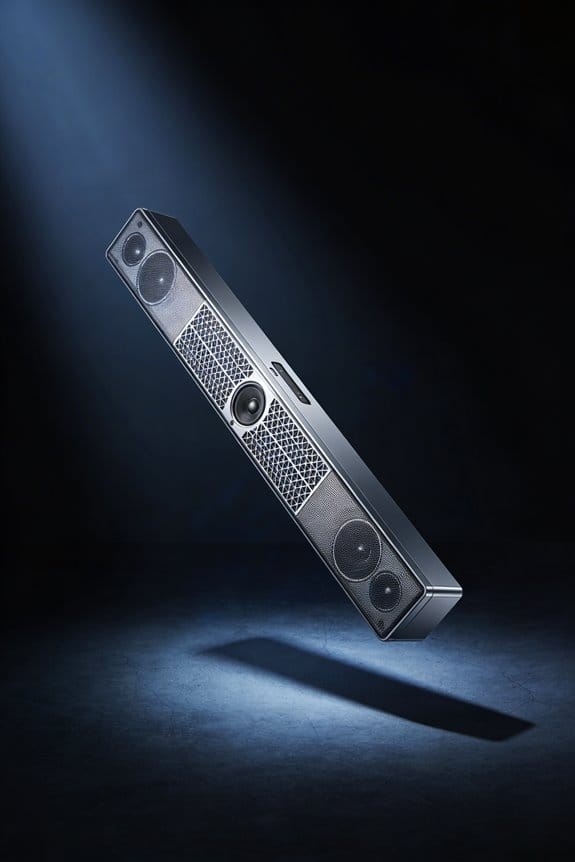
Setting up your speakers in an open floor plan can lead to some frustrating bass issues. Have you ever noticed how the bass sounds great in one spot but then weakens just a few feet away? That’s because low-frequency sound behaves differently than higher frequencies, and in open spaces, it just doesn’t work as well.
Bass waves need a bit of room to breathe, so to speak. They require pressurization to create consistent energy across your listening area. When you’re in an open layout, there aren’t walls to help contain that low-frequency energy, leaving you with unpredictable bass response. You might find that areas of your room pressurize differently, which can make the bass feel powerful in one corner but disappointingly weak in another.
Room modes, which are those natural resonances you’d usually experience in enclosed spaces, turn into a guessing game in an open setting. It’s hard to predict where the strongest sound will be, so equalizing it can feel pointless sometimes. The solution? Adding multiple subwoofers. They can help distribute the bass more evenly across your entire open space, giving you a better listening experience.
So, what can you do? Here are a few tips:
- Consider using several subwoofers positioned around the room.
- Experiment with their placement until you find a spot that balances the bass more evenly.
- Try to create some boundaries, even in an open space, like using furniture to help manage the bass flow.
Truth is, adjusting your setup isn’t always straightforward, but with some patience and testing, you can definitely improve your sound. It can make a world of difference and lead to a much more enjoyable listening experience. Have you dealt with similar sound issues in your space?
Fabric Panels and Ceiling Baffles That Preserve Aesthetics
When you’ve got an open space in your home, it can feel like an echo chamber sometimes. If you’ve ever tried to have a conversation only to be drowned out by the noise bouncing off the walls, you know what I mean. So, how do you improve your acoustics without making your place look like a sound studio?
Fabric-wrapped acoustic panels and ceiling baffles could be the answer. These solutions are not just functional; they can blend seamlessly into your home decor. You can mount fabric panels directly on your walls or hang them from ceiling tracks. They’re designed to absorb mid-to-high frequency sound reflections, and the best part is you can choose colors that match your decor. With thickness options ranging from 1 to 4 inches, denser materials offer better sound absorption for different frequencies.
Ceiling baffles are a great addition, too. They hang vertically in your space and help intercept those pesky sound waves that tend to move horizontally across rooms. What’s cool is that you can customize the dimensions and fabric selections to suit your style. This means they can work with your unique setup to tackle any reverberation issues you might have.
To get the best results, try positioning panels at primary reflection points in your room. And don’t forget about high ceilings—distributing baffles in those areas can make a huge difference where sound tends to carry the most.
How Multiple Subwoofers Fix Uneven Bass Distribution
Got uneven bass in your open space? It’s a common frustration for many audio enthusiasts. Unlike higher frequencies that travel well, bass often ends up being too weak in some spots while booming in others. Thankfully, there’s a simple way to tackle this issue.
Why Multiple Subwoofers Work
Using more than one subwoofer can dramatically improve bass distribution. By placing them in different spots, you create overlapping pressure zones that can fill in those pesky acoustic dead spots around your home. Think of it as spreading the bass love – two or more subwoofers help deliver a more balanced listening experience for everyone.
Recommended Placement Configurations
Think strategically about where to put your subwoofers. A solid option is to position them in opposite corners of the room, along different walls, or even halfway between where you normally sit and the wall. The trick is to minimize bass localization. This way, you and your guests won’t pinpoint exactly where those low frequencies are coming from—the goal is seamless sound.
Testing and Adjustment
You’ll want to check how the bass sounds in different spots. Using a sound pressure level meter or some room correction software can really help with this. After assessing the response, don’t be shy about tweaking individual subwoofer levels, phase settings, and crossover frequencies until you get that consistent bass all around your open space. It might take a bit of trial and error, but the payoff is totally worth it.
In short, multiple subwoofers can truly enhance your audio experience. Why not give it a try and see how it transforms your space?
Managing Echo on Concrete Floors and Glass Walls
Got concrete floors and glass walls in your space? You might be dealing with some annoying echoes that interfere with your audio experience. It’s pretty common, but don’t worry—there are ways to tackle this issue without scrapping your setup.
First off, think about adding sound absorption materials to those hard surfaces. Installing acoustic panels on the walls where sound bounces back is a great start. Focus on spots that are directly between your speakers and your listening area; you’ll notice a big difference in clarity.
Another handy tip: consider throwing down some thick area rugs or carpet tiles on those concrete floors. They really do a nice job of soaking up mid and high frequencies before those sounds can bounce around and create chatter in the background.
Those glass walls don’t have to be your enemy either. You can try applying acoustical window treatments or specialized films that can lessen their reflective nature. And if you find certain areas still echoing, think about using freestanding acoustic panels near those problem spots. It’s kind of like putting a pillow between you and the noise!
So, what’s the catch? Each of these materials works by turning sound energy into heat, which helps cut down on all that echo in your open floor plan. Honestly, it might take a bit of experimenting to figure out what combo works best for you, but it’s definitely worth the effort.
In short, addressing sound in your space doesn’t have to be a hassle. With a few adjustments, you can create a much more enjoyable atmosphere. What’s one change you’re excited to try out?
Frequently Asked Questions
Can Portable Acoustic Partitions Provide Temporary Sound Isolation in Open-Plan Offices?
Yes, I’d recommend portable acoustic partitions as temporary solutions for your open-plan office. They’ll provide sound absorption rather than true isolation, reducing noise levels but not eliminating sound transfer between zones completely.
How Do In-Wall Studio Monitors Affect Traditional Speaker-Room Interaction Dynamics?
In-wall monitors create infinite baffle configurations that eliminate traditional cabinet resonances, but I’ve found they complicate room treatments since you can’t reposition them. Sound absorption strategies must compensate for their fixed placement and altered dispersion patterns.
What Decibel Reduction Is Achievable Between Zones Without Structural Partitions?
I’ll be honest—without structural partitions, you’re looking at minimal sound isolation between zones. My decibel measurements show achieving around -10 dB reduction is difficult, and meaningful privacy requires actual walls, not just acoustic treatments alone.
Does Sound-Masking Technology Address Underlying Acoustic Problems in Open Spaces?
no, sound masking effectiveness only conceals speech, not structural flaws. I’d recommend exploring acoustic treatment options that absorb reflections and control reverberation—these actually solve your open-space problems rather than camouflaging them.
How Does Listener Distance From Speakers Affect Direct Versus Reflected Sound?
As listener distance increases, I notice you’ll hear more reflected sound than direct sound from speakers. This shift dramatically changes sound perception, making reflections dominant in your experience rather than the original audio signal itself.