
Modern movie dialogue has become difficult to understand because directors like Christopher Nolan prioritize realism over clarity, often keeping mumbled or masked dialogue as recorded on set. Sound mixing layers multiple audio tracks at similar volumes, burying conversations beneath music that’s increased 15-20 decibels since the ’90s and bombastic sound effects. Streaming services compress audio files, degrading vocal frequencies, while standard TV speakers with 2-3 inch drivers can’t reproduce the full range of human voice frequencies that theater systems with lossless formats preserve. The sections below explain specific technical factors and solutions you can implement.
Key Takeaways
- Directors like Christopher Nolan prioritize realism over clarity, keeping authentic mumbling and whispered dialogue to strengthen emotional connections.
- Modern sound mixing layers multiple audio tracks at similar volumes, causing dialogue to be buried beneath music and effects.
- Music volume has increased 15-20 decibels since the 1990s, making it harder for dialogue to compete with soundtracks.
- Streaming services compress audio files, degrading subtle vocal frequencies that are preserved in theater’s lossless formats.
- Standard TV speakers lack the range to reproduce full human voice frequencies, prioritizing mid-range sounds over dialogue.
Why Movie Dialogue Has Become Impossible to Understand
Ever tried to watch a new movie, only to find yourself cranking up the volume or hitting rewind way too many times? You’re definitely not alone. So, what’s going on? This frustrating experience is actually tied to a bunch of things happening in how movies are made these days.
Directors like Christopher Nolan often aim for a sense of realism in their films. That sounds good in theory, but when characters mumble or whisper, it’s tough to catch the dialogue. Movies like *Tenet* and *The Dark Knight Rises* showcase this trend. You might notice actors talking in soft tones or even just breathy whispers, which can make it hard to pick up what they’re saying. It’s like they’re trying to recreate actual conversations, but in the process, they lose clarity.
Then there’s the sound mixing. Have you ever felt like the music and effects are drowning out the dialogue? That’s because modern films often stack tons of audio tracks on top of each other, creating a wall of sound. When everything is mixed at similar volume, it’s easy for the dialogue to get buried.
So, what can you do about it? Here are a couple of suggestions:
- Use subtitles: It may seem annoying, but they can help you follow along without the strain.
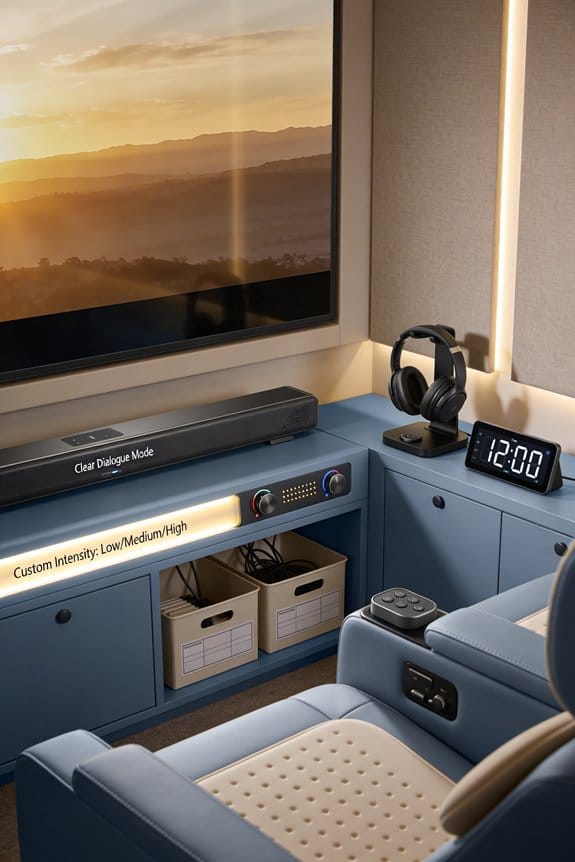
- Adjust your audio settings: Check if your TV or sound system has a dialogue enhancement feature. It can make a difference.
Honestly, many of us just want to enjoy our movie night without feeling lost in translation. As you settle in for your next flick, remember these tips. Have you ever had to struggle through a film’s dialogue? What’s your go-to strategy for making sense of it all?
Why Directors Choose Realism Over Clear Dialogue

Ever watched a movie and struggled to catch some of the dialogue? It’s frustrating, right? But have you ever considered why some directors actually choose to make their films sound less clear? Believe it or not, many prioritize realism because they think it creates a stronger emotional connection with viewers.
Take Christopher Nolan’s *Tenet*, for example. He decided to keep the original dialogue recorded with masks on, replicating how things sound in real life instead of replacing it with clearer audio later. This choice might leave you wondering what the characters are saying at times, but it’s all about creating that authentic feel.
You can see a similar approach with Tom Hardy’s performance as Bane in *The Dark Knight Rises*. The mask he wears distorts his speech, making it harder to understand. Yet, that struggle reflects his character’s situation and the film’s gritty tone.
Alejandro González Iñárritu took this idea even further with *Biutiful*. He intentionally made the dialogue sound poor, aligning it with the characters’ experiences and the environment around them. It’s a bold choice, but it serves the story well.
So, what’s the trick here? Directors adjust how clear dialogue is based on what fits best for each scene. They believe that realistic sound adds layers to the storytelling, making the viewers feel more immersed, even if it challenges their understanding at times. Dialogue becomes just one part of the audio experience instead of the main focus.
In the end, not every movie needs to spell everything out for you. Sometimes, it’s the murky dialogue and the layers of sound that pull you into the story. Next time you find yourself straining to hear a character, think about the emotional journey the director aims to take you on. What do you think—is that worth the effort?
When Music and Explosions Overpower the Words

Ever tried to enjoy a movie, only to be bombarded by explosions and booming music while the characters are trying to have a heart-to-heart? It can be pretty frustrating, right? A lot of us have noticed this issue with modern film sound design. Sound designers now layer a ton of audio tracks—dialogue, music, sound effects, and even background noise. This creates a real challenge for us viewers because everything’s mixed at similar volume levels, making it tough to hear what the characters are saying.
Action flicks are often the worst offenders. You find yourself straining to catch dialogue that’s buried under gunshots and over-the-top chase scenes. And let’s not forget about the music—it’s been cranked up around 15-20 decibels since the ’90s. That’s a lot of noise fighting for your ear’s attention, especially when it’s competing with the human voice.
So, what can you do?
- Use subtitles: They can help when the action gets too loud.
- Adjust your sound settings: If you have a sound system, play with the settings to see if you can boost dialogue without losing the music and effects.
Honestly, it’s all about balance. If you’re struggling to understand the plot because of the sound mix, it might be time to switch things up a bit when it comes to how you watch. It’s not just about enjoying a movie; it’s about appreciating the story and performances, too.
When it comes to modern films, sound can really overpower the words. So next time you’re in the theater or watching from home, consider how sound design affects your viewing experience. Will you pay more attention to those dialogue-heavy scenes or keep battling the booming soundtrack?
Why Boom Mics and Tight Schedules Sabotage Audio
Ever wonder why audio quality can fall short on a film set? It’s often due to a tug-of-war between visual appeal and sound capture. Boom microphones are essential for gathering clear dialogue, but they can sometimes distance themselves from the action due to tight framing. Directors of photography tend to prioritize shots that look stunning, but that might mean using wide-angle lenses and leaving little headroom. And that often forces sound operators to keep the mic farther away from actors than is ideal.
When the mic is more than three feet away from performers, you’re in trouble. The signals get weaker and the ambient noise creeps in, making it tough to capture those crisp lines of dialogue. So, how do production constraints fit into this mix? When you’re juggling a tight shooting schedule, the pressure really multiplies. Fewer takes means you have less room to nail that perfect dialogue.
If you’ve ever sat through dailies, you might notice that directors often focus on how the scene looks and how the actors perform, but audio quality tends to take a backseat. Studios want to save on costs, which results in shorter shooting schedules. This lack of time can eliminate the chances for sound corrections during production, pushing everything into post-production fixes that can get pricey.
How Streaming and TV Speakers Make Everything Worse
So, have you ever tried watching a movie at home and found yourself straining to hear the dialogue? You’re not alone. Even when production teams capture crystal-clear dialogue, you face a whole new set of challenges when you hit play at home.
Streaming Quality Degrades Audio
Let’s talk about streaming services. They compress audio files to save on data and storage, which makes sense on one level. But this compression can really mess with those subtle vocal frequencies that help you catch every word, especially when actors are whispering. For example, while Netflix streams audio between 192 and 320 kbps, theaters use lossless formats that keep every detail intact.
Speaker Limitations Compound Issues
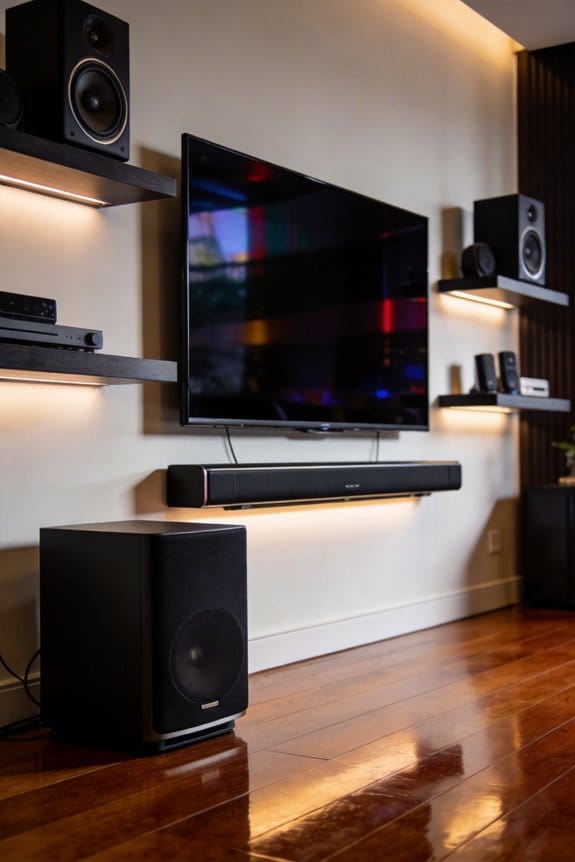
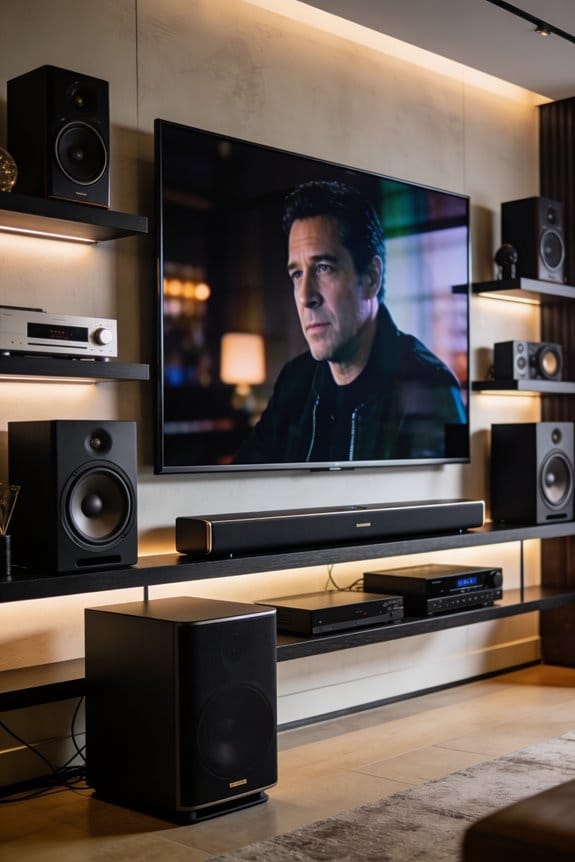
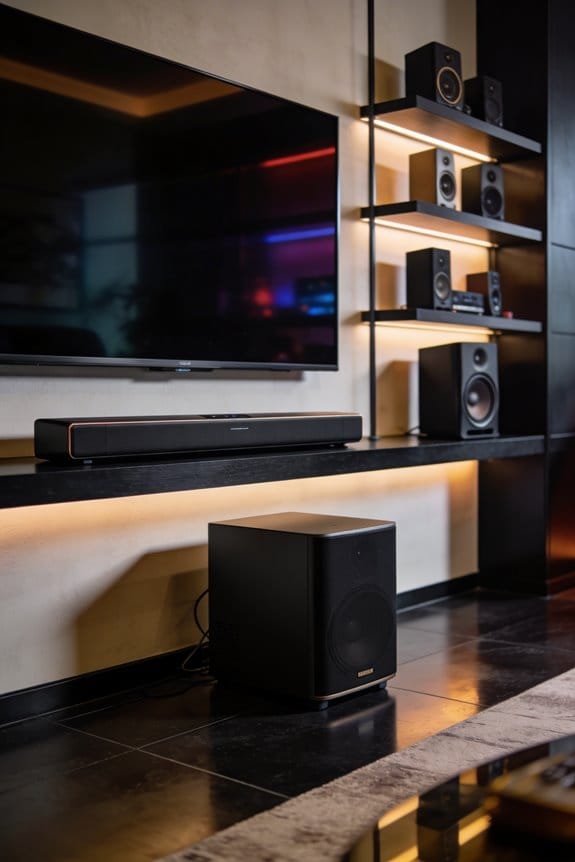
Now, look at your TV speakers — most measure just 2-3 inches. They simply don’t have what it takes to reproduce the full range of human voice frequencies clearly. Instead of letting dialogue shine, they tend to emphasize mid-range sounds like explosions and music, which can push the dialogue down into a muddled mess. Sure, soundbars can help improve clarity, but they still can’t quite compete with full theater setups that use dedicated center channels specifically for dialogue.
Here’s the trick: if you really want to catch those naturalistic performances, you need to invest in external speakers or high-quality headphones.
To wrap it up, capturing great audio on set is just the beginning. The way you watch at home can totally alter that experience. So, what’re you waiting for? Consider enhancing your sound setup — your movies will thank you!
Frequently Asked Questions
Do Actors Receive Specific Training in Mumbling or Naturalistic Speech Styles?
I’ll paint you a clear picture: actors aren’t formally trained to mumble. Traditional programs emphasize voice projection techniques and speech clarity training. However, modern performers deliberately abandon these skills, adopting breathy, naturalistic styles for perceived authenticity.
Can Filmmakers Release Alternate Audio Mixes Optimized for Home Viewing?
Yes, filmmakers can create separate audio mixing versions for home theater systems. Some studios already do this, optimizing dialogue levels specifically for smaller speakers. However, it’s not yet standard practice, and most films still use theatrical mixes for streaming releases.
Are Older Actors Less Likely to Mumble Than Younger Generations?
Yes, I’ve noticed generational differences in vocal projection. Younger actors often adopt naturalistic, breathy mumbling styles, while older generations typically trained in theater use clearer delivery. It’s a shift toward self-conscious realism over traditional articulation techniques.
Do International Audiences Struggle More With Muffled English Dialogue Than Native Speakers?
Yes, international audiences face greater challenges with muffled English dialogue. I’ve found that language barriers and cultural differences in speech patterns make unclear audio even harder to parse, especially when relying on subtitles that may miss mumbled nuances entirely.
Will AI Technology Eventually Fix Unclear Dialogue in Post-Production Automatically?
I think AI algorithms will likely enhance dialogue clarity in post-production, but they won’t solve intentional creative choices directors make. Technology can’t override artistic decisions to use muffled sound for realism or atmosphere.