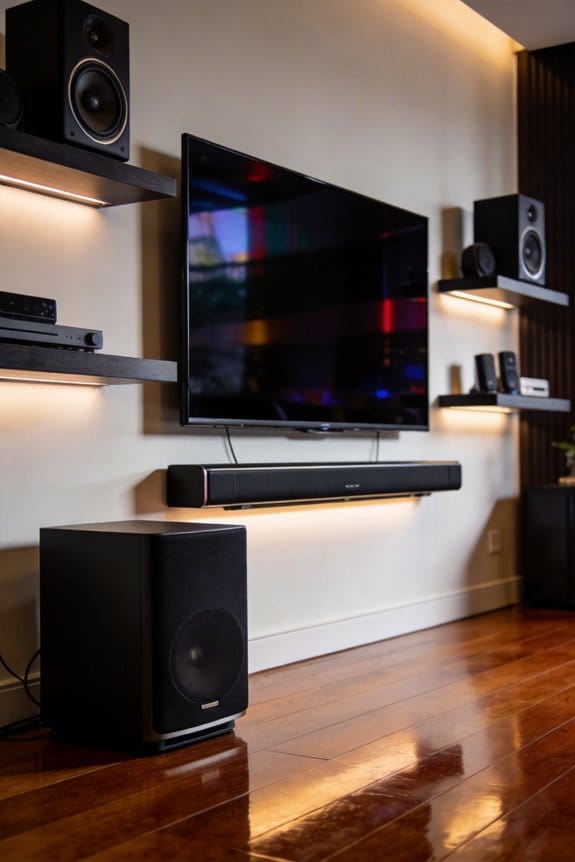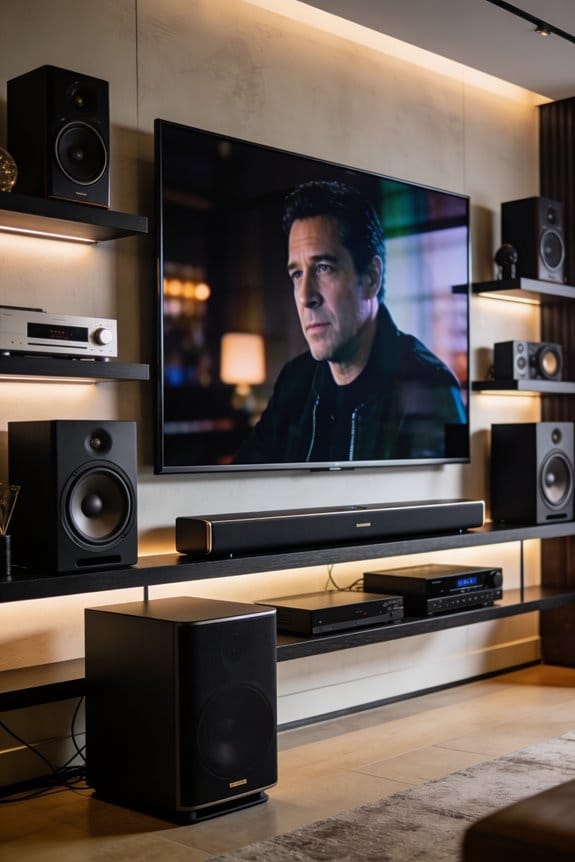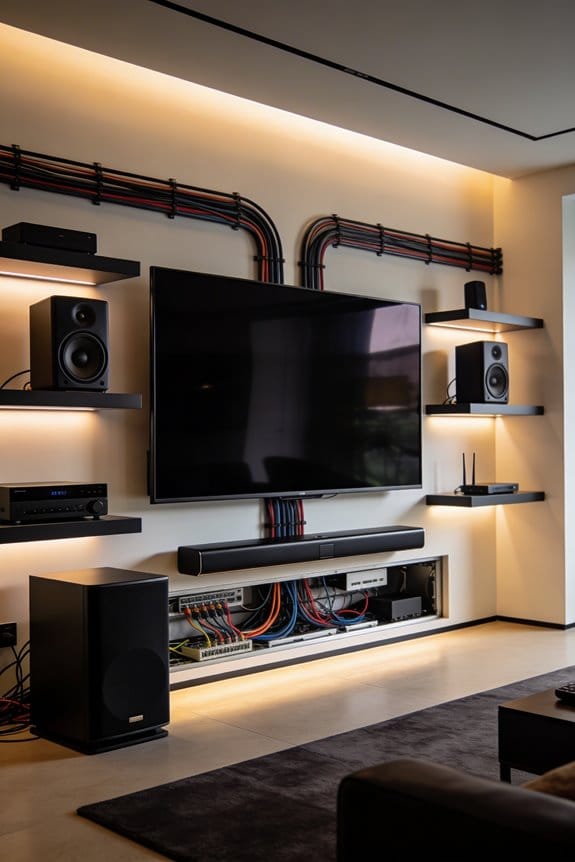


Your furniture actively shapes sound quality by absorbing, reflecting, or scattering audio waves throughout your TV room. I recommend placing soft furnishings like upholstered sofas and thick curtains to cover 20-30% of room surfaces, which reduces echoes and improves dialogue clarity. Hard surfaces such as glass tables and flat shelves reflect sound waves, creating distortion, while strategically positioned bookshelves diffuse frequencies and block bass. Position your couch equidistant from speakers and maintain at least 3 feet of clearance in front of them to eliminate dead zones and achieve balanced tonal distribution across your seating area.
Key Takeaways
- Hard surfaces like glass and wood reflect sound waves, creating echoes that distort audio clarity and muddle dialogue in your TV room.
- Placing soft furnishings on 20-30% of room surfaces absorbs sound effectively, reducing unwanted echoes and improving overall acoustic balance.
- Position your couch equidistant from speakers at 1.5 times the screen size for optimal sound clarity and balanced audio experience.
- Bookshelves filled with varied objects diffuse sound waves when placed perpendicular to speakers, enhancing sound distribution throughout the room.
- Maintain at least 3 feet of clear space in front of speakers to ensure unobstructed sound flow and prevent muffled audio.
How Furniture Absorbs, Reflects, and Shapes Room Sound
Have you ever walked into a room and noticed how some spaces just feel more inviting than others? A lot of that has to do with how furniture shapes the sound in that space. Every piece of furniture plays a role in how sound waves move around, bounce off walls, and even fade away.
Soft materials are your allies when it comes to controlling sound. Think of upholstered sofas, fluffy cushions, and heavy curtains. They absorb sound by turning it into heat, which helps cut down on those annoying echoes and reverberations. On the flip side, hard surfaces like wooden tables, metal frames, and glass shelves reflect sound. This can lead to distortion and can make the sound in a room feel more cluttered and loud than it really is.
Have you considered the arrangement of your furniture? The way you place your items affects how sound reaches you. For instance, putting bookshelves in strategic spots can help scatter sound waves all around. This is called diffusion, and it can really improve the overall audio quality in your room. Also, placing larger pieces against the walls can act as a barrier, preventing sound from bouncing back into the space like a ping-pong ball.
So, how much softness do you need? Aim for about 20-30% of your room’s surfaces to be covered with soft furnishings. This balance helps achieve decent acoustics without making everything sound too dead or dull. Honestly, it’s all about finding that sweet spot between absorption and reflection.
When setting up your place, keep these tips in mind. By being thoughtful about your furniture choices and layouts, you can create a room where the sound feels just right. So, what will you change in your space to make it more acoustically friendly?
Sofas, Rugs, and Curtains That Kill Echoes

Got echoes bouncing around your living space? That can be super frustrating! If you’re looking to tackle unwanted sound reflections without diving into expensive solutions, soft furnishings are your best friends. A good starting point? Cover about 20-30% of your room’s surface with upholstered materials. This simple strategy can really help cut down on those pesky echoes.
Place your sofa in the center of the room. This way, it can soak up mid- and high-frequency sound waves effectively. Thick curtains are another essential component—hang them up over your windows to control reflections that might muddle your conversations or favorite tunes. And don’t forget about area rugs! Lay one directly in front of your TV to help prevent sound bouncing off the floor, which is a common issue in many homes.
Soft furnishings act like broadband absorbers, taking care of various frequency ranges without needing specialized acoustic panels. So, if you’re wondering how to make the most of your space acoustically, consider layering some cushions on your chairs and installing heavy drapes over glass surfaces. It’s an easy way to boost your sound absorption.
Try this: think about how you use your room. Where do the echoes seem the loudest? Maybe it’s time to rearrange your furniture a bit or add more soft items. Truth is, a few adjustments can make a big difference in how your space feels and sounds.
Hard Tables and Shelves That Bounce Sound Back

Flat surfaces like coffee tables, dining tables, and open shelving units can really mess with your sound. They reflect sound waves right back into the room, creating those annoying echoes that you probably didn’t even realize were muddling your audio. Hard materials like glass, metal, and polished wood bounce frequencies straight towards your ears, which means less clarity in dialogue and music. So, what can you do about it?
Try this: putting a runner or placemat on your hard tables can help absorb some of those pesky mid and high frequencies. It might not seem like much, but every little bit counts when it comes to creating a better listening environment.
If you’ve got open shelving, consider angling it instead of lining it up parallel to your speakers. This simple tweak can scatter reflections, making a big difference in your sound quality. And, hey, filling any metal-framed furniture with soft items like throws or pillows can cut down on echoes that bounce around the room.
Are you using glass-top tables? Think about moving those out of the direct line of your speakers. If possible, replacing them with fabric-covered ottomans can help reduce unwanted acoustic reflections.
In the end, making small changes to your decor can really enhance your audio experience. What’s stopping you from trying some of these tips? Just a few little adjustments could make your space sound a whole lot better!
Bookshelves That Scatter Waves and Block Bass
Ever notice how your home theater’s sound can feel a bit off? The good news is that your bookshelves can actually help solve this problem. They’ve got a knack for holding a mix of odd-shaped objects that can serve as great acoustic tools. When you fill those shelves with books, plants, and knick-knacks, you’re creating a way for sound to disperse instead of just bouncing straight back at you.
So, where do you start? Position your bookshelf against a wall that’s perpendicular to your speakers. This setup can maximize the diffusion effect, allowing sound to fill the room more evenly. Try mixing it up with books of different sizes, some small plants, and unique decorations. This varied arrangement can really enhance the scattering effect and make your soundstage a lot clearer.
Now, let’s talk bass. The height of your bookshelf matters here. If you’ve got tall shelves that go from floor to ceiling, they help block those low-frequency sound waves from escaping through the walls. Honestly, that’s something worth considering if you live in an apartment or want to keep the noise down.
And remember, it’s not just about aesthetics; it’s about creating a better listening experience. So, as you’re arranging your shelves, think about how these elements can work together to improve sound quality. You might be surprised at the difference it can make!
Why Your Couch Position Changes What You Hear
Have you ever rearranged your living room and noticed that your favorite tunes just don’t sound the same? It’s not just in your head. Your couch’s distance from the speakers plays a big role in how those audio waves hit your ears, and that can really change which frequencies stand out the most. When you’re too close to one speaker, it can make the music feel lopsided, where one side totally overpowers the other. For the best experience, try to sit equidistant from both speakers. This helps keep everything balanced and clear.
Now, let’s talk about the TV. The space between your couch and the screen matters more than you might think. If you’re sitting too far back, those crisp high frequencies can fade away. But if you’re too close, you might feel overwhelmed by the bass that bounces off the walls. A simple way to find that sweet spot? Measure your screen size and multiply it by 1.5. That’ll give you a guideline for the best viewing distance where both comfort and sound quality are just right.
So, why does this matter? Having the right setup can elevate your entire movie or music experience. It’s not just about seeing the screen clearly; it’s about hearing every sound as it was meant to be heard. Honestly, don’t underestimate the impact of your couch position. A little tweaking could make all the difference in how you enjoy your space.
Keep Furniture Clear of Speakers and Screens
Have you ever sat down to enjoy a movie or some music, only to be distracted by awkward sounds bouncing around your room? It’s frustrating, right? Positioning your couch is just the start. You also need to consider what’s in between your speakers and where you’re sitting.
For clear sound, it’s important that audio waves flow freely to your ears. Muffled sounds can really ruin the experience. So, here’s a simple tip: clear any clutter that’s directly in the path between your speakers and your listening area. Remove anything like coffee tables, floor lamps, or even decorations that can block those sound waves. Aim for at least 3 feet of open space in front of each speaker; it can make a big difference.
Now, let’s talk about your screen. Proper alignment is more than just having it at eye level. You don’t want any tall plants, bookshelves, or furniture getting in the way of your view. Check your setup from various spots around the room. Is anything blocking your line of sight? If it is, adjust the placement until everything’s looking good.
Does this sound like a lot to think about? It might seem like a hassle, but trust me, it’s worth it. Whether you’re watching your favorite show or jamming out to great tunes, clear visuals and crisp sound can elevate your home entertainment experience. So, give it a shot! What’s your current setup like?
Rearrange Until Dead Zones and Echoes Disappear
Have you ever noticed that your favorite movie or show has some moments where the dialogue just seems to disappear? You’re not alone. Poor audio quality can really ruin the experience, but there’s a way to fix it. Let’s dive into how you can rearrange your space to kick those dead zones and echoes to the curb.
After you’ve cleared away any clutter around your speakers and screen, it’s time to figure out where the sound isn’t doing its job. Walk around your room while playing something you’re familiar with. Listen closely for those spots where the dialogue is muffled or the sound feels uneven. When you notice these dead zones, it’s a sign that your sound isn’t spreading out as it should. You might need to rearrange some furniture to help it along.
Here’s a simple tip: try moving your couch forward or backward in 6-inch increments. This little adjustment can help you dodge the nulls caused by wave interference. If you’ve got side chairs, reposition them too. Breaking up those parallel wall reflections will help reduce that annoying flutter echo that can happen if sound waves bounce around too much. If you have some bare walls, consider adding a bookshelf. It’ll not only look nice, but it’ll also help diffuse sound waves and cut down on that metallic ringing you might hear.
Once you’ve made those changes, sit down in your main viewing spot and play some dialogue-heavy scenes. Pay attention to how clear everything sounds now. Keep tweaking the furniture until you find that sweet spot where the volume and tonal balance feels just right throughout your seating area.
Truth is, you might need to experiment a bit to get it just how you like it. But by taking the time to rearrange, you can improve your audio experience—a little effort can go a long way. So, what’s the first change you’ll make in your space?
Frequently Asked Questions
Can Ceiling Height Affect How Furniture Placement Impacts TV Room Acoustics?
Yes, I’ve found that ceiling height considerably amplifies the height impact on acoustics. Taller ceilings create ceiling resonance that changes how sound reflects off furniture, requiring you to adjust placement strategies differently than you’d use in standard-height rooms.
Does Room Shape Matter More Than Furniture Arrangement for Sound Quality?
it’s not a chicken-or-egg debate. Both matter equally. I’ve found that room symmetry creates predictable wall reflections, but strategic furniture arrangement controls them. You’ll need to optimize both for excellent sound quality.
Should I Choose Furniture Based on Acoustic Properties or Aesthetics First?
I’d prioritize acoustic materials first, then refine aesthetic choices. You’ll achieve better sound quality by selecting soft furnishings and diffusive pieces initially, but you can easily balance both through strategic selection of attractive acoustic-friendly furniture options.
How Does Flooring Material Interact With Furniture to Affect Overall Sound?
I’ve found that hard flooring types like tile or hardwood reflect sound waves, while carpet provides sound absorption. When I pair rugs with soft furniture, they work together to minimize echoes and balance your room’s acoustics effectively.
Can Plants or Decorative Objects Improve or Worsen TV Room Acoustics?
Plants and decorative objects can definitely improve your TV room acoustics! I’ve found they add sound absorption through their irregular surfaces and organic materials, reducing harsh reflections while maintaining room vibrancy without over-dampening the space.