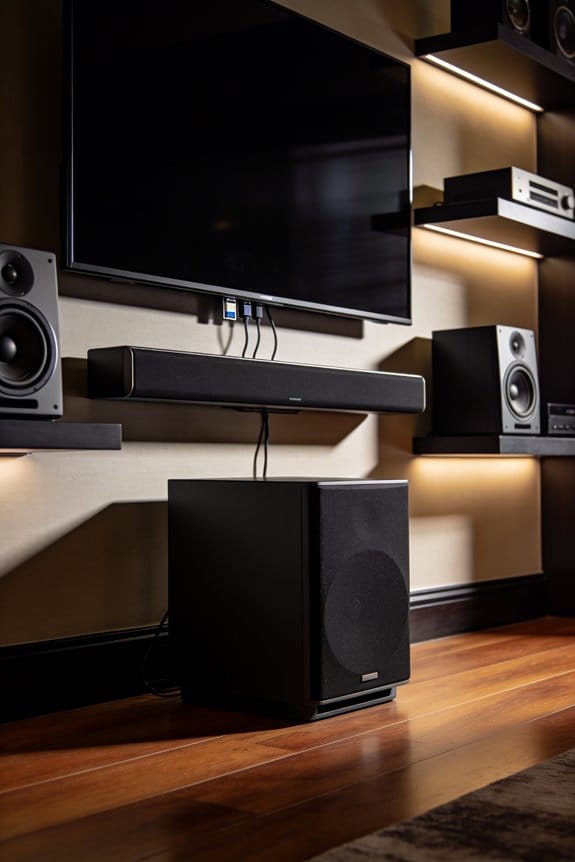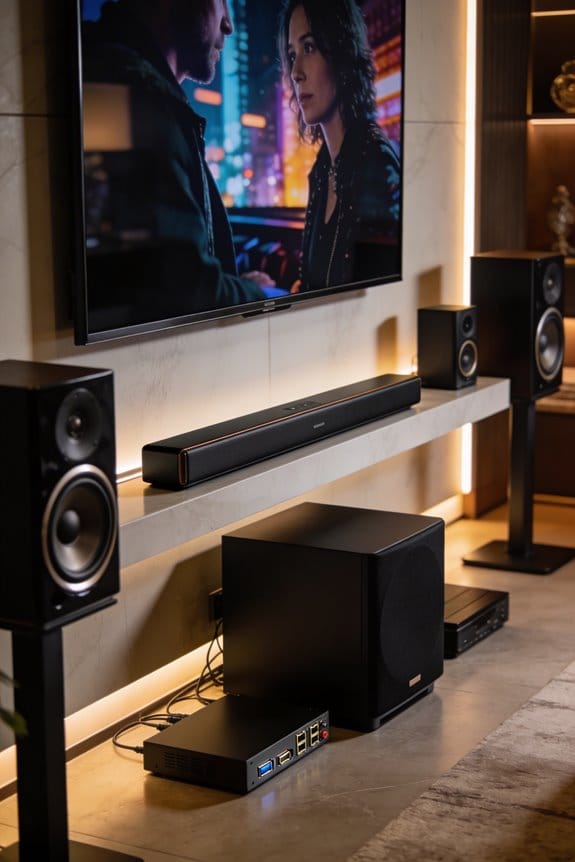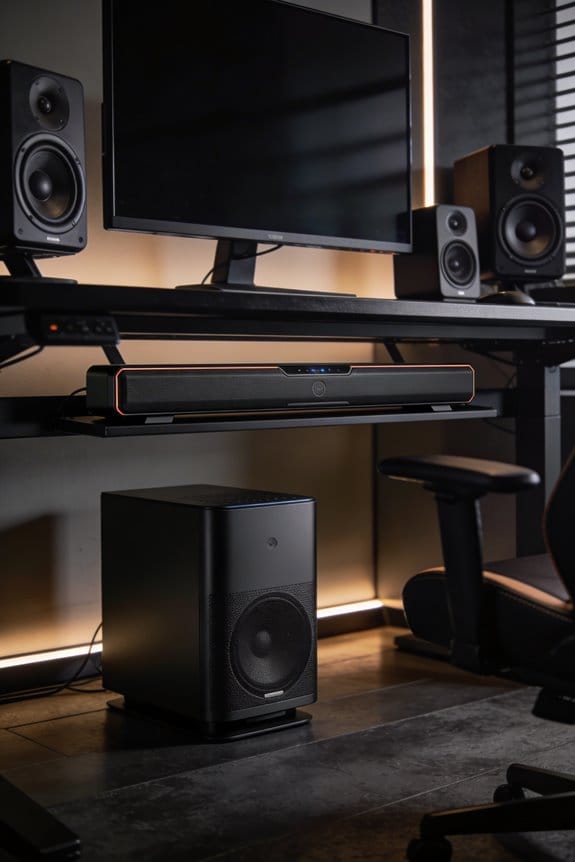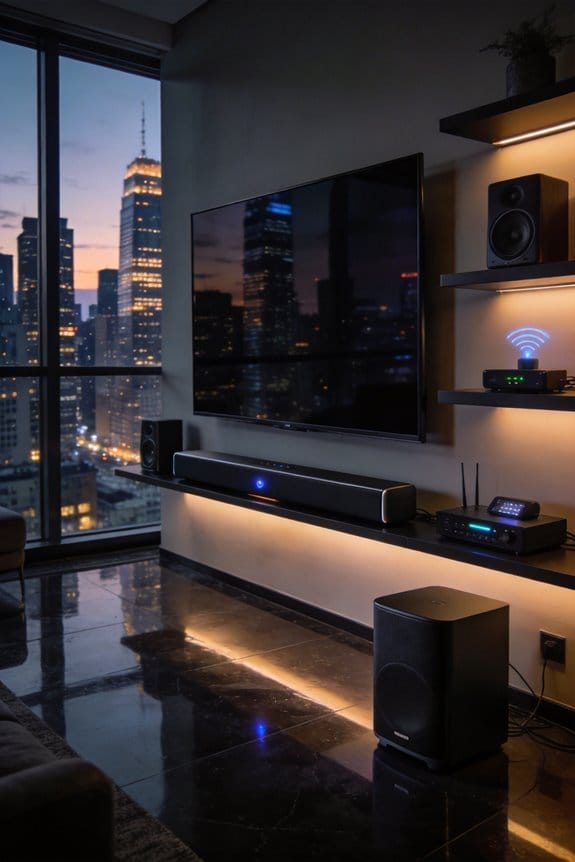
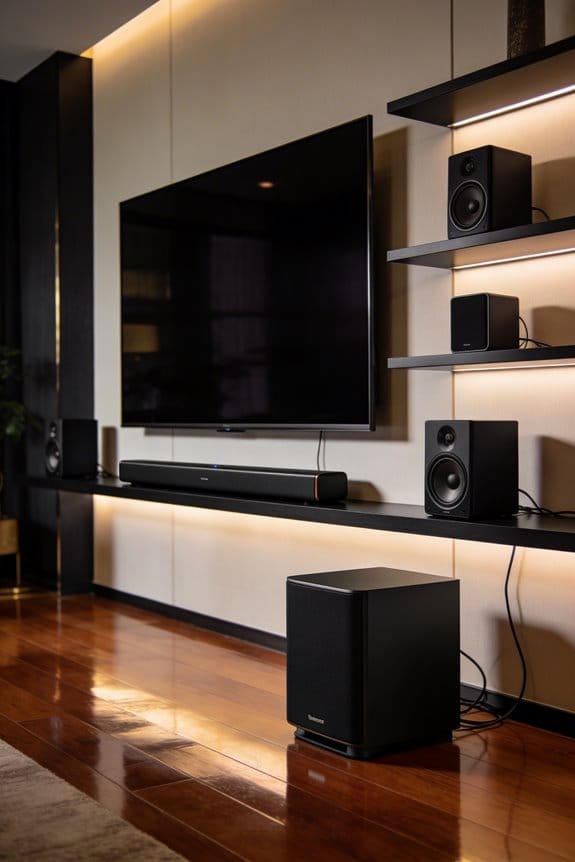

I’ve watched the home audio industry shift dramatically as active wireless speakers replace traditional AV receivers and passive speaker setups. Active speakers integrate amplifiers, DSP processors, and wireless streaming technologies like Bluetooth, WiFi, HEOS, and MusicCast into single units that connect directly to your network. This eliminates bulky receivers, speaker wire runs, and complex calibration procedures that characterized analog systems. While you’ll sacrifice component upgradeability and need multiple power outlets, you’ll gain simplified setup, built-in room correction, voice control through Alexa or Google Assistant, and multi-room synchronization capabilities that traditional systems can’t match without expensive add-ons. Below, I’ll explain the technical differences and help you determine which approach suits your space.
Key Takeaways
- Active wireless speakers eliminate traditional AV receivers by integrating amplifiers, DACs, and wireless connectivity into self-contained units.
- Built-in streaming platforms like HEOS and MusicCast replace receivers for distributing audio from Spotify, Tidal, and other services.
- Wireless ecosystems simplify setup with direct device connections, removing complex speaker cables and external amplifier configurations.
- Voice control integration with Alexa and Google Assistant provides modern convenience unavailable in traditional analog receiver systems.
- Multi-room capabilities allow synchronized playback across speakers without central receiver hubs, ideal for contemporary living spaces.
Active vs. Passive Speakers: How Amplification and Setup Differ
Choosing between active and passive speakers can feel overwhelming, especially if you’re not sure where to start. Here’s a thought: the main difference really comes down to how the sound gets amplified and how you connect everything.
Passive speakers need an external amplifier to deliver power. That means you’ll have to deal with extra components like stereo amps or AV receivers. You’ll be connecting your passive speakers using speaker cables, and often, you’ll also need external crossovers to split the frequencies. It’s a bit more complex, but some people love tinkering with gear—maybe that’s you?
On the flip side, active speakers come with built-in amplifiers for each driver. This setup makes life a lot easier since you won’t need separate power components. The crossovers in these speakers work at line level before amplification, which leads to less distortion and better control over the drivers. You’ll connect them directly to your source devices using short cables, and each speaker requires its own power outlet. The best part is that you won’t have to deal with complicated wiring. However, be aware that this design can limit your ability to upgrade individual components down the line.
Built-In Amps, Crossovers, and DSP: Active Speaker Performance Advantages

Active speakers bring a lot to the table, especially since they come with amplifiers built right into each driver. This setup offers some real performance perks that you just won’t get with traditional passive systems and external amps.
Amp Optimization Through Direct Driver Matching****
Think about it: when manufacturers set up dedicated amplifiers for each speaker component—like woofers, tweeters, and mids—you get a level of control that’s tough to beat. This direct pairing means no guesswork when it’s time for power matching. Engineers fine-tune the amp’s output specifically for the sensitivity, impedance, and frequency range of each driver. So, you’re looking at a more tailored sound.
DSP Benefits for Frequency Management****
Let’s talk about digital signal processing (DSP). Active crossovers manage frequencies before the amplification happens, which cuts down on distortion. This is a real improvement over passive crossovers that kick in after amplification. With these systems, you’ll benefit from features like real-time equalization, room correction, and phase alignment—all adjustable through companion apps. So, why does this matter? Well-known brands like KEF, Genelec, and Focal incorporate these tech advancements to optimize sound quality in your space.
In short, active speakers provide a smart solution for those serious about audio fidelity. With tailored amplifiers and effective DSP, you’re set up for a better listening experience. Have you thought about switching to active speakers for your next sound upgrade?
Power Outlets, Repair Costs, and Upgrade Limits: Active Speaker Drawbacks

Active speakers can sound fantastic and are super convenient to set up, but there are some real-world limitations to keep in mind before you dive in.
Outlet Dependency and Power Consumption****
Have you thought about how many power outlets you actually have? Each active speaker needs its own plug, making it tricky to place them in rooms with limited electrical access. Plus, they tend to eat up more electricity compared to passive systems since every speaker keeps drawing power even when it’s just sitting there on standby.
Repair Complexities and Costs****
Now, let’s talk repairs. When an integrated amplifier goes haywire, it can be a hassle — and often, the repair costs can be higher than just buying new passive components. The built-in electronics mean technicians have to deal with multiple systems at once, which can really add up. It’s something to consider seriously.
Upgrade Challenges
If you’re into upgrading your audio gear, be prepared for some headaches. With all-in-one designs, swapping out individual amplifiers or crossover components just isn’t an option. This can be frustrating if you want to make improvements piece by piece over time. So, why does this matter? Well, it limits your options down the road.
In short, while active speakers have their perks, they also come with a set of challenges you’ll want to weigh. Have you experienced any of these issues yourself?
Bluetooth, WiFi, and Multi-Room Streaming in Modern Active Speakers
Got a question for you: how many times have you tripped over speaker wires while trying to set up your sound system? It’s frustrating, right? Modern active speakers might just be the solution you’re looking for. Unlike passive speakers that keep you tied down with cables, active speakers come with built-in wireless tech like Bluetooth, WiFi, and streaming options.
Take the KEF speakers, for instance. They’ve got Bluetooth 5.3 and RJ45 ethernet connections, with a frequency response that hits 22kHz. This means you can stream high-quality sound without the hassle of wires. And if you have an AV receiver, many integrate platforms like HEOS or MusicCast, making it easy to distribute audio throughout your home.
Setting up your network streaming is pretty straightforward. You’ll want to connect your speakers to your router via ethernet or WiFi. Then, grab the manufacturer’s app. Once you do this, you can stream from services like Spotify, Tidal, and even internet radio without needing extra devices cluttering your space. And guess what? You can even control it all with your voice using Alexa or Google Assistant.
Multi-room setups are really neat, too. You can sync playback across different rooms while keeping the volume adjusted on a speaker-by-speaker basis. This definitely helps create the perfect listening environment everywhere in your home.
When Active Wireless Speakers Make Sense for Your Space
Are you tired of tripping over cables and wrestling with messy setups in your living space? If you’re living in an apartment, dorm room, or small studio, active wireless speakers might just be the solution you need. These speakers can seriously simplify your audio experience, especially when tight spaces limit where you can run cables or place your components.
Try this: if minimalism is your aesthetic, active wireless speakers are a great fit. They don’t require separate amplifiers or receivers, which means no more clutter from long speaker wires snaking through your living area. Just picture a sleek, tidy setup where everything’s streamlined and visually appealing.
The best part is, these speakers work really well when you have a few power outlets handy near your listening spot. Each active speaker needs its own dedicated electrical access, so make sure to check your outlets before committing. They shine in spaces under 300 square feet because they provide accurate stereo imaging without needing a ton of adjustments.
So, why does this matter? For renters, active wireless speakers are perfect since you won’t have to worry about drilling holes in the wall for permanent setups. If you’re all about quick setups and don’t want the hassle of future upgrades, this could be the way to go.
To wrap it up, if you’re craving a clean, no-fuss audio experience in a small space, consider giving active wireless speakers a shot. What’s holding you back from enjoying your favorite tunes without the mess?
Frequently Asked Questions
Can I Use My Existing AV Receiver With New Active Wireless Speakers?
I wouldn’t recommend it since active wireless speakers have built-in amplifiers and don’t need your receiver’s power. However, you can use compatible connections like optical or RCA from your receiver as a source, though sound quality benefits diminish.
Do Active Speakers Work With Vinyl Turntables and Phono Preamps?
Yes, I’ll explain turntable compatibility: if your turntable has a built-in phono preamp, you can connect it directly to active speakers. Without one, you’ll need external phono preamp options between your turntable and speakers for proper amplification.
What Happens to Sound Quality When Streaming Over Bluetooth Versus Wifi?
I’ve found WiFi stability delivers superior sound quality with lossless audio and no compression, while Bluetooth latency introduces delays and compressed audio. For critical listening, I’d recommend WiFi over Bluetooth whenever you’re streaming to active speakers.
Are Passive Speakers Better for Upgrading Components Over Time?
Yes, I’d say passive speakers are like a ship you can rebuild—they offer unmatched speaker longevity since you’re free to swap amplifiers, DACs, and preamps independently, making passive upgrades straightforward whenever technology advances or your budget allows.
Can Active Speakers Integrate With Existing Home Theater Surround Sound Systems?
Active speakers can integrate with home theater systems, but I’d note they typically work best as stereo pairs. You’ll enjoy active speaker benefits like built-in amplification, plus wireless connectivity options including Bluetooth and WiFi for seamless multi-room audio.