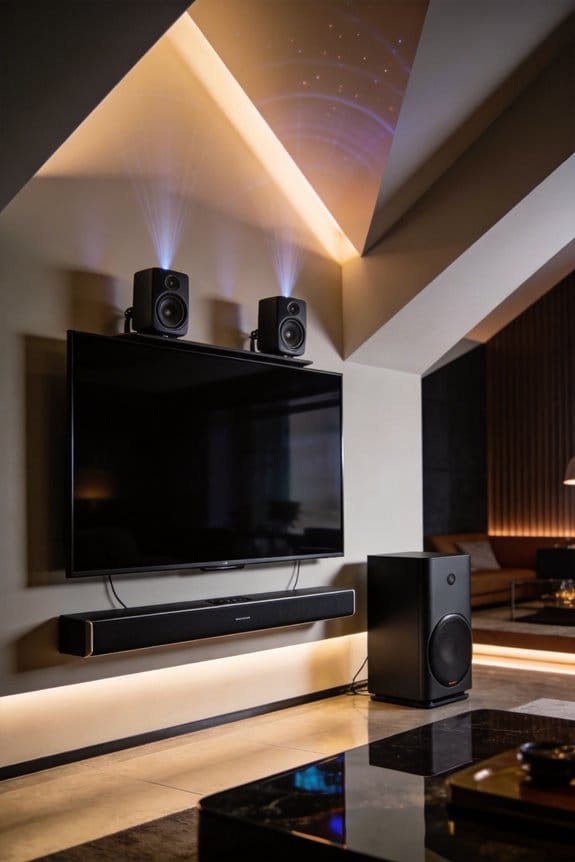

Up-firing Atmos speakers require ceiling heights between 8 to 12 feet to function properly, with 9 feet being ideal for sound reflection. I recommend measuring your ceiling carefully, as heights under 8 feet prevent adequate sound bounce, while ceilings over 12 feet disperse audio before it reaches you. Your ceiling material matters equally—hard surfaces like painted drywall reflect sound effectively, whereas acoustic tiles absorb it. You’ll need to position your seating directly beneath the speakers, as the sound bubble extends only 3 feet high, and the following sections explain how these factors interact with installation costs and in-ceiling alternatives.
Key Takeaways
- Optimal ceiling height for up-firing Atmos modules is 8 to 12 feet, with 9 feet being ideal for reliable overhead sound.
- Ceilings under 8 feet hinder sound reflection, while ceilings over 12 feet disperse sound before reaching the listening position.
- Hard, reflective ceiling surfaces like painted drywall enhance performance; acoustic tiles and textured finishes absorb and scatter sound waves.
- Up-firing speakers create a 3-foot sound bubble above, requiring listeners to sit directly underneath for optimal audio localization.
- In-ceiling speakers maintain 45-degree down-firing angles, delivering superior audio fidelity regardless of seating position compared to up-firing modules.
Does Your Room Qualify? The 8-12 Foot Flat Ceiling Requirement
Have you ever thought about upgrading your home sound system with those up-firing Atmos modules? Before you dive in, take a moment to measure your ceiling height. You want it to be between 8 to 12 feet, as that’s what most manufacturers suggest for the best sound.
Why does this matter? If your ceiling’s under 8 feet, the sound won’t reflect properly, making those fancy speakers less effective. On the flip side, if your ceiling goes over 12 feet, the sound can get too dispersed before it reaches your ears, which isn’t ideal either. From what I’ve seen, a height of around 9 feet tends to deliver the most reliable overhead sound effect.
Here’s a handy tip: check that your ceiling is flat and smooth, as any vaults or textures can wreak havoc on sound reflection. Angled surfaces can distort how sound travels. So, grab that tape measure and check multiple spots in your room for any slopes or irregularities that could mess with the audio experience.
Up-Firing vs. In-Ceiling Speakers: The Performance Gap Explained
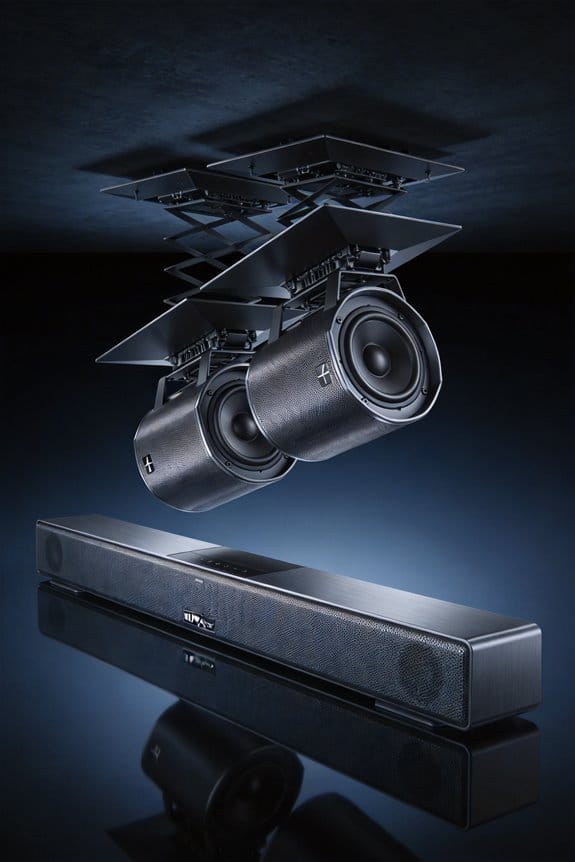
When you’ve got your heart set on creating that immersive Atmos experience, you might be torn between up-firing speakers and in-ceiling setups. Well, here’s the lowdown: these options perform very differently.
In-ceiling speakers provide you with direct overhead sound, which means you’re getting precise height channel placement without needing to rely on ceiling bounce. Ever notice those subtle audio details, like the sound of wind rustling or chirping birds? With in-ceiling speakers, you’ll catch those clearly because the sound travels straight to your listening position. Now, you might be asking yourself, “Is it worth the effort for installation?” The truth is, yes — the payoff is significant!
On the other hand, up-firing speakers have a few advantages, like being easier to install right on top of your existing speakers and usually costing less. But let’s be real: they simply don’t match the overhead simulation of ceiling-mounted options. Instead, they create a smaller bubble of sound—around a 3-foot height—which can feel limiting and loses some power during the bounce off your ceiling. Now, if you’re thinking about in-ceiling speakers, sure, it requires cutting holes and running wires, but it provides that crucial 45-degree down-firing angle that Dolby recommends for the ultimate Atmos experience.
Which Ceiling Materials Work (And Which Kill Sound Reflection)
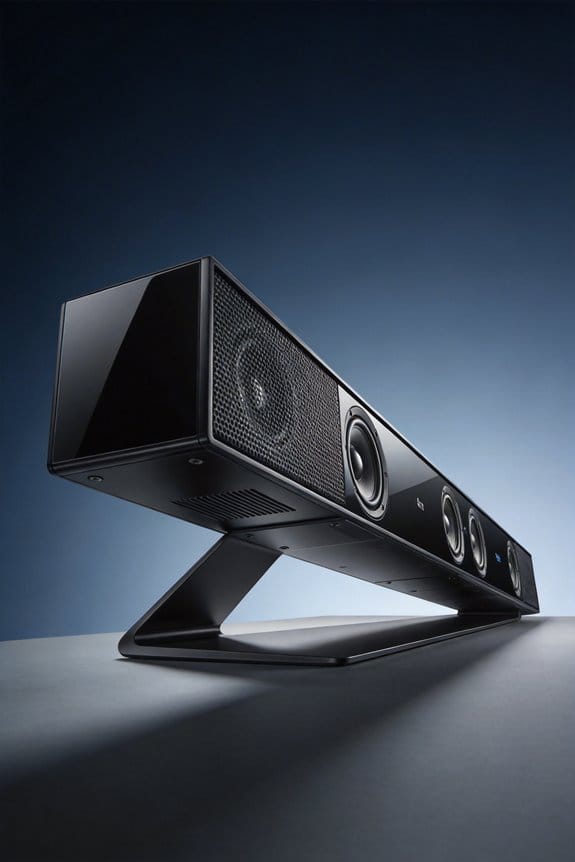
Ever set up your home theater, only to realize your sound just isn’t what you expected? The ceiling material in your room plays a big role in how sound behaves, especially if you’re using up-firing Atmos speakers.
Let’s break it down. Hard, reflective surfaces like painted drywall, smooth plaster, and glossy finishes are your friends. They send audio waves bouncing straight down to your listening spot with little energy loss. This means you’ll get that overhead sound effect you’re looking for.
On the flip side, materials that soak up sound can be a real buzzkill. Think about acoustic ceiling tiles, that textured popcorn finish, or decorative fabric panels. Those scatter sound waves, which totally ruins the up-firing effect. I’ve noticed a drop in performance with these kinds of ceilings; they just dissipate the height channel audio before it even gets to you.
So, what’s the solution if you’ve got absorbent materials up there? In-ceiling speakers might be the way to go for a proper Atmos experience.
If you want that cinematic feel in your space, you’ll need to pay attention to what’s overhead. Don’t underestimate the ceiling’s role in all this! Have you checked what materials you’re dealing with?
Why You Must Sit Directly Below Up-Firing Speakers
What’s the best spot for enjoying that amazing overhead sound from your up-firing Atmos speakers? You might think any old chair will do, but it turns out you need to be pretty deliberate about your seating. The magic happens directly beneath where sound bounces off your ceiling, creating a narrow bubble of audio bliss that’s about 3 feet wide above each speaker. If you sit even a bit outside this zone, you’ll miss out on all those impressive height effects.
Here’s the trick: up-firing speakers have these precise angles designed to direct sound to your main listening area. If you step forward or backward by just a couple of feet, the sound localization gets messed up. Instead of that full, immersive experience, overhead sounds can start to feel vague or even directional. That’s a bummer, right?
This limitation is one reason in-ceiling speakers can be a better option. They keep a consistent sound experience, even if you shift around a bit. With up-firing speakers, if you change positions during a movie, you might lose that Atmos effect completely.
So, why does this matter? Sitting in the right spot can make all the difference in how you experience sound. If you’re serious about enjoying those well-crafted audio landscapes, you’ll want to find that sweet spot as soon as possible.
In short, remember to position yourself directly beneath those up-firing speakers for the best experience. Have you found your perfect listening spot yet?
When 10-Foot Ceilings Eliminate Height Effects Completely
Ever tried setting up up-firing Atmos speakers in a room with 10-foot ceilings? If you have, you probably noticed that things just don’t sound right. The sound has to travel about 20 feet—10 feet up and 10 feet back down—which can really mess with what you hear. This long journey drains some of the power, meaning you might miss out on those subtle details that make Atmos soundtracks so immersive, like the sound of rain or footsteps overhead.
From my own setup, I found that with those high ceilings, there were practically no height effects during crucial scenes. The sound reflection angle becomes too shallow, and the sound spreads too much across the ceiling. Instead of getting that immersive experience, you might actually be better off sticking with traditional surround speakers.
Here’s a thought: if you’re dealing with tall ceilings, think about installing in-ceiling speakers. They can give you direct sound without losing all that detail along the way. It’s a more effective solution if you want to capture all those little auditory details.
Making the Call: Budget vs. Installation vs. Audio Quality
When it comes to choosing between up-firing modules and in-ceiling speakers, you have a few big decisions to make. It’s all about your budget, how much work you’re willing to do for installation, and the sound quality you want. So, what’s the right fit for you?
Up-firing modules are an appealing option if you don’t want to deal with complicated installation. They typically cost between $200 and $400 per pair and just sit on top of your existing speakers. If you’re renting or simply prefer not to mess with your ceiling, this could be a win for you. On the flip side, in-ceiling speakers are a bit pricier, usually ranging from $300 to $800 per pair. But here’s the catch: they require professional installation which involves cutting into drywall and running wires through your ceiling. That might not be what you want to get into.
Now, let’s talk sound quality. Honestly, if you’re looking for immersive audio, in-ceiling speakers usually outperform their up-firing counterparts. They create better overhead effects because the sound travels directly from the speakers. If your room has a ceiling height outside the 8-12 foot range, up-firing modules can struggle to deliver the quality you’d expect. You might miss out on some precision with those modules, but they do simplify things.
So, if you want great sound quality and don’t mind spending more, in-ceiling speakers might be the way to go. But if you prefer an easier setup and a lower price tag, up-firing modules could be just what you need. Truth is, you have to weigh your priorities, and that will guide your choice.
Frequently Asked Questions
Can Ceiling Fans Be Used in Rooms With Up-Firing Atmos Speakers?
I don’t recommend using ceiling fans with up-firing Atmos speakers. Fan placement directly interferes with sound reflection paths, and the blades cause sound interference that disrupts overhead audio effects. You’ll lose the immersive height channels you’re paying for.
Do Vaulted Ceilings Work Better Than Flat Ones at Certain Angles?
vaulted ceilings don’t offer benefits over flat ones at any angle for up-firing Atmos. Flat ceiling drawbacks pale compared to vaulted surfaces, which deform sound reflections and ruin overhead effects I’ve tested.
Will Acoustic Foam Panels Completely Ruin Up-Firing Speaker Performance?
Yes, acoustic foam panels will severely harm performance since they absorb reflections instead of bouncing sound back. I’d recommend reconsidering speaker placement considerations—avoiding acoustic absorption effects on ceilings is essential for up-firing systems to work properly.
How Does the Haas Effect Impact Overhead Sound Localization?
the Haas Effect tricks your sound perception by making you hear whichever speaker fires first. That’s why precise height placement matters so much for convincing spatial audio—timing controls localization completely.
Are Wide Dispersion In-Ceiling Speakers Worth the Extra Installation Cost?
I’d say yes after my cost benefit analysis—wide dispersion in-ceiling speakers deliver consistent overhead immersion regardless of speaker placement precision. They’re forgiving with seating positions, making the extra installation investment worthwhile for true Atmos accuracy.