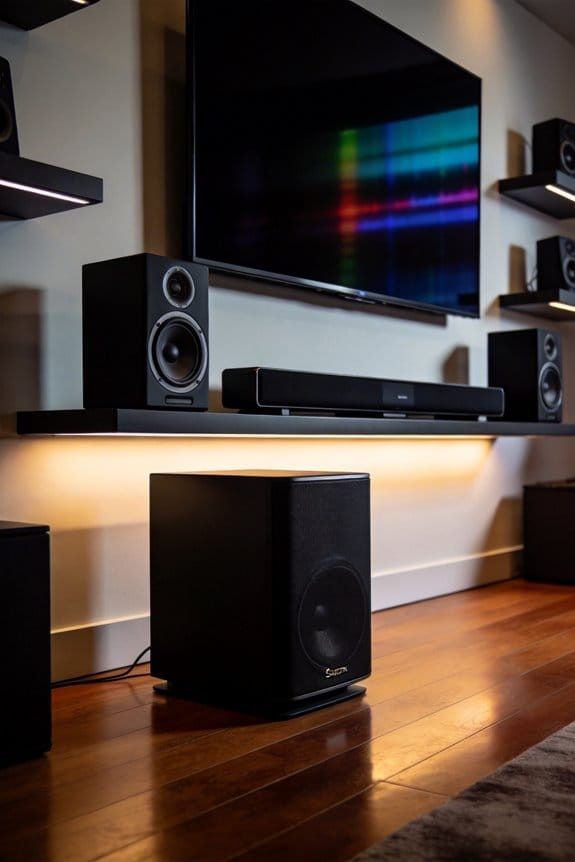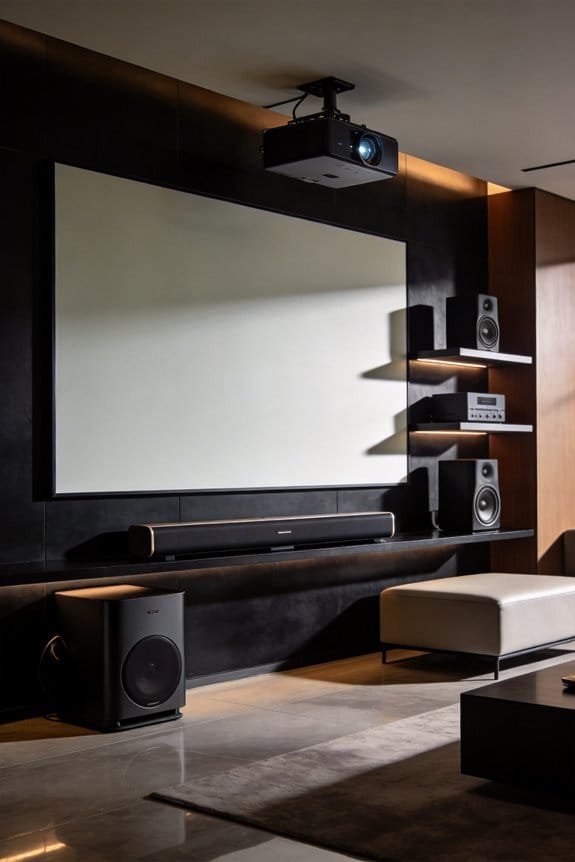
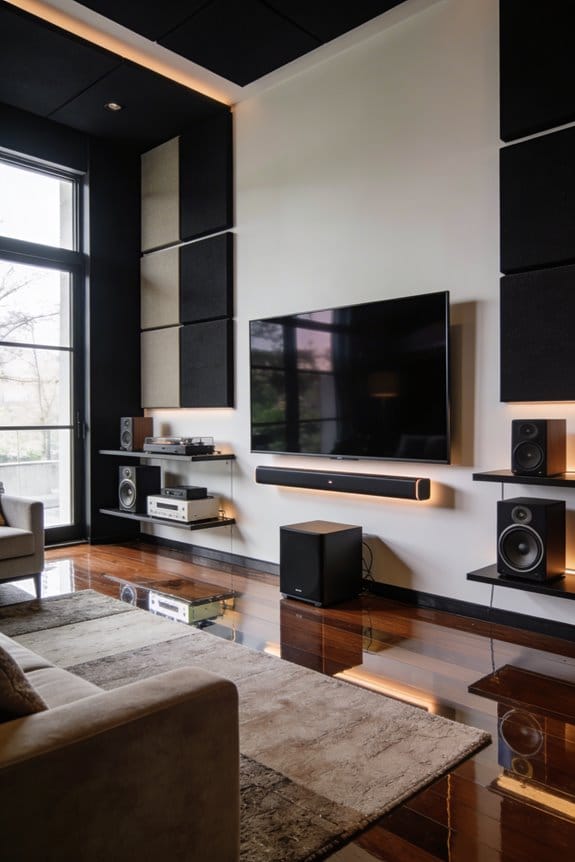

I’ll help you combat echo chambers by adding soft furnishings like heavy curtains and thick rugs, installing acoustic panels at first reflection points covering 20-30% of wall surfaces, and positioning your microphone 3-4 feet from walls. You can seal gaps with acoustic sealant, apply parametric EQ cuts of 3-6 dB at 200-500 Hz frequencies, and position bookcases at 15-30 degree angles for diffusion. The strategies below demonstrate how combining these treatments creates professional-quality acoustics.
Key Takeaways
- Add heavy curtains, thick rugs, and upholstered furniture to absorb sound reflections, especially in corners and on parallel walls.
- Install acoustic panels covering 20-30% of wall surface area at first reflection points to manage high and mid-range frequencies.
- Position microphones 3-4 feet from walls toward room center, using directional patterns to minimize reflections and echo pickup.
- Cover 60-70% of floors with thick wool or shag rugs, layering them in corners and under microphones for maximum absorption.
- Apply parametric EQ cuts of 3-6 dB at 200-500 Hz frequencies to reduce hollow resonances and problematic reflections.
Add Soft Furnishings to Absorb Echo Chamber Reflections
Got a small room that sounds more like an echo chamber than a cozy space? You’re not alone. Dealing with too much reverb can make it hard to enjoy your time indoors or even mess with your recordings if you’re into that. Luckily, soft furnishings can help absorb those pesky sound reflections without breaking the bank.
Start with some heavy curtains on your walls. Thick rugs are also a smart idea for those hard floors. And don’t forget about upholstered furniture—it works wonders throughout the space. These materials can really soak up those mid and high frequencies that create that hollow, echoey effect you might be hearing.
Now, focus on the corners and those parallel walls. These are the spots where sound likes to bounce around the most. You could hang tapestries, install fabric panels, or even set up bookshelves filled with books to create a barrier to those reflective surfaces. This isn’t just about muffling the sound; it can cut down reverb decay time by about 40-60% in a typical 10×12 foot room. Pretty neat, right?
Here’s the trick: layer your soft furnishings. When you combine floor coverings, wall treatments, and strategic furniture placement, you’ll tackle different frequency ranges effectively. It’s all about finding the right mix for your space.
Install Acoustic Panels on Bare Echo Chamber Walls
Have you ever walked into a room that felt so echoey, it was hard to have a conversation? If you’ve added some soft furniture but still feel like you’re in an echo chamber, it might be time to consider acoustic panels. These wall-mounted pieces are designed to absorb specific sound frequencies that contribute to that hollow, reverberant feel.
Here’s a breakdown of common acoustic panel types to consider:
- Foam Panels: Fantastic for absorbing high-frequency sounds.
- Fiberglass Panels: Great for mid-range sound control.
- Bass Traps: Essential for managing those deep, low frequencies.
Where you place these panels makes a big difference. It’s all about reducing those pesky echoes. Look at the first reflection points—these are spots on the wall where sound bounces off before reaching your ears. You should also think about placing them on parallel walls and in corners where sound tends to build up. Don’t forget behind your speakers or microphones.
A good rule of thumb is to cover about 20-30% of your wall’s surface area with panels to notice a real improvement. When you install them, aim for ear level, which is typically around 3-5 feet from the floor. You can use adhesive strips or mounting brackets, depending on your wall surface.
Truth is, controlling sound in a reflective space can be tricky, but with the right panels in the right spots, you can create a much more pleasant environment. Have you thought about where echoes are the worst in your space? Taking a little time to address this can really make a difference in your sound quality.
Position Your Microphone Away From Reflective Surfaces
Have you ever recorded something only to find it sounds echoey and far away? It’s frustrating, right? Well, let me share a few tips on how to avoid that hollow echo chamber effect that happens when microphones are too close to reflective surfaces.
Microphones pick up sound from all around, which means that if they’re placed too near walls, ceilings, or other hard surfaces, you’ll end up with a lot of unwanted reflections. To help reduce that annoying reverb, you should try to position your microphone at least 3-4 feet away from these reflective areas. The right placement can significantly cut down on the echoed sound, leading to a much cleaner signal.
When you’re setting up your space, take a good look around. Identify all those reflective surfaces like windows, mirrors, or even bare walls. The trick is to move your microphone toward the center of the room, away from these problematic spots. If your microphone has a directional pickup pattern, you can also angle it away from those surfaces to further prevent unwanted reflections.
Here’s a little exercise: Record a few short clips from different positions and listen back to see which one sounds best. You might be surprised at how much difference a few inches can make.
In short, keeping your mic away from reflective surfaces is a simple but effective way to improve your sound quality. Have you tried adjusting your mic placement before? What results did you notice?
Seal and Texture Walls to Tame Echo Chamber Bounce
Moving your microphone away from reflective surfaces can help, but if you really want to improve your sound, consider treating the walls in your recording space. It’s all about controlling how sound bounces around.
Seal Gaps and Cracks
First off, look for any gaps or cracks in your walls, around windows, and door frames. Applying acoustic sealant can really cut down on sound leaking in or out. This isn’t just about keeping your sound in; it helps prevent those pesky reflections that occur when sound bounces back unexpectedly.
Add Textured Wall Materials
Next, think about adding some textured surfaces. Installing things like stucco or rough plaster can make a world of difference. These textures scatter sound waves in different directions instead of just bouncing them straight back, which really helps reduce that echo chamber effect.
If you’ve got smooth walls, consider applying three to four coats of textured paint to create some micro-variations that’ll diffuse sound. You might also want to explore fabric wall coverings, cork panels, or textured foam. They can absorb sound and scatter it, giving you a more balanced acoustic environment.
Use Heavy Curtains to Stop Window Reverb
Windows can really mess with your recording space, can’t they? The glass reflects sound waves like it’s their job, which can create a lot of unwanted reverb. To tackle this, heavy theatrical curtains could be your best bet. Think about fabrics like velvet, suede, or multilayer types that can actually absorb sound frequencies between 500 Hz and 4 kHz.
When choosing your curtains, window placement is key. Larger windows need thicker fabrics—aim for materials that weigh at least 12-15 ounces per square yard. The best part is, you can maximize your coverage by hanging the curtains from ceiling-mounted tracks that extend 6-8 inches beyond the window frame.
If you’ve got multiple windows, it’s smart to treat each one individually rather than going for continuous drapes. This way, you’re making sure each window gets the attention it needs. Curtains that reach the floor and bunch up a bit are ideal because they create extra absorptive mass, which helps trap those low-frequency reflections.
Cover Hard Floors With Thick Rugs and Carpets
Hard floors, like hardwood or tile, can really bounce sound around your space, creating echoes that are less than ideal for recording. If you’ve noticed your recordings sounding a bit hollow, it’s probably time to tackle that hard floor scenario.
Try this: cover at least 60-70% of your floor with thick rugs or carpets. When it comes to rugs, not all materials are created equal. Wool rugs with a dense pile are known to absorb sounds better than synthetic options. And if you’re leaning towards carpets, go for shag styles—they do a fantastic job at soaking up sound compared to flat-weave designs. Placing rugs in corners and near walls is key, as this is where sound reflections tend to get intense, potentially creating standing waves that can mess with your audio.
Wondering where to start? Position your largest rug right under your microphone setup. This will help catch any floor reflections before they make their way up to the mic capsule, cutting down those annoying hollow tones that can creep into your recordings. If one rug isn’t enough, don’t hesitate to layer them to boost the thickness of sound absorption.
Apply EQ to Cut Frequencies That Cause Hollow Sound
Once you’ve taken care of those floor reflections with rugs and carpets, it’s time to tackle those pesky frequencies that sneak through your acoustic treatment. You might be wondering how to pinpoint the specific ranges that create that hollow sound in your space—it’s not always obvious.
Here’s a simple way to get started: fire up your audio interface software and pop a parametric EQ onto your master channel. Use a spectrum analyzer to find those peaks between 200-500 Hz, where those hollow vibes tend to hang out. Try making narrow cuts, between 3-6 dB, at the frequencies that stand out.
For an even more precise approach, grab a boosted bell filter and sweep through the midrange until the hollow sound becomes more noticeable. Then, dial back that specific frequency. Focus on cutting areas like 250 Hz, 315 Hz, and 400 Hz first—those bands often add that boxy quality in spaces that reflect sound.
So, why does this matter? Well, addressing the right frequencies can make a huge difference in how your space sounds. It’s all about making your recordings clearer and more natural.
In short, deal with those hollow spots by tuning your EQ, and you’ll likely notice a significant change. Got other audio challenges on your plate? What are you tackling next?
Position Bookcases to Diffuse and Scatter Reflections
Are you tired of dealing with annoying echo in your room? Honestly, it can be a real pain when every sound bounces around, making it hard to enjoy your space. One simple solution is to use bookcases. By strategically placing them along your walls, you can turn them into effective diffusers that break up those harsh reflections you’re battling.
Optimal Bookcase Placement
Try this: position tall bookcases on the walls that face each other, especially where sound tends to bounce more, like opposite your main sound source. To really make a difference, mix up the sizes and depths of the books you put on the shelves. This helps scatter different sound frequencies. Don’t forget to leave some books sticking out at varying lengths; it creates an uneven surface that helps break up those sound waves.
Implementation Steps
- Place your bookcases about 6-12 inches away from the walls. This creates an air gap that can really help with sound diffusion.
- Fill those shelves completely. Empty spaces can reflect sound, which is what you’re trying to avoid.
- Angle your bookcases 15-30 degrees away from the walls. This little tweak can increase the scattering effect.
- For even better sound control, combine your bookcases with some absorptive panels.
Combine Multiple Fixes for Stubborn Echo Chamber Problems
Have you ever walked into a room and felt like your voice was bouncing off the walls? It’s frustrating when echo problems linger, even after trying a few fixes. If you’re dealing with stubborn echoes, layering your approach can really make a difference.
Start by putting up some absorptive panels on the biggest wall surfaces. It’s a solid first step. From there, think about adding soft furniture items, like upholstered chairs or some nice fabric curtains to help minimize secondary reflections. One tip that’s worked for many is positioning your existing bookcases at angles instead of flush against the walls. This helps diffuse sound rather than just reflecting it right back at you.
And don’t forget about those hard floors! Adding area rugs can significantly dampen sound, especially in corners where echoes tend to gather. If vertical reflections are still causing trouble, consider applying acoustic foam to the ceiling. So, why does this matter? It’s all about creating a space that’s comfortable and functional.
Once you’ve tried these techniques, test the results by clapping sharply in different spots around the room. You might need to tweak the arrangement a bit until you find the right balance. It doesn’t have to be perfect, just better!
Test Your Room With Simple Clap and Recording Checks
Have you ever recorded in your space, only to find the sound just doesn’t feel right? Before you pour more time and money into acoustic treatments, it’s worth figuring out if your current setup is doing what it should. One of the simplest ways to check is with a clap test.
Start by standing in the middle of your room and clapping sharply once. Pay attention—do you hear any flutter echoes, that annoying rapid repetition of sound? Or maybe a long reverb tail that seems to linger more than two seconds? These sounds can give you a good hint about how your room is behaving acoustically.
Next, grab your recording gear. Set up a microphone where you usually record and capture that clap. Afterward, listen back and take a look at the waveform in your digital audio workstation. Are there any unusual decay patterns or frequencies that seem to build up? These signs can highlight problem areas and show whether your current acoustic panels are pulling their weight when it comes to reducing reflections.
So, why does all this matter? It helps you pinpoint which walls might need some extra treatment without shelling out cash for fancy equipment. You can tackle the issues head-on and make your space sound better, all from a couple of straightforward tests.
Frequently Asked Questions
What Room Dimensions Create the Worst Echo Chamber Problems?
You’d think bigger’s always worse, but I’ve found parallel walls at any room size create problems. When dimensions match sound frequency wavelengths—typically 10-15 feet—you’ll get standing waves and nasty resonances that’ll ruin your recordings completely.
How Did Historic Recording Studios Like Columbia Records Build Their Chambers?
I’ll explain the historic innovations Columbia Records pioneered. They converted concrete basements into echo chambers, sealed and painted walls multiple times for maximum reflection, then positioned speakers at one end with microphones opposite to capture that signature studio design reverb.
Can Ceramic Sculptures or Irregular Shapes Improve Room Acoustics Naturally?
Yes, I’ve found ceramic sculptures create acoustic irregularities that trap specific frequencies naturally. Their curved, uneven surfaces scatter sound waves unpredictably, reducing harsh reflections. However, they work best supplementing other treatments rather than replacing dedicated acoustic panels entirely.
Why Do Low Ceilings Make Reverb Tails Last Longer?
Low ceilings don’t actually make reverb tails last longer—I should clarify that smaller dimensions reduce low frequency buildup while increasing reflection density. What you’re hearing is more concentrated sound absorption patterns creating that prolonged reverb perception.
What’s the Difference Between Echo Chambers and Reverberation Chambers?
Ironically, I’ll clarify they’re actually the same thing—both terms describe enclosed spaces with reflective surfaces. “Reverberation chamber” simply emphasizes precise acoustic properties and sound isolation for measurements, while “echo chamber” sounds more colorful for studio work.