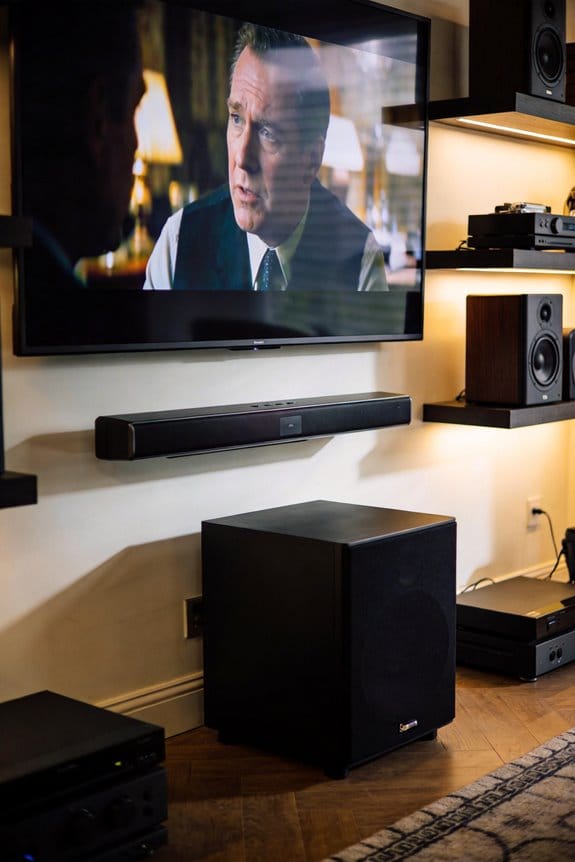

Older movies sound quieter on modern systems because engineers recorded them 6-12dB hotter than today’s standards to overcome tape hiss, but streaming services apply loudness normalization that reduces mono tracks below newer films’ levels. I’ve found that vintage recordings relied on tape saturation for natural compression, keeping dialogue clear against music and effects, but this analog warmth doesn’t translate to digital playback. Your modern TV expects wider dynamic range than these films provide, and built-in speakers lack the depth to reproduce their limited frequency range properly. The following sections explain exactly how to adjust your equipment for ideal vintage audio.
Key Takeaways
- Older films recorded at higher levels with tape saturation to combat noise, creating natural compression different from modern mastering standards.
- Loudness normalization algorithms on streaming platforms make older mono tracks sound quieter compared to dynamically mastered contemporary films.
- Modern TV speakers lack the dynamic range of theatrical systems, compressing audio and making dialogue harder to hear without adjustments.
- Mono recordings designed for analog playback lose warmth on digital systems due to missing tube amplifier coloration and limited frequency response.
- Boosting center channel levels by 3-6 dB and using external speakers significantly improves dialogue clarity for vintage mono films.
Why Vintage Films Used Hotter Recording Levels
Have you ever wondered why the audio in classic films sounds so unique? It turns out, older recording equipment faced some serious challenges, which led sound engineers to crank up their preamp levels way higher than what we think is standard today.
From the 1940s through the 1970s, tape machines were notorious for producing a lot of background noise, creating a high noise floor that could drown out softer sounds. To tackle this, engineers recorded at what we now call “hot levels,” pushing audio signals 6-12dB above modern standards. This approach meant that the dialogue could be clear and easily heard over the constant tape hiss. Plus, that tape saturation added a nice harmonic distortion, giving that vintage sound quality we love.
You might notice that older films keep a pretty consistent volume throughout. That’s because these engineers knew every word needed to cut through the system noise and there wasn’t a lot of room for post-production fixes back then.
How Tape Saturation Kept Dialogue Front and Center
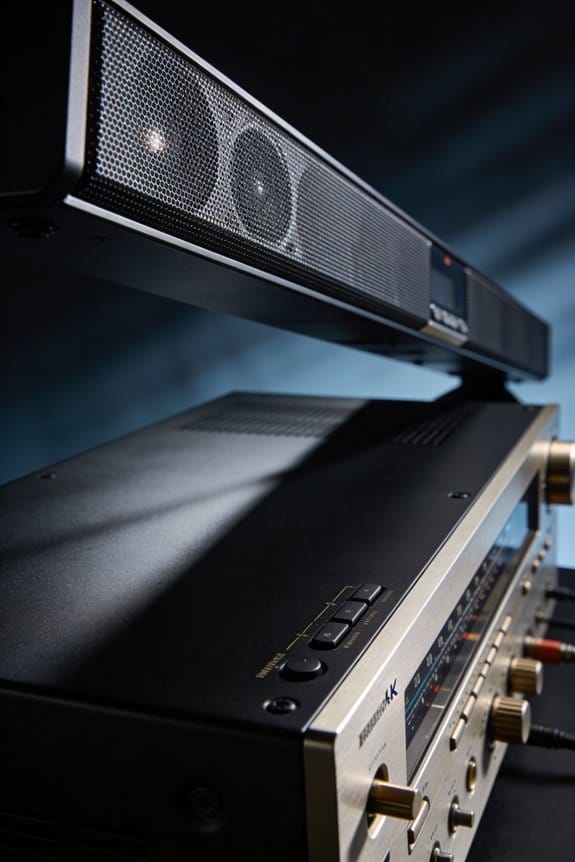
Hot recording levels might’ve fixed the noise problem, but they led to another interesting effect that really helped classic films keep dialogue front and center. When engineers cranked up the signals on analog tape machines, the magnetic tape would hit saturation at high volumes. This created a natural compression effect you don’t often find in digital formats.
Here’s the trick: that saturation would compress the loudest sounds while leaving the quieter dialogue mostly intact. As a result, music and sound effects didn’t drown out speech. Plus, the way saturated tape naturally limited sound meant that dialogue stayed clear and consistent throughout the recording.
So, why does this matter? You can actually use this behavior to your advantage. Many sound professionals today recognize how tape saturation works to balance dialogue against louder elements.
Truth is, modern digital systems just don’t replicate that same vibe unless you add specific processing. It’s fascinating how something that started out as a solution to noise turned into a crucial technique for clear storytelling in films.
To sum it up, the way analog tape naturally worked helped keep important parts—like dialogue—clear and balanced. Have you ever thought about how sound affects your favorite movies?
Why Modern TVs Expect Wider Volume Swings
When you’re watching a movie at home, have you ever noticed how the dialogue is sometimes barely audible, while the action scenes blast your eardrums? There’s a reason for that. Filmmakers craft modern movies using audio that’s designed for theaters with powerful sound systems. These systems can handle a wide range of sounds, from nearly silent whispers to bone-rattling explosions.
Modern TVs expect your home audio to keep up with these cinematic standards. Consider this: a theater setup might cover a dynamic range of 105 decibels, allowing explosions to hit around 85 dB and dialogue to sit comfortably at -27 dB. But here’s the kicker: your living room setup doesn’t quite have the same muscle. A soundbar, for example, might top out at 200 watts compared to the 10,000 watts found in a theater. So, when you’re cranking up the volume at home, you’re squishing that massive range down to maybe 30 dB, which makes the soft sounds nearly impossible to catch.
You might be wondering, what can you do about it? Here’s a trick: when watching movies, try adjusting the sound settings if your TV has features like ‘night mode’ or ‘dialogue enhancer.’ These settings can help boost the quiet parts without making the loud sounds unbearable. Also, consider using subtitles. They can make it easier to follow the story, especially during those quiet moments where the action is happening but the sound is low.
Frankly, navigating audio levels can feel frustrating. It’s like being stuck between the need for volume that allows explosions to feel impactful and the desire to hear the subtle dialogue. So, next time you settle down for movie night, pay attention to those sound options and adjust as needed. You deserve to experience the film as the creators intended. What audio tricks have you found helpful for your home viewing experience?
How Streaming Services Compress Old Mono Tracks
Have you ever noticed how classic films sound a bit off when you stream them? It’s not just your imagination. Older movies were recorded in mono, which means they have a single audio channel. But today’s streaming services work their magic (or not-so-magic) to convert those old tracks into formats that fit modern stereo or multi-channel systems.
Here’s the trick: while they try to make everything sound consistent, this can lead to some real issues. For starters, they apply loudness normalization across the board. This means that older mono tracks, which were often mastered at lower levels, come through sounding much quieter than their newer counterparts. So, you might really have to crank up the volume just to catch those classic lines.
When you hit play on a vintage film, the streaming service automatically downmixes that single mono channel into something that’s spread across your speakers. While this sounds convenient, it can actually create an awkward listening experience. What was once a focused audio track meant for one speaker can end up sounding diffuse and unbalanced in your space. Have you ever found it tough to hear the dialogue because it’s all mixed up? You’re not alone!
Additionally, the modern compression algorithms are designed to keep things consistent, but they often sacrifice the dynamic range that made those recordings special. This can leave you straining to hear the conversation amid all the added effects and music.
Honestly, if you’re streaming a beloved classic, it might help to familiarize yourself with the audio settings on your device. Adjusting the audio output or using enhancements like night mode can sometimes bring the dialogue back to life.
The takeaway? Streaming older films can be a mixed bag when it comes to sound quality. It’s worth experimenting with your settings to see if you can improve that experience. What strategies have you found useful for enjoying classic films while streaming?
Why Vintage Mono Sounds Thin on Digital Speakers
Ever noticed how classic films sound weirdly thin when you play them through modern digital speakers? It’s like the audio is lacking some depth or richness, and that’s not your imagination. This happens because old mono recordings were made for analog systems, not today’s digital technology.
Back in the day, mono tracks were crafted for tube amplifiers and paper-cone speakers, which added a natural warmth to the sound. These speakers had their own charm thanks to harmonic distortion, which made even the simplest recordings feel fuller. But when you switch to digital speakers that strive for technical accuracy, a lot of that charm disappears.
So why does this matter? Well, the limitations of mono recordings become painfully clear when played on modern systems. The frequency range of those old tracks generally falls between 100Hz to 8kHz, while new speakers have the capability to handle everything from 20Hz to 20kHz. Without the analog coloration, you’ll notice reduced bass and somewhat flat high frequencies.
If you’re showing a classic movie or listening to vintage music, keep in mind that some of that thinness is just part of the package. Here’s a tip: consider using a good equalizer or even a dedicated vintage audio setting on your speakers if they have one. Doing this can help to smooth out some of those rough edges and bring a bit more warmth back to the sound.
Honestly, it’s really fascinating how technology has changed how we experience sound. Next time you pop in a classic film, think about the era it came from and how it was designed to be heard. Remember, some recordings might not have that modern richness, but they carry a different kind of beauty. Why not appreciate the uniqueness of each sound instead of comparing them to what’s currently popular?
When to Use Center Channel Boost for Classic Movies
Watching older mono films can be a real treat, but it can also become frustrating when the sound doesn’t quite hit the mark. If you’ve ever noticed that the dialogue in those classic movies sounds off or imbalanced, it might be time to tweak your center channel settings—especially when those vintage tracks get remixed into surround sound. Studios often send all the sound through the center channel, which can lead to issues if your speaker setup isn’t up to snuff.
Try this:
- Go into your receiver’s speaker level menu.
- Boost your center channel by 3-6 dB above the reference level.
- Check how it sounds during scenes packed with dialogue.
- If you hear distortion, dial it back a bit.
Why does this matter? Those adjustments can really help balance out the audio since older mono recordings tend to concentrate sound into one channel. With proper amplification through your center speaker, you’ll likely notice an improvement in clarity, pulling you right back into that classic cinema experience.
How to Set Your TV for Older Film Audio
Have you ever tried watching an older film, only to find it hard to catch the dialogue? It can feel frustrating when the sound on your TV just doesn’t support that classic movie experience. Most modern TVs are set with default sound settings that work well for today’s blockbusters, but they often don’t do justice to older films.
To get started, take a look at your TV’s audio settings. You’ll want to turn off any processing labeled “Dynamic Range Compression,” “Night Mode,” or “Auto Volume.” These features are designed for multi-channel audio, and they tend to mess up mono recordings from the past. Here’s a simple trick: set your sound mode to “Standard” or “Speech.” Avoid using cinema or music presets, as they often boost bass frequencies that just aren’t there in older films.
Another thing to consider is treble adjustments. Increasing the treble by 2-3 levels can really help bring out the dialogue, especially since vintage recordings often suffer from tape roll-off. Also, it’s wise to disable virtual surround processing. That feature might sound nice, but it usually creates artificial effects that muddy those original mono mixes designed for single-speaker setups.
So, why does this matter? The goal here is simple: you should be able to enjoy those classic films without straining to understand the characters. Try these settings out and see the difference for yourself!
Why External Speakers Fix Vintage Playback Issues
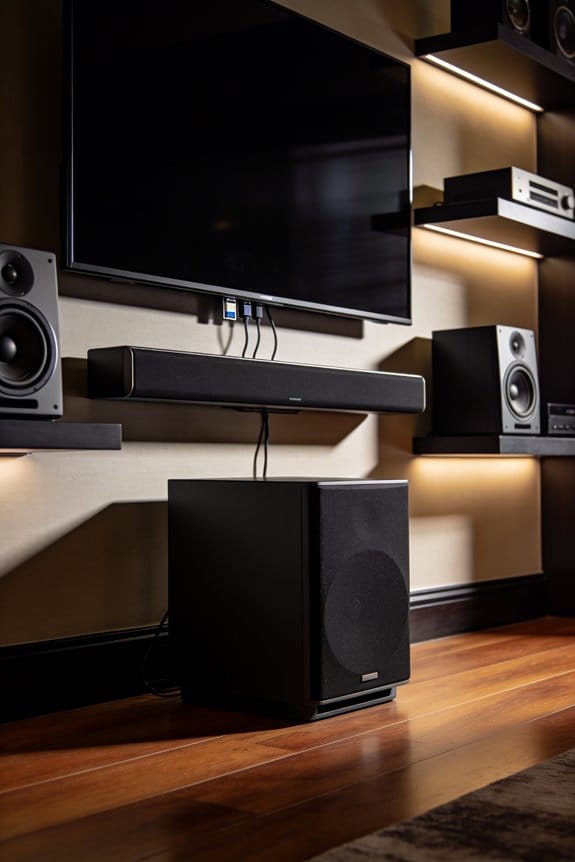
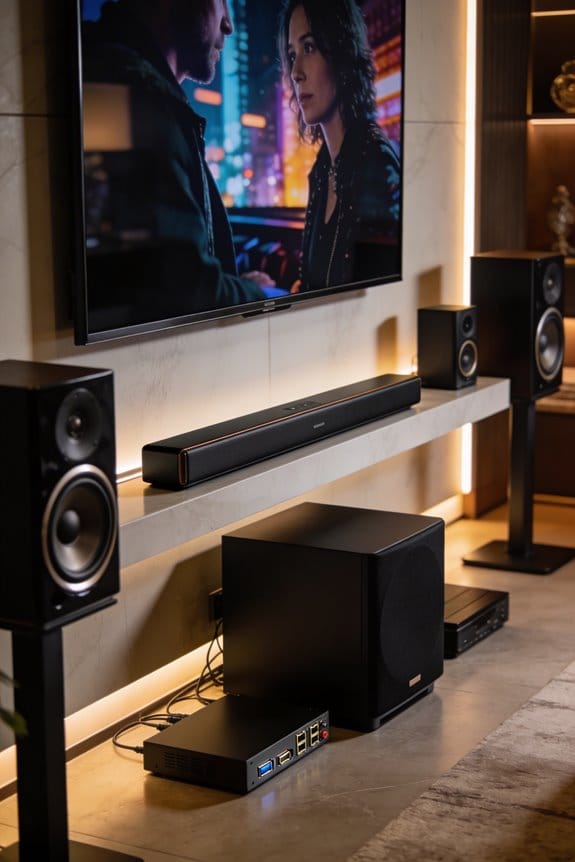
Ever tried watching a classic film on your modern TV and found the dialogue hard to hear? You’re not alone. Many people struggle with this when the older audio mixes don’t quite mesh with today’s tech. Here’s what you need to know: connecting external speakers to your TV can make a big difference.
Think about it—most TV speakers today are tiny, measuring only 2-3 inches across. In contrast, vintage speakers often boasted 8-12 inch woofers that really brought those old mono recordings to life. Plus, built-in TV amplifiers typically pump out only 10-20 watts per channel. That simply doesn’t cut it for the dynamic range found in older films.
So, why does this matter? External speaker systems come with some solid perks when it comes to enjoying vintage audio:
- Bigger drivers can handle bass frequencies below 100Hz, which helps with the resonance of dialogue.
- Dedicated center channels keep speech clear and separate from other sounds.
- More powerful amplifiers keep your audio crisp, even at lower volumes.
- Separate tweeters are perfect for handling high-frequency tape hiss without any fuzz.
The best part is, once you hook up those external speakers, you’ll likely notice a significant boost in how clearly you can hear dialogue. Those original mixes just sound better when the right equipment is in play.
In short, using external speakers can really enhance your enjoyment of classic cinema. If you’re a fan of old films, why not give it a try?
Frequently Asked Questions
Why Do Modern Movies Have Quieter Dialogue Than Older Films?
Modern movies have quieter dialogue because I’m hearing audio mixing designed for theaters with wide dialogue dynamics. When downmixed to home systems, the speech gets buried under music and effects that dominated those extra channels in cinema playback.
How Does Dolby Atmos Affect Home Playback of Theatrical Releases?
Dolby Atmos creates an immersive experience with spatial audio that’s optimized for theaters, but when I downmix those 64 channels to your home stereo system, dialogue often gets buried beneath music and effects tracks.
What Is the Ideal Speaker Setup for Mixed Classic and Modern Content?
Like finding middle ground on a seesaw, I’d recommend a 5.1 system with careful speaker placement and minimal acoustic treatment. This setup handles mono classics while delivering modern surround without overwhelming dialogue or requiring excessive room modifications.
Can Soundbar Settings Improve Dialogue Clarity in Contemporary Films?
Yes, I’d recommend enabling your soundbar’s dialogue enhancement mode. Most soundbar features include center channel boosting or vocal clarity settings that prioritize speech frequencies, helping combat the channel downmix issue that buries dialogue in modern films.
Why Does Downmixing Multi-Channel Audio Bury Speech on Home Systems?
Ironically, *more* audio channels means *worse* speech intelligibility at home. When downmixing multi-channel mixing from 64 tracks to stereo, one dialogue track gets buried beneath 63 music and effects tracks, overwhelming your speakers completely.