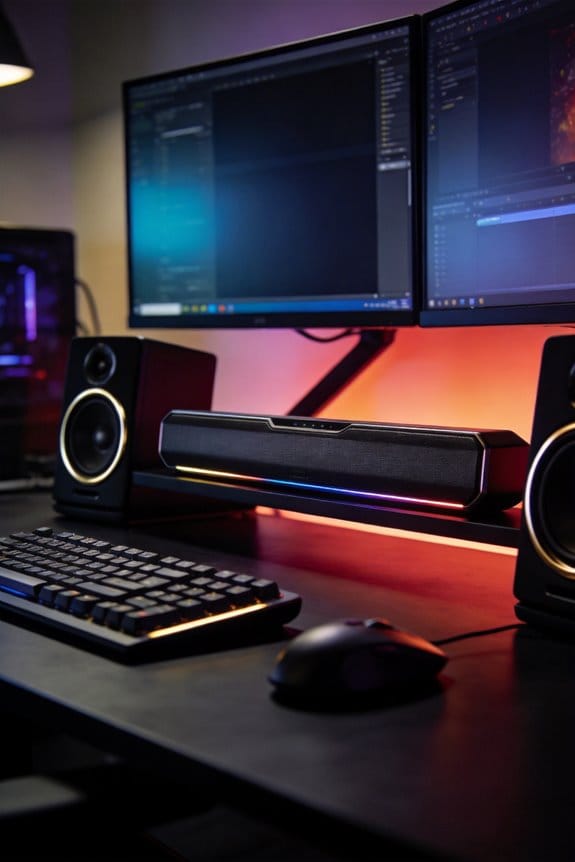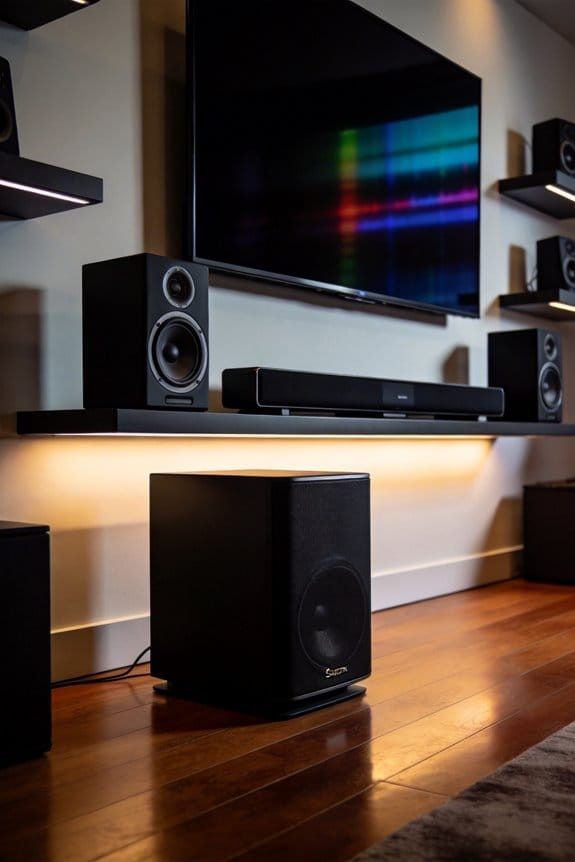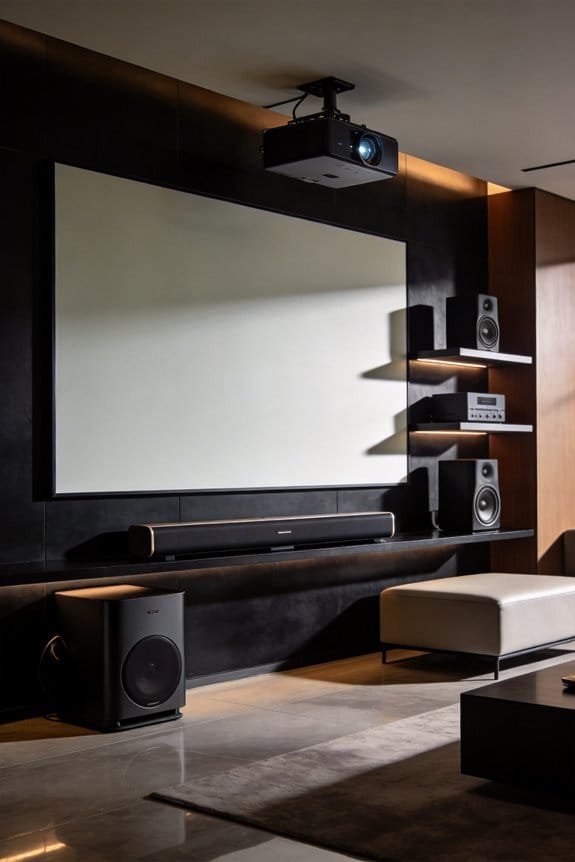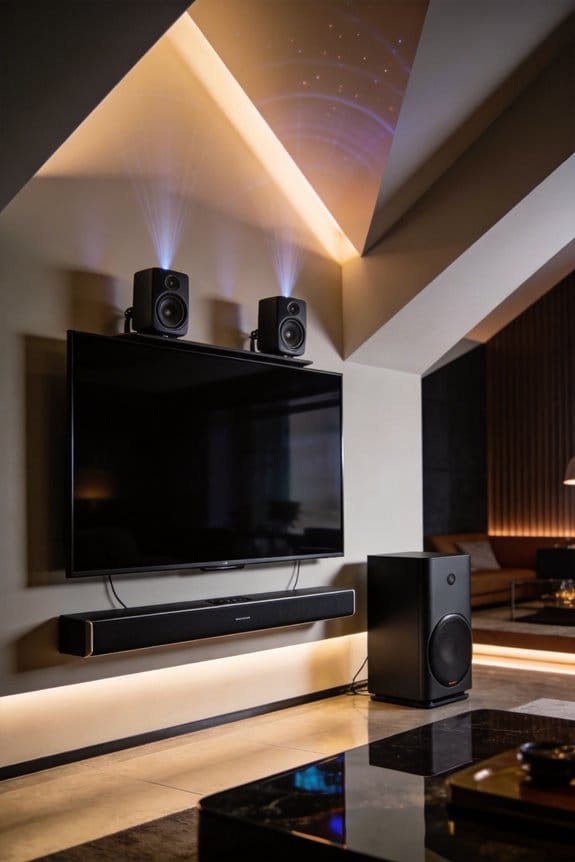
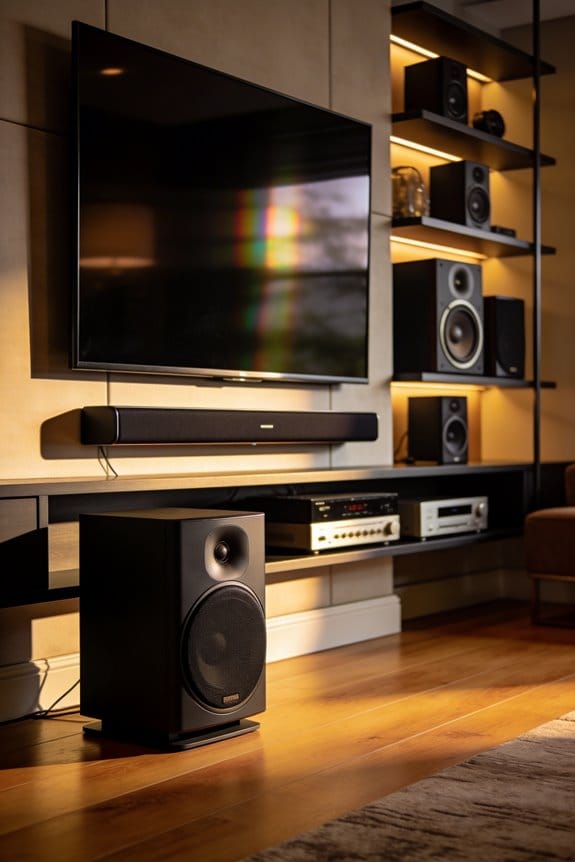

I’ve found that your audio sounds different at home because showrooms use acoustic panels, bass traps, and professional calibration equipment that your living room lacks. Hard surfaces in your home reflect frequencies differently than treated showroom spaces, while furniture placement prevents ideal speaker positioning in the 6-8 feet equilateral triangle setup. Showrooms also use lossless audio formats like FLAC instead of compressed MP3s, and skilled technicians adjust equalizer settings, crossover points, and speaker timing with real-time analyzers. The psychological atmosphere of retail environments additionally influences your perception. I’ll show you specific techniques to replicate showroom performance through strategic room treatment, precise calibration steps, and professional placement methods.
Key Takeaways
- Room acoustics differ significantly between showrooms with professional treatment and homes with varied surfaces that reflect or absorb sound unpredictably.
- Showrooms employ professional calibration equipment and skilled technicians to optimize speaker performance specifically for that environment.
- Furniture placement at home often prevents ideal speaker positioning, disrupting the equilateral triangle setup used in optimized showroom demonstrations.
- Psychological factors influence perception as showrooms create atmospheres and use carefully selected demo tracks that enhance perceived audio quality.
- Source file quality matters greatly; showrooms typically use high-quality lossless formats that may differ from compressed files used at home.
Your Room Acoustics Change Speaker Performance
Have you ever brought home a new set of speakers only to find they don’t sound quite like you expected? It’s super frustrating when they’re not performing the way they did back in the showroom. The thing is, your listening environment plays a huge role in how sound comes through those speakers.
Every room is different—its shape, the materials used for the walls, and even the furniture arrangement all affect the sound. Showrooms are set up with acoustic panels and bass traps that help control the sound and keep unwanted echoes at bay. At home, though, you’ve probably got a mix of hard surfaces and soft furnishings that create a different kind of sound experience.
Here’s what you need to know: the room you’re in impacts the frequencies you hear. Hard surfaces like hardwood floors and bare walls can reflect those mid and high frequencies, which sometimes results in a bright or harsh sound. On the flip side, carpets, curtains, and couches absorb those frequencies but might leave bass sounds bouncing around unchecked. So, you might end up with speakers that sounded perfectly balanced in the showroom now blaring treble or sounding too boomy in your living space.
To make your speakers sound better, consider these tips:
- Rearrange your furniture. Sometimes, just moving a couch can help with sound reflection.
- Try adding some rugs or curtains if your room feels too echoey.
- If possible, set up some kind of acoustic treatment. Even simple wall hangings can make a difference.
Honestly, it might take a bit of experimenting, but finding the right setup for your space can really enhance your listening experience. Remember, tuning your environment to complement your speakers can make all the difference.
In short, your room’s acoustics play a huge part in how sound is shaped. So, what’ll you try first to improve your sound experience at home?
Showrooms Use Professional Calibration You Don’t Have

Have you ever walked into a showroom and been blown away by the sound quality? It’s not just magic; it’s professional calibration working its charm. Showrooms have access to top-notch calibration gear and skilled technicians, which means the sound you’re hearing during demos is fine-tuned to perfection, something you just can’t easily recreate at home.
These places employ detailed calibration methods that include measuring frequency response, tweaking speaker timing, and adjusting volume levels across all channels. They use expensive equipment like real-time analyzers and reference microphones – tools that can cost a fortune and are likely not lying around in your living room.
So, how do they create such impressive sound? The answer involves addressing room-specific acoustic issues through both electronic calibration and acoustic treatment. Technicians carefully adjust several settings, including equalizer levels, crossover points, and delay times, all to adapt to the unique characteristics of the room. This level of expertise isn’t something the average person has up their sleeve, which is why there’s often a big difference between showroom demos and what you get at home when you rely on basic auto-calibration from a receiver.
The truth is, a lot of people are left wishing their home setup could sound like that showroom experience. What can you do about it? Here are some simple tips to improve your home sound:
- Consider investing in a decent microphone and software for measurements.
- Take the time to understand your room’s acoustics and make necessary adjustments.
- Don’t be afraid to tweak your sound settings a little more than the default setup offers; sometimes, a few small changes can make a world of difference.
It may take some effort, but with a bit of know-how and patience, you can get closer to that showroom sound. So, what’s stopping you from experimenting a bit with your home audio setup?
Your Source Files and Recordings Matter More Than Speakers

Are you spending hours hunting for the ideal speakers? Well, let me tell you something that’ll shift your perspective. The truth is, your source files and recording quality play a far more crucial role in your listening experience. A crummy 128kbps MP3 can make even the fanciest speakers sound dull and lifeless. In contrast, a lossless FLAC or WAV file showcases the depth and richness of the music, fully utilizing your speakers’ capabilities.
Think about it: the file format you pick directly affects how much of the original sound comes through. Compressed formats like MP3 cut out audio data to save space, which means you’re missing those subtle details that add magic to the music. And let’s not forget about the recording quality, which depends on the studio gear and techniques used long before those songs reach your setup. Even the best speakers can’t bring back what’s lost due to compression or shoddy recordings.
So, what can you do to enhance your listening experience? Start by choosing higher-quality file formats whenever possible. Opt for lossless options like FLAC or WAV that preserve the music’s intricate details. In addition, make sure to pay attention to the recordings themselves; some of your favorite tracks might just need a better quality source to truly shine.
Home Speaker Placement Conflicts With Furniture and Layout
Have you ever tried to set up your speakers for that perfect sound, only to realize your furniture is throwing a wrench in the works? It’s a struggle many of us face. Your couch, TV stand, and coffee table often limit where you can place your speakers, and that can seriously mess with your listening experience.
When you think about it, showrooms showcase speakers placed ideally—about 6-8 feet apart and arranged in a nice equilateral triangle with the listening spot. But your living room isn’t a showroom. You might find yourself squeezing speakers next to the TV, cramming them in corners, or even hanging them on walls just to work around the furniture.
Here’s the deal: furniture affects sound waves in ways you might not expect. Your couch absorbs those crisp high frequencies, while your coffee table might reflect mid-range sounds in a weird way. And let’s not forget bookshelves and entertainment centers that could mess with how sound feels in your space, changing things like stereo imaging and how wide the soundstage feels. Honestly, it’s a far cry from that perfect setup you imagined.
So, what can you do? Prioritize where your speakers go while being mindful of your furniture layout. Try placing your couch a bit further back from the wall if you can, and make sure your speakers are at ear level when you’re seated.
The biggest takeaway? It’s all about finding a balance. Don’t be afraid to experiment with different setups to see what sounds best in your unique space. And remember, you’re not alone in this challenge. How have you tackled your own speaker placement struggles?
Showroom Psychology Makes Everything Sound Better
Do your home speakers sound completely different from what you heard at the store? You’re not alone. While getting the speakers in the right spot at home can be a challenge, the bigger issue often lies in how your expectations shape your listening experience.
Listener expectations are huge when it comes to how you perceive the quality of sound during showroom demos. Retail settings create an atmosphere that makes speakers seem better than they really are, even if the actual sound doesn’t change much. Sales folks typically pick tracks that highlight the speakers’ strengths, subtly downplaying any weaknesses. Plus, the unfamiliar room acoustics and a bit of retail pressure can skew your perception of audio quality.
Think about how showroom conditions might differ from your own space. You’ll find factors like:
- Professional calibration
- Prime speaker positioning
- Acoustic treatments that might not be in your home
These settings can really elevate the listening experience, making it memorable. But let’s be real—your living room comes with its own set of challenges: background noise, furniture affecting sound, and varying conditions that can change by the day.
So, why does this matter? It’s all about those little details that make a big difference in your experience at home. If you want your setup to feel as good as that showroom, pay attention to how you position your speakers and consider treating your space acoustically.
In the end, remember: your environment plays a crucial role in how sound is perceived, so don’t be discouraged if your home setup sounds different. Have you ever compared a showroom sound to your own? What was that experience like for you?
Match Showroom Sound With Room Treatment and Setup
When you’re trying to bring that amazing showroom sound into your home, you really need to pay attention to how you treat your room and set up your speakers. It’s the key to getting the best acoustic performance possible.
Implementing Showroom Optimization Techniques
Many professional showrooms invest a lot to enhance their sound, and they do this by carefully treating their rooms and positioning their speakers just right. You can get similar results at home by focusing on a few important details:
- First, think about adding acoustic panels where sound bounces off the walls. Placing them at the first reflection points on your side walls, ceiling, and behind where you listen can make a huge difference.
- Position your speakers at least 2-3 feet away from the front wall. This helps reduce bass buildup and creates a clearer soundstage.
- Don’t forget about the corners of your room. Using bass traps in these areas can help control those low-frequency sounds that can make everything sound muddy.
- Make sure that your speakers are evenly spaced from the side walls. This balanced setup really enhances the stereo image.
Now, let’s talk about calibrating your speakers. You want to make sure they sound just right, and using calibration systems like Audyssey or Dirac Live can help with that. They correct frequency response and channel levels, getting you closer to that showroom quality.
So, why does this matter? Well, it makes the listening experience much more enjoyable. If you put in a bit of effort to optimize your space, you might be surprised at how much better your music or movies can sound.
Calibrate Your Home System Like the Professionals Do
Ever sit down to watch a movie or listen to your favorite tunes, only to be let down by the sound? It’s frustrating, right? Getting that perfect audio experience at home might seem tricky, but I promise it’s not as daunting as it looks.
Start with your receiver’s setup menu. This is where the magic begins. Most receivers have a built-in automatic room correction software that uses a calibration microphone. You’ll want to grab that mic and place it at your main listening spot—usually where you sit, at ear height. From there, just follow the prompts to measure frequency response and check speaker distances. Make sure you do a few sweeps from nearby spots to get a better picture of your room’s acoustics.
So, why does this matter? Well, the professionals adjust timing delays, crossover frequencies, and equalization curves to help your system play nicely with your room’s unique sound. It’s like giving your setup a tailored fit. Remember to check if your speakers are wired correctly by using test tones, and don’t forget to assess the subwoofer phase alignment. Fine-tuning those channel levels is key too. Using an SPL meter, aim for about 75 dB across all speakers for a balanced surround sound experience.
The best part is, with a little time and patience, you can do this yourself! You’ll be surprised at how much you can improve your home audio setup by following these simple steps. It might take some trial and error, but once you nail it, movie nights will feel like you’re right in the theater.
In short, calibrating your home audio doesn’t have to be a complex chore. Just take it step by step, and soon enough you’ll be enjoying sound that rivals any commercial installation. So, what’s stopping you from diving in and giving it a go?
Frequently Asked Questions
Do Speakers Sound Better at Audio Shows Than Retail Showrooms?
Like comparing wines at a vineyard versus a grocery store, I’ve found speakers sound markedly better at audio shows than retail showrooms. Audio shows invest heavily in optimized showroom acoustics and professional setup, making speaker comparison far more revealing and enjoyable.
Should I Use the Same Speakers for Music and Home Theater?
I’d recommend dedicated speakers for each purpose if your budget allows. Music preferences and room acoustics matter differently for stereo versus surround sound. However, quality speakers can handle both tasks admirably if you’re willing to compromise slightly on each.
Can Expensive Cables Improve Sound Quality at Home?
I’ve found that quality cables can reduce sound interference, but expensive doesn’t always mean better. Good cable materials matter for shielding and conductivity, though you’ll see diminishing returns beyond mid-priced options in most home setups.
How Do Compressed Audio Formats Affect Speaker Performance?
Audio compression reduces speaker dynamics by removing subtle harmonic details and soundstage depth. I’d recommend using lossless formats when possible, as they’ll reveal your speakers’ true capabilities and help you hear the nuances compressed files simply can’t reproduce.
Will My Speakers Damage From Playing at Loud Volumes Daily?
Like a marathon runner pushing beyond limits, your speakers can suffer damage from daily loud volume sessions. I’d recommend staying within manufacturer specifications to guarantee speaker longevity—occasional peaks are fine, but constant strain accelerates wear considerably.