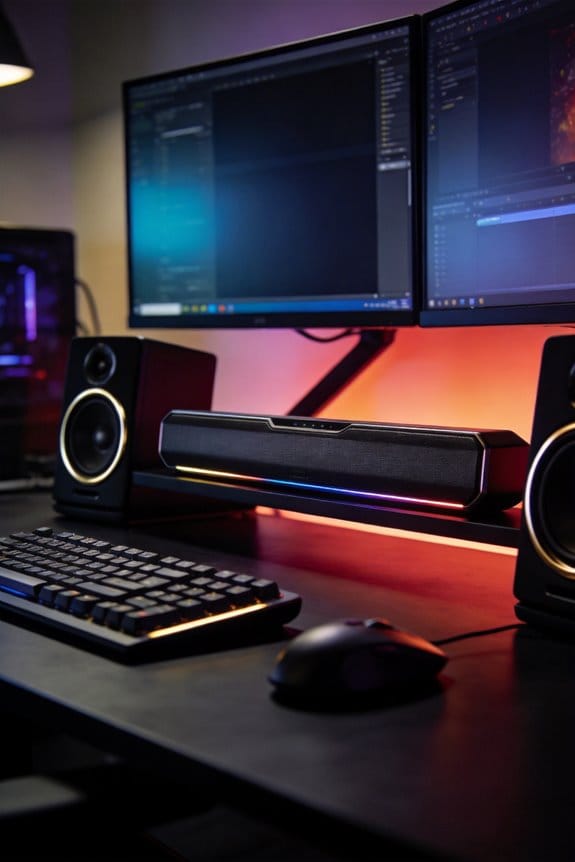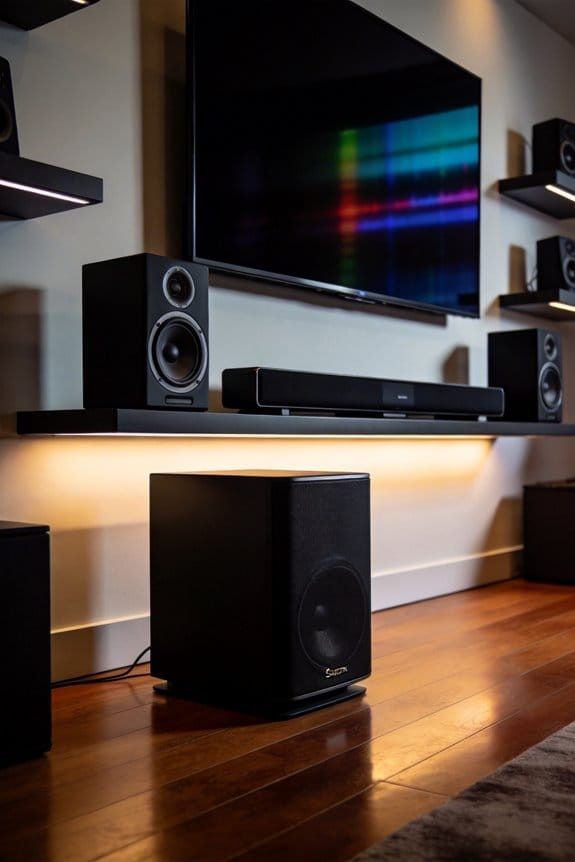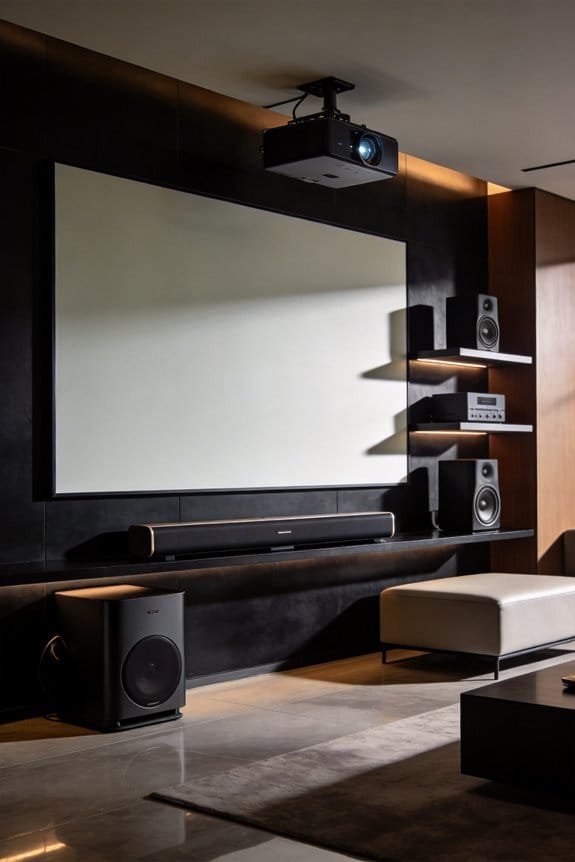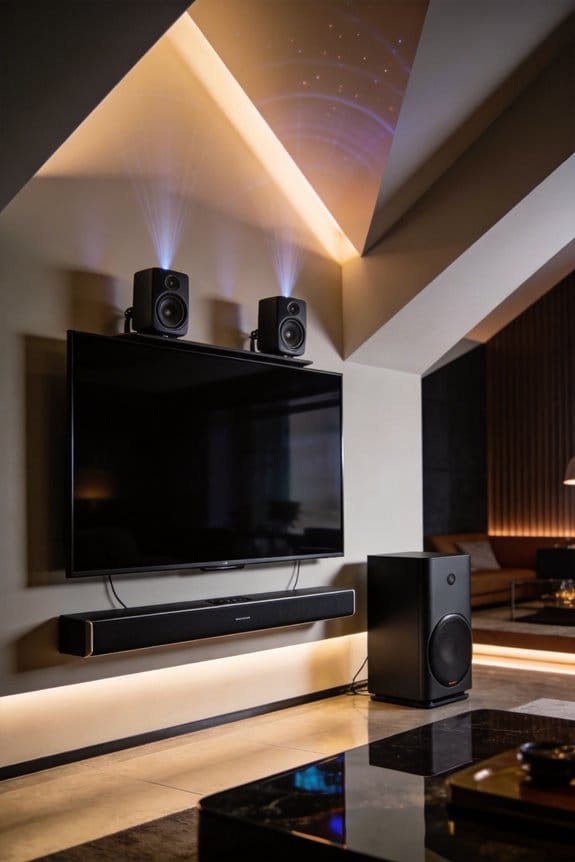
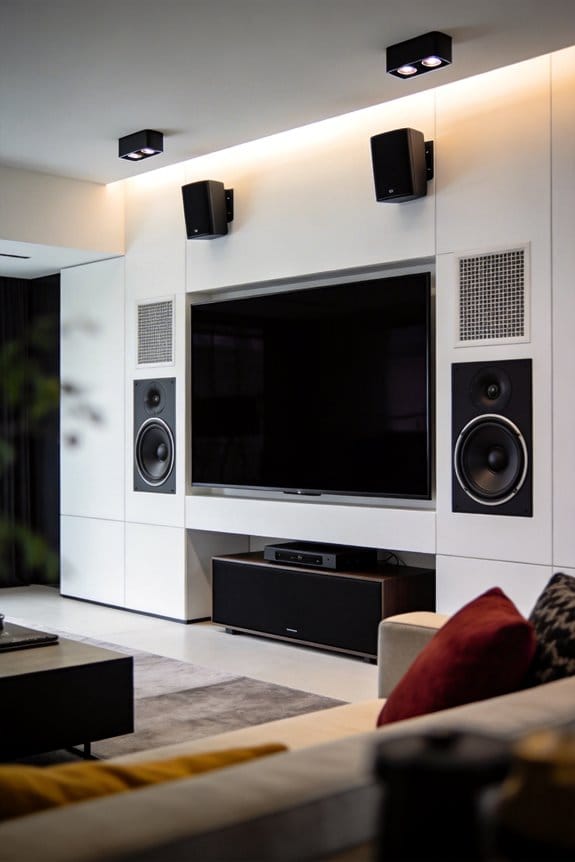

I’ll show you how in-wall speakers deliver premium sound quality while disappearing into your walls, transforming any room into a theater-grade listening space without the clutter of traditional speaker systems. These architectural audio solutions mount directly into walls between 42-48 inches high, offering full-range sound from 45Hz to 20kHz while their paintable grilles blend seamlessly with your décor. Installation requires walls at least 0.5 inches thick with proper stud spacing, and professional setup costs $50-$150 per speaker for materials alone. The sections below cover specific placement techniques, smart features, and room selection criteria.
Key Takeaways
- In-wall speakers mount flush with walls, providing full-range sound while maintaining a clutter-free, minimalist aesthetic with paintable grilles.
- Proper installation at 42-48 inches height with strategic spacing creates theater-quality surround sound without visible equipment cluttering rooms.
- Smart in-wall systems offer voice control and multi-room integration, enabling seamless audio management throughout the home via manufacturer apps.
- Installation requires adequate wall thickness, proper stud spacing, and interior locations to avoid moisture damage and ensure optimal sound performance.
- Architectural speakers blend seamlessly with home decor, offering comparable sound quality to bookshelf systems while saving valuable floor space.
Why In-Wall Speakers Outperform Traditional Setups for Home Audio
When it comes to setting up your home audio system, have you ever felt overwhelmed by the options? If you’re like most people, you might be eyeing traditional floor-standing or bookshelf speakers. But you might want to consider in-wall speakers. They’ve got some real benefits that can make your listening experience so much better.
For starters, mounting in-wall speakers directly into your walls means you won’t have to worry about where to place furniture. This frees up valuable floor space for other uses, which is especially nice in smaller rooms. Plus, walls can actually enhance the sound. When speakers are tucked away like this, the wall surfaces help to boost bass response better than traditional speakers could achieve in less-than-ideal spots.
Want to enjoy sound that fills the whole room? Installing your speakers at the right height—usually between 42 to 48 inches from the floor—can help deliver consistent sound across all listening areas. It’s all about creating that perfect audio experience, isn’t it?
And let’s not forget aesthetics. With in-wall speakers, you can paint over the magnetic grilles, making them nearly invisible. This means you don’t have to deal with unsightly wires or bulky stands cluttering your beautiful interior design. You can enjoy full-range sound from 45Hz to 20kHz—without compromising on style.
Installation Costs and Wall Requirements for In-Wall Speakers
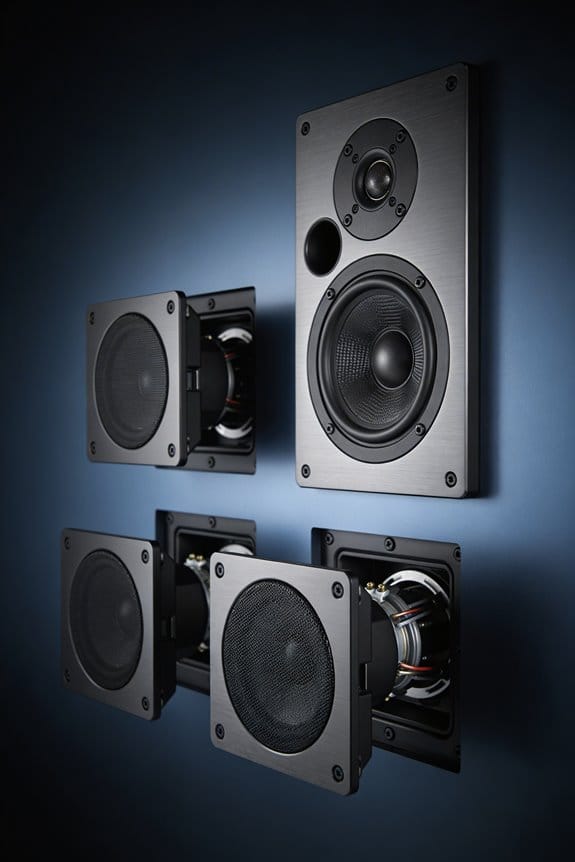
Installing in-wall speakers can feel like a daunting task, especially if you’re excited about elevating your home audio but unsure about the process. Have you ever thought about the hidden costs and requirements? Well, let’s break it down together.
When installing these speakers, you’ll need to keep an eye on your wall structure. Key factors include:
- Wall materials: Your drywall should be at least 0.5 inches thick.
- Stud spacing: Make sure the spacing of your studs is up to par.
- Depth: There should be enough space behind your wall for the speakers.
Standard speaker cutouts usually measure around 8 to 10 inches in diameter, so be ready to double-check those measurements. If you’re not confident about your wall’s condition, hiring a professional might save you a lot of headaches. They’ll check everything for you, from the wall composition to the wiring, ensuring a smooth installation with no surprise issues.
Now, let’s talk about costs. If you go the DIY route, you could manage the material costs between $50 and $150 per speaker. Just remember, you’ll be responsible for cutting the openings and routing the cables. Word of advice? Watch out for any electrical wiring or plumbing hidden in the walls, or you might end up with more than you bargained for!
So, why does all this matter? Proper installation not only enhances sound quality but also keeps your space looking clean and professional. And let’s be real, who wants visible wires hanging everywhere?
In short, whether you tackle the installation yourself or hire a pro, understanding these details can save you time and cash in the long run. Are you ready to take the plunge into in-wall speaker installation?
How In-Wall Speakers Create Theater-Quality Surround Sound
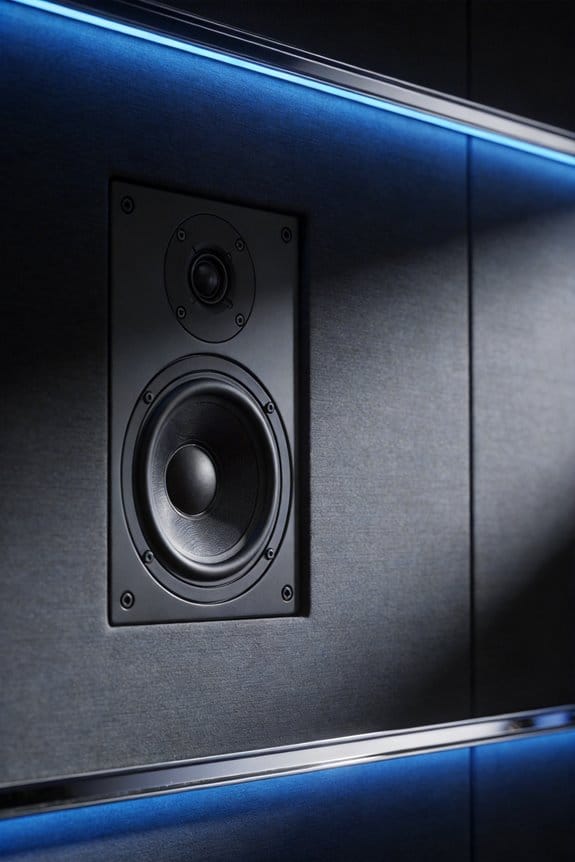
After you’ve got your in-wall speakers set up, do you ever wonder how they deliver that amazing surround sound experience we all crave? It all boils down to audio dispersion—the way sound waves radiate throughout your space from each speaker.
To achieve that surround sound magic, these speakers need to be installed with some thoughtful techniques. Each driver is positioned at just the right angle. The front speakers take care of the dialogue and main audio, while the side and rear channels are responsible for those subtle ambient effects and directional cues. You might be surprised to learn that angled tweeters are designed to direct high frequencies right towards your listening area, ensuring clear dialogue even if you’re sitting 15-20 feet away.
Spacing is also critical. Keeping side channels about 6-8 feet apart helps create an immersive soundfield that echoes what you’d find in a commercial theater with setups like Dolby Atmos or DTS:X. So, why does this matter? It’s all about filling your room with sound, making you feel like you’re in the middle of the action.
The best part is that with the right positioning and spacing, your in-wall speakers can easily recreate that cinematic experience right at home. So, if you’re aiming for theater-quality sound, paying attention to these details can take your setup to the next level. Don’t you think it’s worth it to enjoy your favorite movies with that rich sound all around you?
Smart In-Wall Speakers: Voice Control and Multi-Room Audio
Your voice can now control your in-wall speaker system, making it easier than ever to enjoy music throughout your home. This tech shift is transforming how we experience audio—no more fumbling for remotes while trying to set the mood.
Voice Command Functionality
Imagine just saying, “Play my chill playlist” and having your speakers come to life without lifting a finger. With voice command functionality, you can adjust the volume, skip tracks, or switch audio sources—all by simply talking. You just need a smart device like an Amazon Echo Dot or Google Nest Mini to connect everything to your home network. How convenient is that?
Multi Room Integration
If you’re hosting a party or just want to escape with some tunes in your bedroom, multi-room integration is a fantastic feature. You can either play different content in each area or sync music throughout the entire house. Configuring zones is straightforward with manufacturer apps like Sonos S2 or Control4, allowing you to assign specific speakers to different rooms.
- Stream your favorite services:
- Spotify
- Apple Music
- Tidal
The best part is you can enjoy all that simultaneously across your connected zones. So, whether you want a chill atmosphere in the lounge or energetic beats in the kitchen, you can make it happen with just a few taps on your app or a simple voice command.
In-Wall vs. Bookshelf Speakers: Sound Quality and Value Comparison
How do you choose between hiding speakers in your walls or putting them on shelves when both claim to deliver amazing sound? It’s a tough call, but let’s break down the sound quality and cost to help you make the best decision for your space.
Sound Performance Factors
In-wall speakers can sound just as good as bookshelf models, but only if they’re installed correctly. They typically have a frequency range of around 45Hz to 20kHz, but don’t forget to consider things like wall cavity depth and insulation materials. These factors can really impact how well you hear the bass and the overall clarity.
On the flip side, bookshelf speakers let you easily adjust their positions. You can play around with their angle and placement to get that perfect soundstage and precise imaging. Why does this matter? Because small tweaks can make a world of difference in your listening experience.
Pricing Analysis
In terms of cost, in-wall systems generally run between $200 and $800 per pair. Then you have to factor in installation fees, which can set you back another $150 to $300 for each speaker. Bookshelf speakers are often priced between $150 and $600 per pair, but don’t forget about those stands that add an extra $50 to $200 to your total bill.
Bottom line, both options have their pros and cons. Want a clean, integrated look? Go with in-wall speakers. Prefer flexibility with sound? Bookshelf speakers might be the way to go. What’s most important to you: aesthetics or sound quality?
Best Rooms and Layouts for In-Wall Speaker Installation
Choosing the right rooms for in-wall speaker installation can be a bit tricky. You want to ensure you’re making the most out of your space while also getting the best sound quality possible. So, which areas in your home are best suited for this?
Living rooms that are at least 12×18 feet in size can really shine when it comes to a 5.1 surround sound setup. Here’s a little trick: place the front speakers about 30 degrees off-center and the surround speakers at around 110 degrees from your listening position. Just keep in mind that your walls need to have 16-inch on-center studs and be built with 2×4 or deeper framing to fit those bigger 8-inch woofers.
Maybe you’re considering adding in-wall speakers in your bedroom instead. For those smaller spaces, 6.5-inch drivers are usually the way to go for a cozy listening experience. It’s best to mount them 2-3 feet above ear level when you’re sitting down.
Now, a couple of places to avoid? Bathrooms and kitchens are not ideal—moisture can really mess with sound quality and might even damage your speakers. And exterior walls can cause issues too, since insulation can block sound waves and impact your bass response.
Frequently Asked Questions
Can In-Wall Speakers Be Removed and Reinstalled in a Different Home?
Yes, I can remove and reinstall in-wall speakers in your new home. The installation process requires careful extraction to avoid damaging the speakers or walls. You’ll need to patch the original holes and cut new openings for speaker removal and reinstallation.
Do In-Wall Speakers Work With Existing Home Theater Receivers and Amplifiers?
Yes, I’ll confirm that in-wall speakers work with your existing home theater receivers and amplifiers. Receiver compatibility isn’t an issue since they’re passive speakers requiring standard speaker wire connections during speaker installation, just like traditional bookshelf models.
What Happens to In-Wall Speakers During Home Renovations or Wall Repairs?
I’ll explain that in-wall speakers need careful handling during renovations. You should cover them with protective materials or temporarily remove them. Proper renovation considerations and speaker protection methods prevent dust damage and guarantee your audio system survives construction work intact.
Are In-Wall Speakers Compatible With Dolby Atmos and Other Immersive Formats?
Yes, I can confirm in-wall speakers are fully compatible with Dolby Atmos and other immersive formats. However, you’ll need proper placement and angling during installation to achieve the best immersive sound, particularly for height channels in Atmos setups.
How Do In-Wall Speakers Affect Home Resale Value and Buyer Appeal?
Like hidden treasure in walls, in-wall speakers typically boost resale value when professionally installed. I’ve found they appeal to buyer’s preferences for modern, clutter-free homes—especially those seeking smart technology and premium entertainment features already integrated.