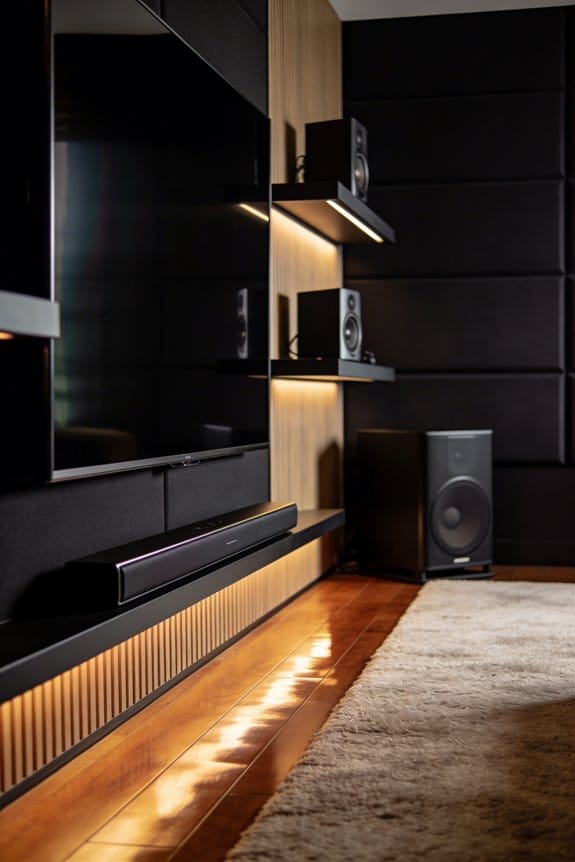

I’ll explain how your flooring choice fundamentally shapes your home theater’s sound quality through absorption versus reflection patterns. Carpet absorbs sound waves to prevent echo and reverb, creating clarity for dialogue and reducing bass vibrations, while hardwood reflects sound to cause harsh frequencies, standing waves, and muddy bass response. However, excessive carpet combined with wall treatments creates dead, lifeless audio, so you’ll need reflective surfaces when acoustic panels cover over 40% of walls. Cork flooring offers a middle ground, absorbing mid-to-high frequencies while maintaining firmness. The sections below detail specific scenarios and solutions for optimizing each flooring type.
Key Takeaways
- Carpet absorbs sound waves, reducing echo and reverb, which enhances dialogue clarity and creates a more immersive audio experience.
- Hardwood floors reflect sound, causing harsh high frequencies, excessive reverb, and standing waves that complicate accurate sound localization.
- Over-treating a room with carpet and acoustic panels can create a “dead” sound where dialogue feels flat and lifeless.
- Area rugs on hardwood floors offer a balanced solution, absorbing reflections while maintaining room liveliness when paired with acoustic treatments.
- Cork flooring provides a middle ground, naturally absorbing mid-to-high frequencies while offering firmness and reducing footfall noise effectively.
Why Carpet Beats Hardwood for Home Theater Acoustics (Usually)?
When setting up your home theater, have you ever considered how the flooring affects your audio experience? It turns out that carpet often wins out over hardwood flooring in most cases. Carpet offers some serious advantages when it comes to sound quality because it absorbs sound waves. This absorption helps prevent that annoying echo and reverb that can muddle your audio and make it harder to enjoy your favorite movies.
On the other hand, hardwood surfaces tend to reflect sound waves directly back into your space. This can lead to standing waves and room echoes that mess with the clarity of dialogue and the overall imaging of your speakers. So, how do you avoid these issues? The fibers in carpet actually trap those bouncing sound waves, which greatly improves acoustic clarity, especially for speech. Plus, it helps reduce the vibration that travels through your floor from bass-heavy sounds.
Here’s a tip: when choosing carpet, go for denser materials with quality underpadding. This combo really boosts sound absorption, particularly in the higher frequency ranges where you find dialogue and ambient sounds. So, instead of worrying about your speakers needing extra adjustments, you can focus on enjoying your movie nights with your favorite snacks nearby.
When Does Carpet Actually Hurt Your Home Theater Sound?

Did you know that carpet can actually mess with your home theater sound in certain situations? It’s true! If you’ve gone all out with acoustic treatments on your walls and ceiling, adding carpet can be a big mistake. When you combine fluffy carpet with heavy acoustic panels, you might end up creating a “dead” or lifeless sound in your room.
You’ll notice it quickly—dialogue might feel flat, high frequencies could just disappear, and no matter how much you fiddle with the calibration, your speakers sound muffled. That’s frustrating, right?
So, what’s the solution? If you’ve covered 40% or more of your walls with absorption panels, hardwood flooring is actually the way to go. Why? Because hardwood helps preserve those crucial high frequencies that can easily get lost beneath all that carpet. A reflective floor can balance things out nicely, especially since your acoustic panels are already tackling mid-range sounds on the walls.
The best part is, this balance is key for keeping that natural sound reproduction you want in your home theater. So, consider your flooring carefully if you’ve invested time and money into acoustic treatments. It really can make a difference.
In short, don’t let carpet become a sound culprit in your space. Have you thought about how your flooring choice affects your audio experience?
What Acoustic Problems Does Hardwood Flooring Create?

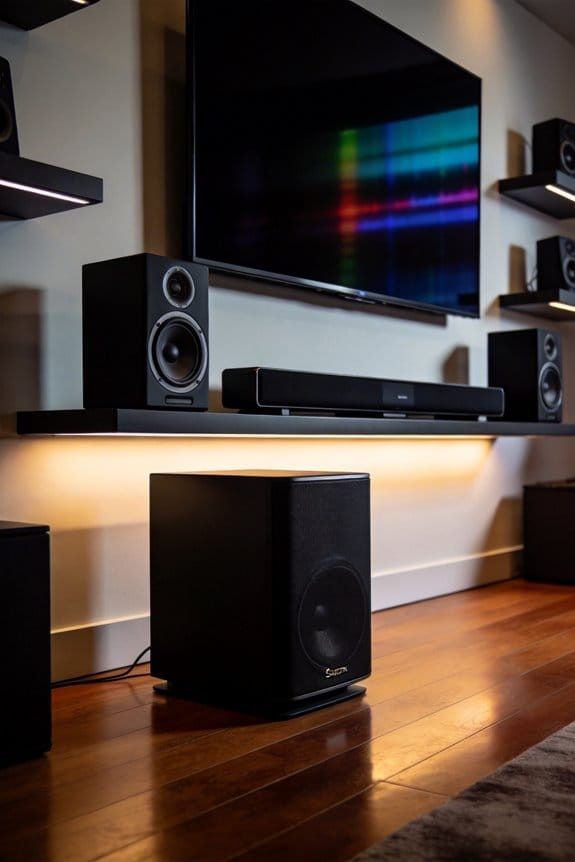
Have you ever noticed how beautiful hardwood floors can be but also wondered about their impact on sound quality? While they definitely add style to a space, hardwood flooring can create some serious acoustic issues that might ruin your home theater experience. The hard, smooth surface reflects sound waves right back into the room. This can lead to annoying echoes and standing waves that really muddy dialogue clarity.
When you’re watching a movie, you might find that the sound has this bright quality that makes high frequencies feel harsh and tiring after a while. Plus, hardwood floors can produce excessive reverb and decay. This makes it tough to pinpoint where the sound is coming from in a surround sound setup. You might also notice that bass frequencies combine with direct sound to create uneven responses. So, why does this matter? Well, it could mean your favorite scenes don’t hit as hard as they should for that full, immersive experience you want.
To tackle these acoustic issues, consider adding some treatments to your space. Here are a few suggestions:
- Area rugs can absorb some of that excess sound.
- Acoustic panels help dampen echoes.
- Sound-absorbing furniture can also make a big difference.
The best part is, you don’t need to completely revamp your space. Just a few tweaks can significantly improve your home theater’s sound quality. If you’re dealing with hardwood floors and sound issues, try making adjustments to create a more balanced audio environment.
In short, hardwood floors have their downsides when it comes to acoustics, but with the right treatments, you can enhance your listening experience. So, what adjustments will you try first?
How to Fix Hardwood Floor Acoustics Without Replacing It?
Fixing hardwood floor acoustics can be a real challenge for many homeowners. If you’re like me, you’ve probably noticed how sound travels in your home – from annoying echoes to background noise. Thankfully, you don’t have to tear up your stylish flooring to make a difference.
Try this: place area rugs in those busy spots and where you usually listen to music or watch TV. These rugs can seriously help reduce sound reflections. Go for dense options with good underpadding; they really make a difference when it comes to absorbing sound.
You might want to think about putting acoustic panels on your walls and ceiling. These panels can help balance out sound frequencies in your room. Place them at reflection points – where sound bounces directly between your speakers and where you sit. It’s actually pretty simple to find those sweet spots.
Adding soft furniture can also transform your space. Think upholstered chairs, plush sofas, and even cozy ottomans. This kind of furniture helps break up sound bouncing off your hardwood floors. Just be careful when layering these items; too much absorption can make your space sound “dead,” which isn’t what you want when trying to enjoy music or movies.
So, why does this matter? A few thoughtful changes can vastly improve your viewing and listening experience without the hassle of a full renovation. Just remember that creating the right balance in your room requires some trial and error.
Should You Choose Cork Flooring for Your Home Theater Instead?
Have you ever sat in a home theater and noticed how the sound just doesn’t feel right? Echoes bouncing off the walls, or maybe the bass is overwhelming. If that sounds familiar, you might be on the lookout for a flooring solution that tackles these acoustic issues head-on.
Cork flooring is worth considering if you want a happy medium between carpet and hardwood. It brings some great benefits: its unique cellular structure naturally absorbs sound, keeping those annoying echoes at bay. You get a firmer surface than carpet, but with the added advantage of sound absorption. So instead of feeling like you’re in a echo chamber, you’ll enjoy reduced reverb without all the heaviness that a thick carpet tends to create.
Wondering why that matters? For home theaters, cork flooring strikes a balance. It absorbs those mid-to-high frequencies and still allows some sound to reflect, which means you won’t need to pile on the extra soundproofing treatments that hardwood might require. Plus, cork’s cushioned surface can cut down on footfall noise and vibration, so your movie nights are way more enjoyable without having to do major renovations.
In short, cork flooring could be a smart choice for creating the perfect sound environment in your home theater. Why not give it a thought? Have you considered how flooring impacts your listening experience?
Frequently Asked Questions
Can Laminate Flooring Provide Similar Acoustic Benefits to Hardwood or Carpet?
Like choosing between echo and silence, I’ll tell you laminate behaves acoustically similar to hardwood—reflecting sound harshly. For acoustic comparison purposes, laminate offers minimal soundproofing benefits compared to carpet, requiring identical supplementary treatments I’d recommend for hardwood installations.
How Does Furniture Placement Affect Sound Quality on Different Flooring Types?
I’ve found that furniture arrangement dramatically impacts sound dispersion on both flooring types. Soft furnishings on hardwood help absorb reflections, while strategic placement on carpet prevents over-dampening. I’ll position pieces to optimize your room’s acoustic balance.
What Is the Ideal Room Size for Choosing Carpet Over Hardwood?
I can’t determine an ideal room size from room dimensions alone. Instead, I’d evaluate your space’s existing acoustics and flooring absorption needs. Smaller rooms benefit more from carpet’s sound-dampening properties, while larger rooms offer flexibility.
Does Underfloor Heating Impact Acoustic Performance of Carpet or Hardwood?
underfloor heating doesn’t greatly affect your carpet or hardwood’s acoustic performance. However, I’ve found it can impact heating efficiency and sound insulation layers beneath flooring, potentially altering your room’s overall sonic characteristics.
Can Vinyl Flooring Serve as a Compromise Between Hardwood and Carpet Acoustics?
Vinyl won’t compromise effectively—it reflects sound like hardwood without acoustic insulation benefits. I’d recommend cork instead for vinyl durability with better sound absorption, or use area rugs over vinyl to control reflections in your theater space.