

YouTube Music caps at 256kbps with the Opus codec because it inherited compression infrastructure from video streaming, where bandwidth optimization matters more than audio fidelity. In contrast, Spotify Premium reaches 320kbps using Ogg Vorbis, which preserves more midrange detail and stereo imaging for complex music. You’ll notice these differences most with high-end headphones in quiet environments, though Bluetooth earbuds compress signals enough to make both services sound nearly identical. The sections below explain how codec choices, listening equipment, and exclusive content availability influence your decision between these platforms.
Key Takeaways
- YouTube Music streams at 256kbps Opus codec while Spotify uses 320kbps Ogg Vorbis, resulting in less preserved audio information.
- YouTube prioritizes video streaming and bandwidth optimization over music quality, limiting compression algorithms designed for audio fidelity.
- Premium services like Spotify optimize compression specifically for music playback, enhancing clarity, midrange details, and stereo imaging.
- Neither platform offers lossless audio, unlike competitors such as Apple Music, Tidal, and Amazon Music HD with uncompressed streaming.
- YouTube Music’s video-focused infrastructure causes frequency response limitations and dynamic range restrictions compared to dedicated music streaming platforms.
Spotify Beats YouTube Music on Audio Quality (But Not by Much)
When you’re trying to choose between Spotify Premium and YouTube Music, audio quality can make a big difference, especially if you really care about your tunes. With decent headphones, you’ll probably notice that Spotify delivers clearer sound compared to YouTube Music. But don’t get too excited—the difference isn’t as massive as you might think.
Spotify streams at 320kbps using the Ogg Vorbis codec, while YouTube Music maxes out at 256kbps with the Opus codec. What does that mean for you? Essentially, Spotify tends to preserve more audio information. This means better clarity in high-frequency sounds and a more dynamic range overall. If you’re using studio monitors or high-end wired headphones, you’ll pick up on the differences more clearly.
So, why does this matter? The Opus codec is efficient for its bitrate, which helps YouTube Music in some situations, but Spotify’s higher bitrate keeps more details during compression. You’ll especially appreciate this if you’re listening to complex music with a lot happening, like orchestral pieces or layered vocals.
Here’s the trick: Try listening to your favorite songs on both platforms in a quiet space. You might find that Spotify holds up better with intricate sounds, offering a richer listening experience.
In short, while both services have their merits, Spotify edges ahead in audio quality for those who truly care about sound fidelity. Which one will you choose for your next jam session?
Why YouTube Music Maxes Out at 256kbps While Spotify Hits 320kbps
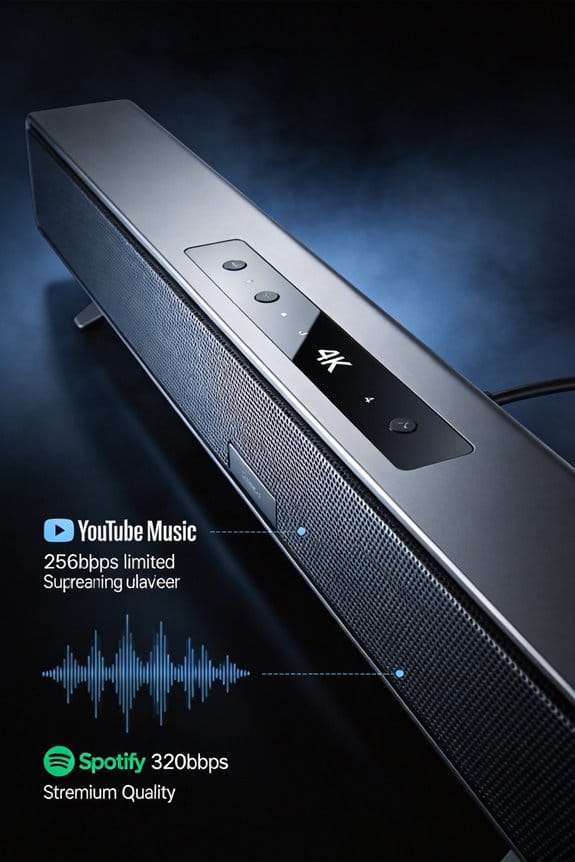
Have you ever wondered why YouTube Music seems to fall short when you compare it to Spotify? The answer lies in the way each service handles audio compression and their overall focus.
YouTube Music gives you a maximum bitrate of 256kbps using the Opus codec. On the other hand, Spotify Premium cranks out 320kbps with Ogg Vorbis encoding. The reason for this difference can be explained by YouTube’s focus on video. They aim to optimize bandwidth for streaming millions of video uploads, which doesn’t always translate perfectly for high-quality music playback.
Now, let’s dive into what that means for you as a listener. Opus is certainly smart because it provides good sound quality for the bitrate, meaning that YouTube Music’s 256kbps isn’t completely lacking. In tests, it can actually come close to Spotify’s 320kbps. But here’s the catch: Spotify has built its infrastructure from the ground up specifically for music. This means they can optimize their compression, while YouTube is still playing catch-up, using a system meant for videos.
So, what should you keep in mind? If you’re all about high-quality music, Spotify might be the way to go, particularly if you’re willing to pay for the premium features. It’s all about what you value more: convenience or audio quality?
How Opus and Ogg Vorbis Codecs Shape What You Hear

Have you ever wondered why the same song can sound different on Spotify versus YouTube Music? Both of these platforms compress music using different codecs, and how they do it can really affect what you’re hearing. While Ogg Vorbis is great at 320kbps for capturing more midrange details and giving a richer stereo image, Opus shines when it comes to lower bitrates. At 128kbps, Opus keeps vocals sounding clearer compared to other formats, which is pretty impressive.
The way you perceive audio can change dramatically based on the codec they use. If you’re a fan of heavy cymbals crashing or the delicate sound of acoustic guitar strings, you’d likely prefer Ogg Vorbis. On the other hand, if you listen to a lot of podcasts or spoken word, Opus really aims for clarity in speech. So, why does this matter? Well, these technical differences explain why the same songs might feel so different, especially if you’re using good headphones or quality speakers.
Try this: next time you’re tuning in, pay attention to those little details. Think about the sounds that pop out more clearly. It’s those unique traits in each codec that can make or break your listening experience. Frankly, it’s all about what you prefer to hear when you’re chilling at home or on the go.
In short, whether you’re rocking out to your favorite tracks or immersing yourself in a gripping podcast, the codec you’re streaming can truly change the vibe. So, what’s your go-to platform for music and why?
YouTube Music Inherited Compression Standards From Video Streaming
Have you ever noticed that the audio quality on YouTube Music isn’t quite what you’d expect? This stems from the fact that it grew out of YouTube’s video platform, which never really set out to be a music streaming service. Instead, it borrowed the same compression standards designed for videos, focusing more on minimizing data usage than on delivering high-quality sound.
When you’re tuning into your favorite playlists on YouTube Music, you’re actually hearing audio that’s been compressed using algorithms meant for video streaming. This means that YouTube is prioritizing speed and efficiency over the richness of the music. For example, the audio caps at 256kbps with the Opus codec, while competitors like Spotify offer up to 320kbps. Why does this matter? It can lead to a noticeable dip in sound quality, including issues with frequency response and dynamic range, impacting your overall listening experience.
So, what can you do about it? One option is to supplement your music experience with platforms designed specifically for audio streaming. This isn’t about abandoning YouTube Music—it can still be your go-to for music videos and concerts—but mixing it up can elevate your sound experience. Remember, YouTube Music’s infrastructure is built around video, which makes improving audio quality a tough nut to crack.
Frankly, understanding the roots of these audio limitations can be a game-changer when it comes to your listening habits. If you really value high-quality sound, you might want to explore dedicated music services. They’re built from the ground up with music in mind, which means you’re likely to hear your favorite songs in all their glory.
Ultimately, if you’re looking to enhance your music experience, consider what platforms work best for you. What do you value more—convenience or quality?
Neither Spotify Nor YouTube Music Offers Lossless Audio
While YouTube Music and Spotify might have the biggest libraries and an easy-to-navigate interface, neither actually offers lossless audio quality. If you’re a real music enthusiast, you could find this frustrating. Both services compress audio a fair amount, with Spotify Premium reaching just 320kbps using the Ogg Vorbis codec, and YouTube Music maxing out at 256kbps with its Opus codec.
So, what can you do if you want the best sound quality? Check out Apple Music, which delivers audio at 1411kbps in ALAC format. If you’re really serious about high fidelity, Tidal HiFi is worth your attention since it offers FLAC files that maintain the original studio recording quality. You get nearly no added noise or distortion, and trust me, the difference is noticeable.
Amazon Music HD is another great choice for listeners focused on getting uncompressed audio through their streaming service. The best part is that you can explore these options without ditching your current playlists — many have similar libraries to what you might be used to.
You’ll Hear Quality Differences With Good Headphones in Quiet Rooms
Ever notice how much your earbuds can hold you back? When you ditch those cheap ones for a solid pair of headphones, the difference in audio becomes impossible to ignore. You’ll pick up on the subtle differences between streaming services like YouTube Music and Spotify that were completely hidden from you before. Quality headphones—whether they’re studio-grade or audiophile tier—will expose compression artifacts, a lack of dynamic range, and missing frequency details that those consumer earbuds cover up.
Want to really test how your headphones perform? Find a quiet spot where you can listen without interruptions. This is where you can truly appreciate the 320kbps advantage of Spotify over YouTube Music’s maximum bitrate of 256kbps. It becomes especially clear when you’re diving into complex orchestral pieces, layered electronic tracks, or even acoustic recordings where every little detail counts.
Try this: focus on these specific scenarios to pinpoint those quality differences:
- Listen to classical music passages and pay attention to soft string sections.
- Check out jazz recordings that showcase cymbal decay and the intricate brush work.
- Get into rock tracks that have multiple layers of guitar overdubs.
- Tune into electronic music where sub-bass frequencies might sneak in.
Let’s be real—consumer-grade equipment often doesn’t have the resolution needed for meaningful comparisons. So, why does this matter? Because it can elevate your listening experience to a whole new level.
In short, quality headphones can truly enhance your music experience. The next time you put on those new headphones, what will you listen to first?
Why Bluetooth Earbuds Make Both Services Sound Nearly Identical
Why do Bluetooth earbuds sound similar no matter the music service you choose? The simple answer lies in how Bluetooth technology handles audio. When you listen through wireless earbuds, the audio signals get compressed before they even reach your ears. This means that difference in quality between streaming platforms often won’t matter to most listeners.
Understanding Bluetooth Compression****
When you think about it, your earbuds are doing even more compression on top of what the streaming services are already applying. Imagine a lineup where Bluetooth codecs like SBC cap out at about 328kbps. Meanwhile, aptX peaks at 352kbps, making it pretty tough to tell the difference between Spotify’s 320kbps and YouTube Music’s 256kbps streams.
Earbud Limitations Override Source Quality
Now, consider this: most consumer earbuds aren’t really built to catch the finer details in audio. They prioritize battery life and connectivity—important aspects for everyday users—over delivering top-notch sound quality. So, when you compare expensive earbuds to budget options, the real differences show up more in performance than in whatever streaming bitrate you’re debating.
So, why does this matter? If you’re using standard wireless earbuds, you’re not likely to notice the subtle quality differences that might exist between different streaming services. Instead, focus on finding earbuds that fit comfortably and serve your needs without getting caught up in the numbers.
Car Speakers and Noisy Environments Erase Bitrate Advantages
Ever notice how great your playlist sounds when you’re chilling at home, but the moment you hit the road, everything seems to dull? It’s not just you. When you’re cruising down the highway with the windows cracked, all the road noise, engine vibrations, and wind whipping by create a sound environment that totally drowns out the subtle differences between streaming services. You could be listening to a 320kbps track versus a 256kbps one, but with background noise hitting around 60-85 decibels, it’s almost impossible to notice the difference.
Car speakers can also be a real letdown. Most factory-installed systems can’t handle those low and high frequencies well at all. They might struggle to reproduce sounds below 80Hz or above 15kHz accurately. That means all those little details in the music just get lost.
Here’s what you might want to keep in mind:
- Traffic sounds can easily drown out anything going on in that crucial 2-8kHz frequency range.
- Cabin resonance? It can mess with how bass sounds between 40-120Hz.
- Plus, depending on where you sit in your car, the speaker placement can cause uneven distribution of sound.
YouTube Music’s Exclusive Access to Bootlegs and Live Recordings
Are you tired of streaming services that make you feel like you’re missing out on the good stuff? You might want to consider YouTube Music. Unlike Spotify, Apple Music, and Tidal, it has something special to offer—bootlegs and live performances that you simply can’t find elsewhere.
YouTube Music taps into a treasure trove of content within its massive video library. This means you can find live performances from small venues, concert recordings, and those elusive bootleg tracks. It’s like a secret stash of live music waiting for you to explore.
What’s in it for you? Think about rare acoustic sessions, festival sets, and unreleased tracks that artists chose not to distribute officially. Plus, there are DJ mixes, remix compilations, and regional music from independent creators who’ve decided to skip traditional record labels entirely.
The sound quality? It varies. One moment you might be treated to a professional soundboard capture, and the next, a casual smartphone recording. But the variety and uniqueness of the content make it worth checking out. The best part is, you won’t find this stuff on competing platforms, no matter which subscription tier you choose.
So, why does this matter? Because if you’re craving something fresh and different, YouTube Music could be your go-to source for live and exclusive recordings. If you still haven’t explored it, give it a shot and see what hidden gems you can find.
In short, if you’re looking to spice up your playlists with something more than the usual hits, don’t overlook YouTube Music. What’s the most unexpected live performance you’ve stumbled upon?
Pick Spotify for Critical Listening, YouTube Music for Rare Tracks
Caught between Spotify and YouTube Music? It can feel like a tough choice. The truth is, it all boils down to what you’re after in your music experience. If you’re after top-notch sound quality, Spotify Premium is your best bet. Its 320kbps Ogg Vorbis codec ensures that every note hits just right, which is perfect for those moments when you really want to dive into an album. This higher bitrate captures more details in the music, giving you clearer bass, midrange, and treble.
But if you’re hunting for those elusive tracks—the live performances, bootlegs, or regional gems that you just can’t find anywhere else—YouTube Music is where you should head. It’s a treasure trove for rare recordings and unique sounds that can often be overlooked by the mainstream.
So, what’s more important to you: pristine audio quality or access to those hard-to-find tracks? If you’re looking to enjoy studio albums through good headphones, Spotify will likely serve you well. On the flip side, if you love discovering obscure DJ mixes or alternate versions, YouTube Music is fantastic for that purpose.
At the end of the day, it’s about matching your preferences with the platform that meets your needs. What will you choose to groove to next?
Frequently Asked Questions
Can I Upgrade Youtube Music to Lossless Quality by Paying More?
No, I can’t upgrade YouTube Music to lossless quality regardless of payment. The platform doesn’t offer lossless formats or advanced audio enhancements like spatial audio. I’d need to switch to Apple Music, Tidal, or Amazon HD for true lossless streaming.
Does Apple Music Sound Better Than Both Spotify and Youtube Music?
Like comparing crystal to glass, yes, I’d say Apple Music advantages include superior AAC encoding that outperforms both competitors. Spotify sound quality comes close at 320kbps, but YouTube Music trails behind both services noticeably.
Will Switching From Wireless to Wired Headphones Improve Streaming Audio Quality?
Yes, I’d recommend switching to wired headphones since they’ll eliminate Bluetooth compression, revealing wired advantages like improved audio clarity. You’ll notice clearer highs and tighter bass, especially when streaming at higher bitrates on premium services.
Do Music Producers and Audio Engineers Prefer Specific Streaming Services Professionally?
I’ve found professionals gravitate toward Apple Music and Tidal for their streaming preferences—lossless audio formats matter when evaluating mixes. YouTube Music’s compressed catalog doesn’t meet studio standards, while Spotify’s 320kbps remains acceptable for casual reference listening only.
Can I Hear Compression Artifacts if I’m Not an Audiophile?
Yes, you’ll likely notice compression artifacts during quiet passages or complex musical sections, even without trained ears. Your compression awareness naturally develops through attentive listening. The listening experience improves considerably when you know what sonic details to focus on.