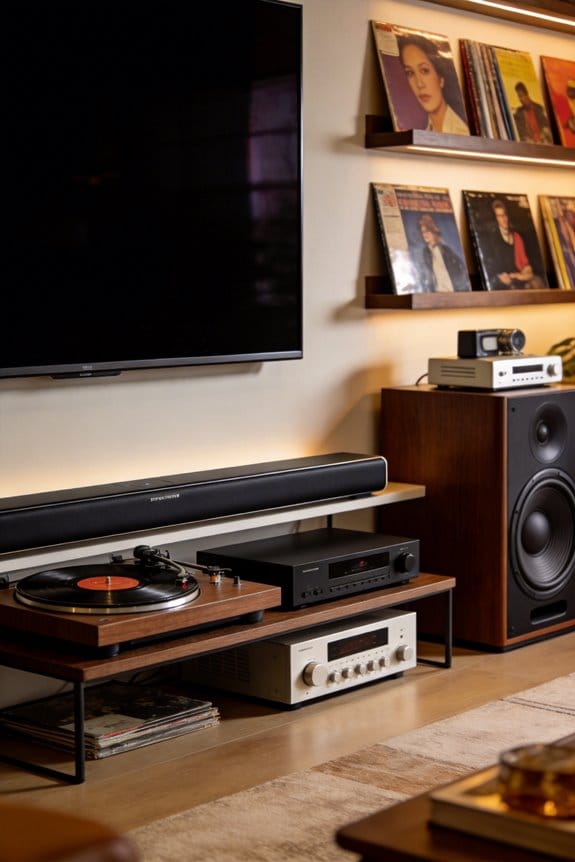

When you connect a vinyl turntable to a soundbar, the analog signal gets converted to digital format at 44.1kHz or 48kHz, which disrupts the continuous waveform that defines vinyl’s warmth and character. Soundbars also compress dynamic range by 10-20dB, reduce channel separation due to their compact 24-36 inch speaker spacing, and use Class D amplifiers that alter harmonic distortion patterns. I’ll explain how each processing stage affects your records and which settings minimize quality loss.
Key Takeaways
- Digital conversion at 44.1-48kHz disrupts vinyl’s analog warmth, causing loss of subtle details and smooth sound flow.
- Class D amplifiers in soundbars create different harmonic distortion patterns compared to traditional Class A/AB amplifiers used with vinyl.
- Dynamic range compression reduces peaks by 10-20dB and boosts quiet passages, eliminating vinyl’s natural highs and lows.
- Soundbar speaker separation of 24-36 inches severely limits soundstage compared to vinyl’s spatial capabilities and traditional speaker placement.
- Digital processing modes, equalization, and loudness compensation further alter vinyl’s authentic tonal characteristics and listening experience.
What Happens When You Play Vinyl Through a Soundbar?
Are you thinking about connecting your turntable to a digital soundbar? It can sound a bit complex, but once you understand how it works, you’ll see the charm in this hybrid setup.
When you play vinyl through a soundbar, the process starts with your turntable. The cartridge picks up the vibrations from the stylus and turns them into electrical signals. These signals need a little boost, so they pass through a phono preamp to bring them up to line level. After that, your soundbar takes over. It receives this analog signal via an auxiliary input or optical connection.
So, what happens next? Your soundbar converts the analog signal into a digital format. This transformation involves sampling the signal at specific frequencies, often 44.1kHz or 48kHz, so it’s compatible with the soundbar. Once it’s in the digital realm, the soundbar’s processor works its magic. It applies equalization, compression, and sometimes even spatial effects to enhance the sound before flipping it back to analog for the speakers.
This setup does have its quirks. You get that warm, rich sound characteristic of vinyl, but with the additional processing from the soundbar, making it a bit different from pure analog or fully digital sources. So, here’s the trick: balance is key. If you’re looking to experience that vintage vinyl magic without losing out on clarity, this could be a fun experiment for you.
In the end, connecting your turntable to a soundbar lets you enjoy vinyl in a modern format while adding some of the exciting features digital processing offers. Have you tried this setup yet? What did you think?
Does Digital Conversion Destroy Vinyl’s Analog Sound?
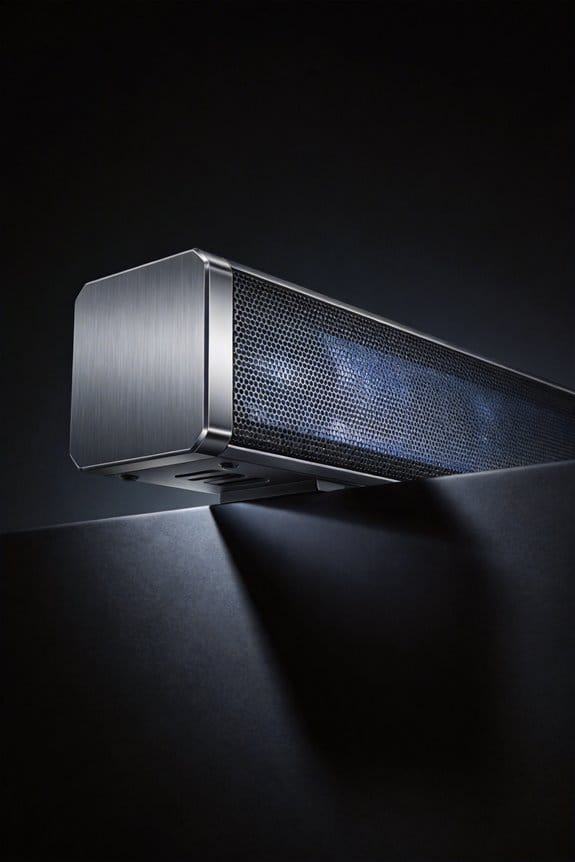
Have you ever wondered if digital conversion messes with the sound of your vinyl records? It’s a hot topic among music lovers and audiophiles alike. When you hook up your turntable to a digital soundbar, it gets a bit complicated. The cartridge picks up the analog signal, but once it hits the soundbar, things take a digital turn. The soundbar samples the analog signal, usually at 44.1kHz or 48kHz, and this can break up that beautiful, smooth flow of sound that vinyl delivers.
So, what’s happening in that conversion process? There are a couple of key issues to think about:
- Analog warmth: This rich quality that we love about vinyl starts to fade with digital sampling. It just doesn’t have that same lush texture.
- Compressed dynamics: The processing that the soundbar does can squash the differences between quiet and loud sounds. You know how those subtle nuances in a track can really grab your attention? Well, they can get lost in translation.
This back-and-forth transformation—going from analog to digital and then back to analog—changes the original character of the vinyl listening experience. You may ask, “So, why does this matter?” If you’re a fan of authentic sound and want that genuine vinyl experience, it’s worth considering how you’re playing your records.
If you’re serious about preserving the rich audio quality of your vinyl, think about investing in a high-quality analog speaker setup instead of relying solely on digital soundbars. The best part is, your records will thank you for it! In the end, making the right choices for your audio setup can make a world of difference. What’s your go-to method for listening to vinyl?
How Soundbar Amplification Changes Vinyl’s Warmth
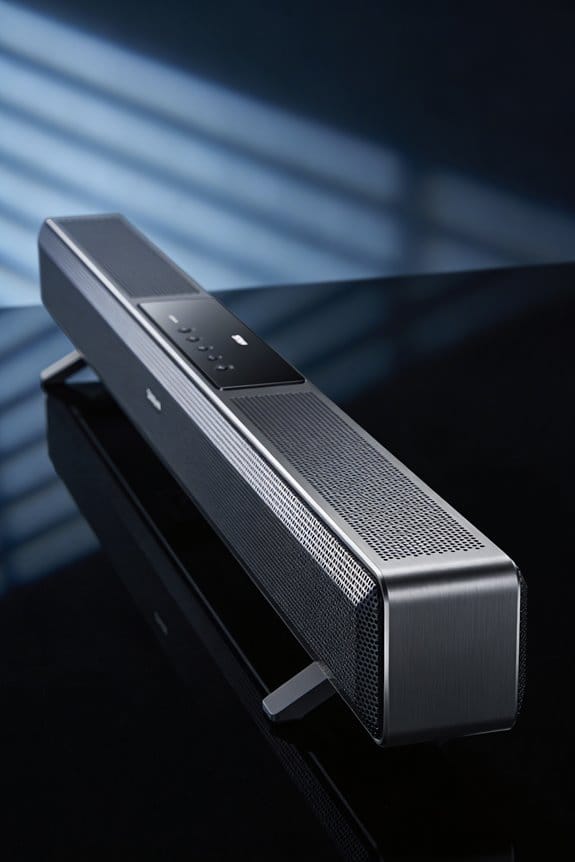
Have you ever noticed that your vinyl records sound different when you play them through your digital soundbar? It’s a common situation, and it actually boils down to how soundbars amplify the music. Let’s dive into what happens in that amplification stage and why it can change the warm sound you love from vinyl.
When you hook up your turntable to a digital soundbar, the signal goes through Class D amplifiers. These amplifiers are efficient, running at about 90%, but they switch at high frequencies, anywhere from 200kHz to 600kHz. That’s a significant difference compared to traditional Class A or Class AB amplifiers that you’d find in a dedicated stereo setup. So, why does this matter? It’s all about how these different technologies shape the sound.
The warmth of vinyl records comes from those rich harmonic distortion patterns you expect in analog playback. However, digital soundbars often come with their own processing magic—or rather, alterations. They use equalization curves and apply compression, sometimes 3:1 or greater. Plus, they enhance bass in ways that can heavily modify those lovely harmonic characteristics you cherish.
Here’s a tip: if you really want the full vinyl experience, consider upgrading your setup. Try using a dedicated stereo amplifier instead of relying on a soundbar. The difference could be remarkable, bringing you back to that warm, inviting sound that makes vinyl special.
Why Soundbars Compress Vinyl’s Quiet-to-Loud Range
Have you noticed your vinyl records losing that rich contrast between soft whispers and booming crescendos when you play them through your soundbar? It’s a common frustration, and understanding why can help you improve your listening experience.
Understanding Dynamic Range Compression****
Soundbars have a tendency to compress the dynamic range of vinyl playback to keep volume levels consistent. So, what does that mean for you? It means that the natural highs and lows of your records get squished down. Instead of enjoying the delicate sounds at 30dB alongside the powerful peaks at 70dB, you’re stuck with a flatter sound that doesn’t capture the true essence of the music.
How Soundbars Process Audio
Let’s dig into how soundbars manage this audio processing.
- The digital signal processor in your soundbar takes a look at the incoming audio levels.
- When it sees peaks that go beyond certain thresholds, it dials them back by about 10-20dB.
- At the same time, quieter moments get a boost to keep everything at a manageable volume.
This is great for keeping dialogue clear in movies and preventing sudden loud bursts, but it comes at a cost. Have you ever thought about what you might be missing? Those subtle dynamic shifts in your vinyl are intentionally crafted, and compressing them takes away from the artistry.
In short, while soundbars offer convenience, they also flatten the sound you love from your vinyl collection. So, if you want to get back that vivid dynamic range, consider exploring options other than your soundbar.
Recapping, soundbars compress the beautiful nuances of your vinyl records. Have you thought about trying out a different setup to reclaim that depth in your music?
Channel Separation Loss: Vinyl’s Stereo Width Through Soundbars
Ever tried to enjoy the rich sounds of your vinyl collection through a soundbar? If you have, you might’ve noticed something off about the way your music sounds.
Vinyl records are known for their warmth and character, but they come with a catch: there’s only about 30dB of channel separation between the left and right channels. In contrast, digital files can boast over 90dB. Now, when you play those vinyl records on a soundbar, you’re hitting a double whammy. You’ve got that limited channel separation from the vinyl mixed with the soundbar’s compact design, where speakers are usually only 24 to 36 inches apart.
So, what does that mean for your listening experience? Well, it means the soundstage—the immersive feeling of space and dimension in music—gets squished down. Traditional stereo speakers are typically set 6 to 8 feet apart, and that distance does wonders for spreading out the sound. But with a soundbar, everything feels closer together. Instruments that should occupy their own spaces end up sounding bunched up, making it hard to appreciate the full depth of the music.
Frankly, vinyl’s inherent mechanical groove limitations already hinder true stereo imaging, and pairing it with a soundbar just worsens that spatial presentation. If you really want to dive deep into your vinyl experience, consider using a good pair of stand-alone speakers instead. They’ll give you the sonic landscape that vinyl was meant to deliver.
In a nutshell, if you’re serious about enjoying your records, think twice before sticking with a soundbar setup. Why not aim for a fuller, richer sound? Your ears will thank you.
The Turntable-to-Soundbar Connection That Preserves Quality
Connecting your turntable to a soundbar can feel like a puzzle, especially when you’re trying to keep the sound quality intact. So, how can you navigate this setup without compromising your love for vinyl? Believe it or not, achieving decent audio isn’t out of reach, you just need the right tools and some know-how.
Start with a phono preamp. This little device does the important job of converting the low-level signal from your turntable’s cartridge to a line-level output that your soundbar can actually handle. Once you’ve got that in place, connect the preamp’s RCA outputs to your soundbar’s auxiliary or optical input—whichever works best for you.
Now, let’s talk about how to integrate your soundbar. You’ll need to select the right input mode using your remote or from the soundbar’s device menu. It might seem simple, but getting this step right is crucial. Here’s the trick: adjust your soundbar’s equalizer to flat or neutral settings. This helps to keep the original tone of your vinyl intact, preserving that classic sound you love.
Frankly, you should also check your soundbar’s audio settings for features like “night mode” or “volume leveling.” These can mess with the dynamic range of your music and dilute your listening experience. Why would you want to lose that authentic vinyl sound?
In short, connecting your turntable to a soundbar is definitely doable with some careful steps. With the right setup, you won’t have to sacrifice quality for convenience. So, what’s holding you back from giving your vinyl collection the playback it deserves?
Which Soundbar Settings Work Best for Vinyl Playback?
Getting your soundbar ready for vinyl playback can feel a bit overwhelming, right? You want to make sure you’re hearing those rich, warm sounds from your records without any unwanted digital enhancements.
Start by diving into your soundbar’s settings. The first step is to turn off all the digital sound processing modes that mess with the audio signal. This means disabling bass boost, virtual surround, dialogue enhancement, and dynamic range compression. These adjustments might help with digital content, but they can really muddy the unique vibe of vinyl.
If your soundbar has a “Pure Direct” or “Stereo” mode, select that for the best sound. It cuts out unnecessary processing that just complicates things. Also, set your equalizer to flat or neutral—this keeps everything at zero decibels across the board. And don’t forget to turn off loudness compensation. Why? It compresses the dynamic range and takes away the contrast between soft and loud sounds, which is part of what makes vinyl so enjoyable.
Another thing to check is whether your soundbar’s input sensitivity matches your turntable’s output level. Usually, it should be around 2-5 millivolts for moving magnet cartridges. Just imagine—everything dialed in perfectly, allowing you to really appreciate those classic tracks.
Why Vinyl Still Sounds Different Through Digital Speakers
Have you ever wondered why vinyl records sound so distinct, even when played through a digital soundbar? It all comes down to the way that vinyl captures music. Unlike digital files, which are made up of samples converted into binary data, vinyl holds complete waveforms in its grooves. This means that when you spin a record, the soundbar receives an analog signal, preserving that rich, warm sound that many audiophiles swear by.
When you listen to vinyl, you might notice that the midrange frequencies feel fuller and the bass tones are more natural. That’s because the continuous wave pattern in vinyl brings a depth that digital audio can’t quite replicate. So, it’s no surprise that many people prefer the character of a vinyl record over a digital track, even if the final output is through digital speakers. But keep in mind—there’s a trade-off.
You’ll also pick up some mechanical noise coming from the turntable, like motor whirring or stylus vibrations. Plus, electromagnetic interference can sneak into the mix as well, which might take away from that pure sound experience. The key player here is the cartridge. It converts the movement in the grooves into electrical signals, keeping the defining traits of vinyl, despite the digital processing by the soundbar.
Frequently Asked Questions
Can Bluetooth Transmission From Turntable to Soundbar Affect Vinyl’s Sound Quality?
Yes, I’ve found that Bluetooth transmission greatly degrades vinyl’s sound quality. The conversion from analog to digital eliminates analog warmth, while Bluetooth latency and compression artifacts strip away the rich, natural characteristics that make vinyl special.
Do Expensive Soundbars Reproduce Vinyl Better Than Budget Models?
Yes, I’ve found expensive soundbars reproduce vinyl better through superior sound engineering and premium materials that preserve analog warmth. Budget models compress dynamics and introduce harshness, undermining vinyl’s natural depth and richness you’re seeking.
Should I Use Optical or HDMI Connection for Vinyl Playback?
HDMI supports higher bandwidth than optical, but for vinyl playback through your soundbar, I’d recommend HDMI. Connection types matter less than signal quality from your turntable’s preamp—both deliver uncompressed stereo adequately for analog sources.
Will a Soundbar’s Subwoofer Help Preserve Vinyl’s Bass Warmth?
I’d say a soundbar’s subwoofer enhances bass amplification but can’t replicate vinyl’s analog warmth. The subwoofer performance boosts low frequencies digitally, yet it lacks the natural, continuous waveform characteristics that give vinyl its distinctive bass depth and richness.
Can Equalizer Settings Compensate for Vinyl’s Lost Analog Characteristics?
I don’t think equalizer settings can fully restore vinyl characteristics once you’ve lost them through digital conversion. You’re missing the continuous waveform and analog warmth that made vinyl special in the first place.